FIFA pledges total support for Gianni Infantino after the 2026 World Cup media rights strategy collapses, sparking a governance crisis.
Introduction
In what is rapidly turning into one of the most tumultuous commercial crises in modern sports governance, global football’s governing body has officially rallied to shield its leader. FIFA has pledged its unequivocal support to President Gianni Infantino following the dramatic collapse of its flagship 2026 World Cup global media and broadcasting rights plan. The ambitious financial blueprint, designed to maximize revenue across an expanded 48-team mega-tournament spanning Canada, Mexico, and the United States, unraveled after intense pushback from major international networks, bidding syndicates, and digital streaming giants who rejected FIFA's sky-high valuations and rigid bundling terms.
The sudden breakdown of the rights strategy leaves a multi-billion-dollar void in FIFA’s projected 2023–2026 commercial cycle, sending shockwaves through the headquarters in Zurich and causing panic among regional confederations expecting historic payouts. Despite mounting criticism from corporate partners and media executives who view the failure as evidence of institutional hubris, top FIFA officials closed ranks this week, publicly re-affirming Infantino’s mandate and insisting the organization remains financially rock-solid. As football’s governing body moves into crisis management mode, the situation raises urgent questions about the commercial viability of an expanded tournament and whether Infantino’s iron grip on global football governance is beginning to show structural cracks.
The timing of this breakdown could hardly be more awkward for FIFA. With stadium transformations nearing completion and international qualifying campaigns entering critical phases, the administration was supposed to be celebrating a golden era of commercial expansion. Instead, the collapse has exposed deep friction between FIFA’s commercial aggressive targets and the harsh realities of a cooling global media rights market. As broadcasting executives refuse to blink, FIFA finds itself in the uncomfortable position of having to defend its president while simultaneously scrambling to re-architect its central economic engine before June 2026.
Background & Context
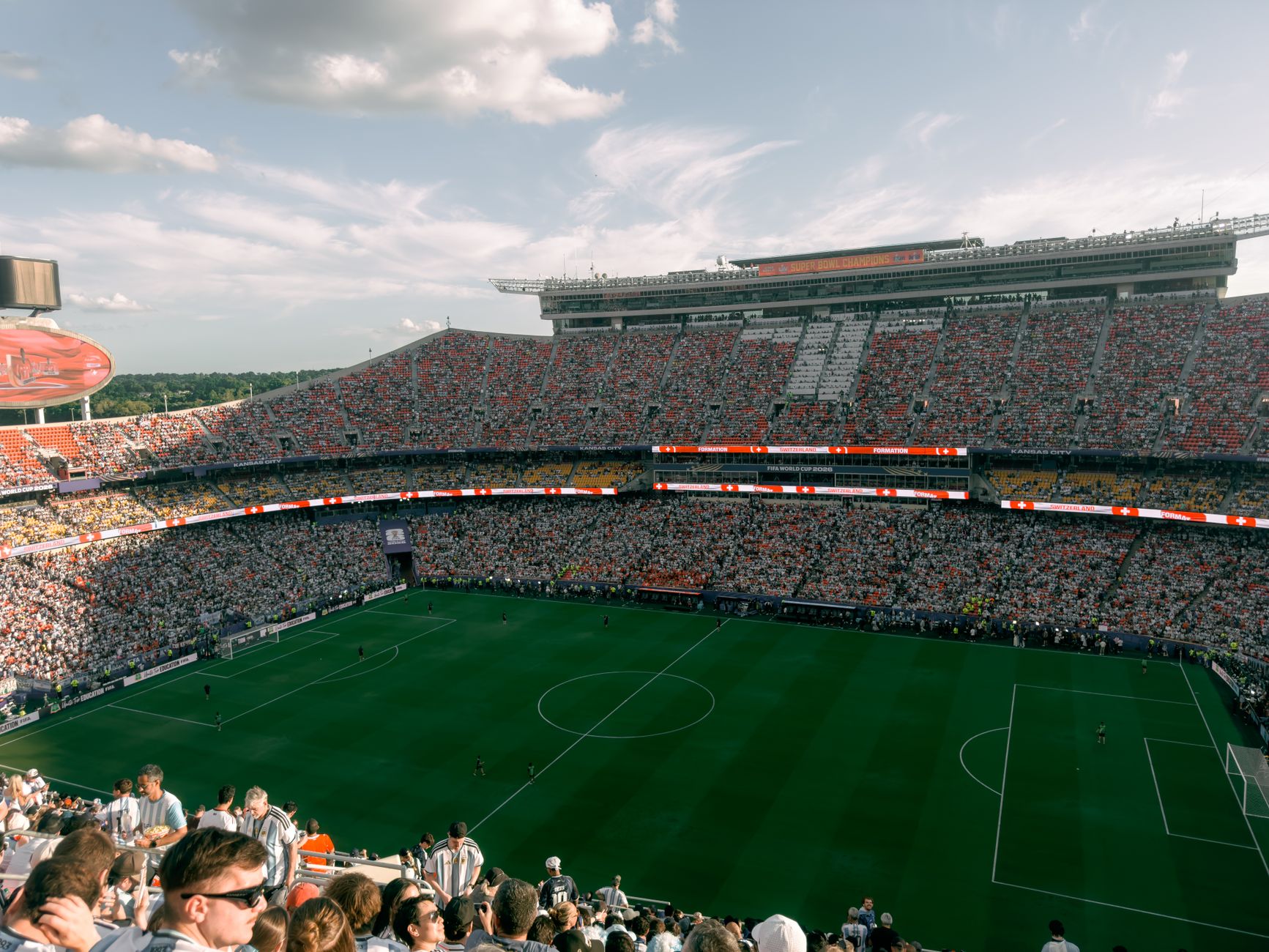
The 2026 FIFA World Cup was conceived as the ultimate jewel in Gianni Infantino’s crown. Expanded from the traditional 32-team format to a mammoth 48-nation spectacle featuring 104 matches, the tournament was explicitly engineered to drive unprecedented broadcast, ticketing, and sponsorship revenues. Hosting the event across three vast North American nations was meant to unlock the lucrative United States media market while leaning into the deep footballing culture of Mexico and the rapidly growing fan base in Canada. To accommodate this unprecedented enterprise, massive capital investments were poured into venue overhauls, detailed extensively in our feature on How America's Greatest Stadiums Transformed for World Cup 2026, as NFL arenas were adapted for international pitch dimensions and luxury hospitality demands.
However, the sheer scale of the expanded format introduced complex operational and financial challenges. To meet its ambitious $11 billion revenue target for the four-year cycle, FIFA attempted to revolutionize how World Cup rights were packaged and sold. Rather than relying on traditional regional agency deals, Zurich sought to centralize global rights, unbundle digital over-the-top (OTT) packages, and force traditional free-to-air networks into competitive bidding wars against tech platforms. This high-risk strategy was modeled on the assumption that global media appetite for live football was virtually inelastic. Similar logistical ambitions were analyzed in How US Stadiums Were Transformed for World Cup 2026, which highlighted how stadium infrastructure was pushed to its limits to handle back-to-back match days across different time zones.
The collapse of this grand strategy is not an isolated incident, but rather the culmination of years of friction between FIFA and major media houses. Historically, broadcast rights for the World Cup were secured years in advance under long-term, stable agreements. Under Infantino’s leadership, FIFA increasingly adopted an aggressive tendering policy, demanding sub-licensing guarantees and record-breaking rights fees. When major European and Asian broadcast consortiums balked at the inflated reserve prices for 2026, pointing to unfavorable kick-off times for Eastern Hemisphere audiences and saturated domestic sports rights budgets, the entire tender structure crumbled. FIFA was left with unsold inventory in key markets and a collapsing valuation framework that threatened the tournament's overall financial model.
Key Details & Analysis
At the core of the collapse lies a fundamental disconnect between FIFA's financial expectations and the economic conditions currently facing global media companies. FIFA’s internal projections relied on generating over $4 billion from linear broadcast rights alone for the 2026 tournament—a massive surge compared to Qatar 2022. However, when the bidding windows opened across Europe, South America, and Asia, traditional networks refused to meet the reserve prices set by Zurich. Key stakeholders, including public service broadcasters and commercial giants, formed informal buying coalitions or simply abstained from bidding, refusing to accept FIFA's strict terms regarding digital exclusivity and sub-licensing restrictions.
To understand why the rights plan fell apart, one must analyze the shifting dynamics of the sports media ecosystem:
Market Saturation & Ad Recession: Linear television networks are facing severe cord-cutting trends and declining advertising revenues, making billion-dollar upfront rights guarantees financially unsustainable.
Time Zone Disadvantages: Primetime matches in West Coast North American venues translate to middle-of-the-night kick-offs in European and Asian markets, dramatically reducing projected live viewership and localized ad monetization.
Tech Giant Hesitation: While FIFA anticipated massive bids from tech titans like Apple, Amazon, and Netflix, these platforms showed reluctance to purchase non-exclusive or geographically fragmented packages that lacked long-term library value.
Inflated Match Inventory: Expanding from 64 to 104 matches created a dilution effect; networks argued that group-stage fixtures between lower-ranked nations offered minimal commercial return compared to high-stakes knockout ties.
The failure of the rights plan forced FIFA’s finance committee into an emergency reassessment. The financial model of the World Cup relies on high-margin media rights to subsidize team participation allowances, host nation logistics, and distribution grants for all 211 member associations. Without these projected media revenues intact, FIFA faces potential budget deficits that could force deep cuts to its development programs. Beyond the numbers, the collapse highlights tactical errors in FIFA’s negotiation stance. Rather than securing early anchor partners, Zurich attempted to play rival networks against each other in a market that was simply unwilling to take the bait, leaving Infantino's administration exposed and searching for alternative capital injections.
The impact of this broadcast uncertainty extends directly to the pitch, where global visibility is essential for celebrating iconic moments. Stellar highlights, such as those featured in our compilation of the Top 5 Free Kicks of World Cup 2026, depend on vast, multi-platform media distribution to capture global audiences and generate viral engagement. If broadcast coverage is fragmented across obscure regional streaming services due to last-minute fire-sale deals, the cultural footprint of the world's biggest sporting event risks being severely compromised.
Expert Perspective
The collapse has ignited a fierce political divide within global football's governing ranks, triggering vocal calls for institutional accountability while prompting loyal confederations to circle the wagons. European governance critics have been quick to point out that Infantino’s centralized management style left the organization vulnerable to such a high-profile failure. Lise Klaveness, President of the Norwegian Football Federation and a longtime advocate for FIFA reform, publicly called into question the transparency and risk management protocols of the current administration, arguing that FIFA's governance structure prioritizes executive grandstanding over sound economic planning. Details of this fierce European dissent are examined in Norway FA Tells FIFA President Infantino to Resign | World Cup 2026.
Conversely, Infantino retains powerful backing across key regions, particularly within CONMEBOL and CONCACAF, where member nations are desperate to protect the host continent's commercial interests. Heavyweights like the Mexican Football Federation (FMF) and the Argentine Football Association (AFA) issued swift statements reaffirming their confidence in Infantino’s leadership, arguing that the market downturn is a global macroeconomic reality rather than a failure of FIFA management. This geopolitical split is detailed in our coverage of how Mexico & Argentina Back Infantino Amid FIFA Civil War | 2026 World Cup, illustrating how the rights collapse has intensified existing political fault lines between UEFA and the rest of the world.
Industry analysts and media rights pundits view FIFA's dilemma as a watershed moment for sports broadcasting economics. Sports business commentators at outlets like ESPN have noted that FIFA misjudged the leverage dynamic in an era where media conglomerates are cutting costs. Pundits emphasize that while the World Cup remains a premier global asset, no single property is immune to the structural shifts sweeping the media landscape. Executives from major broadcast networks speaking anonymously off the record have suggested that FIFA will ultimately be forced to discount its package prices by up to 25 to 30 percent, or risk going into the tournament with unallocated broadcast territories in crucial European and Asian markets.
Impact & Implications
The financial shortfalls resulting from the rights collapse carry severe operational implications for participating national federations. FIFA’s revenue generation is directly linked to the distribution payouts given to qualified teams, as well as the solidarity payments distributed to non-qualifying nations to fund grassroots infrastructure. If FIFA fails to plug the revenue gap through alternative commercial channels, the performance bonuses promised to national associations could be significantly slashed. Smaller federations relying on World Cup windfalls to sustain their domestic football operations for the next four years face immediate budgetary uncertainty.
Furthermore, the collapse undermines FIFA’s standing with existing global corporate sponsors. Companies that signed major sponsorship deals for the 2026 cycle did so under the guarantee of record-breaking global television reach across 48 competing nations. If broadcast rights are sold off at fire-sale rates to secondary networks or hidden behind restrictive subscription paywalls, overall viewership numbers will drop. This potential drop in cumulative worldwide television audiences threatens to trigger penalty clauses in FIFA's corporate partnership contracts, creating a secondary wave of financial liabilities that could further drain Zurich’s cash reserves.
From a political standpoint, the crisis severely weakens Gianni Infantino’s standing as an invincible commercial strategist. Having constructed his presidency on the promise of delivering unprecedented financial returns to member associations, this major operational misstep provides significant ammunition for his political opponents within FIFA’s Council. While a formal vote of no confidence remains unlikely due to his strong base of support in Africa, Asia, and the Americas, Infantino's ability to push through future radical reforms—such as expanded club competitions or altered tournament schedules—has been significantly impaired by this public setback.
Looking Ahead
In the immediate term, FIFA's executive team must execute a rapid strategic pivot to salvage its broadcast portfolio before time runs out. The governing body is expected to scrap its centralized global tendering process and revert to localized, emergency tender negotiations. Media rights experts anticipate that FIFA will be forced to unbundle packages, offering non-exclusive rights, sub-licensing flexibilities, and discounted regional territories to entice reluctant broadcast partners back to the bargaining table before production logistics become unmanageable.
Football's governing body is also preparing to hold emergency sessions of its Finance Committee and Council ahead of the next formal FIFA Congress. During these meetings, Infantino and his executive board will present a revised commercial model aimed at reassuring member associations that solidarity payments will remain intact. Broadcasters, fans, and federations alike will be watching closely as FIFA publishes updated financial disclosures on FIFA.com, searching for definitive proof that the organization can navigate this self-inflicted financial storm without jeopardizing the staging of the tournament itself.
As the clock ticks down toward June 2026, the focus will inevitably shift from corporate boardrooms back to the pitch. Qualified teams are locking in their warm-up schedules, host cities are finalizing transit corridors, and fans around the world are preparing for an historic feast of football. However, the shadow of this rights collapse will hang heavily over FIFA's leadership throughout the build-up. The coming months will determine whether Infantino's defensive stance can protect his presidency, or whether the 2026 World Cup will be remembered as the event that exposed the financial limits of global football's governing body.
Conclusion
The collapse of the World Cup 2026 media rights strategy represents a watershed moment in modern sports business, exposing the dangers of aggressive financial over-reach in an unpredictable global market. FIFA's pledge to defend Gianni Infantino reflects an organization determined to project strength and unity during a time of acute institutional crisis. Yet, no amount of political support from Zurich can alter the fundamental economic realities facing global broadcasters: the days of automatic, ever-escalating rights fees have come to a decisive end.
Ultimately, the true test of FIFA’s resilience will lie in its ability to adapt to a changing media landscape without sacrificing the universal reach that makes the World Cup the world’s greatest sporting spectacle. As host cities prepare their transformed stadiums and 48 nations dream of international glory, football’s administrators must quickly repair the financial architecture supporting the game. Whether Gianni Infantino emerges from this crisis with his authority intact or fundamentally weakened, the 2026 World Cup has already reshaped the business of global sport forever.