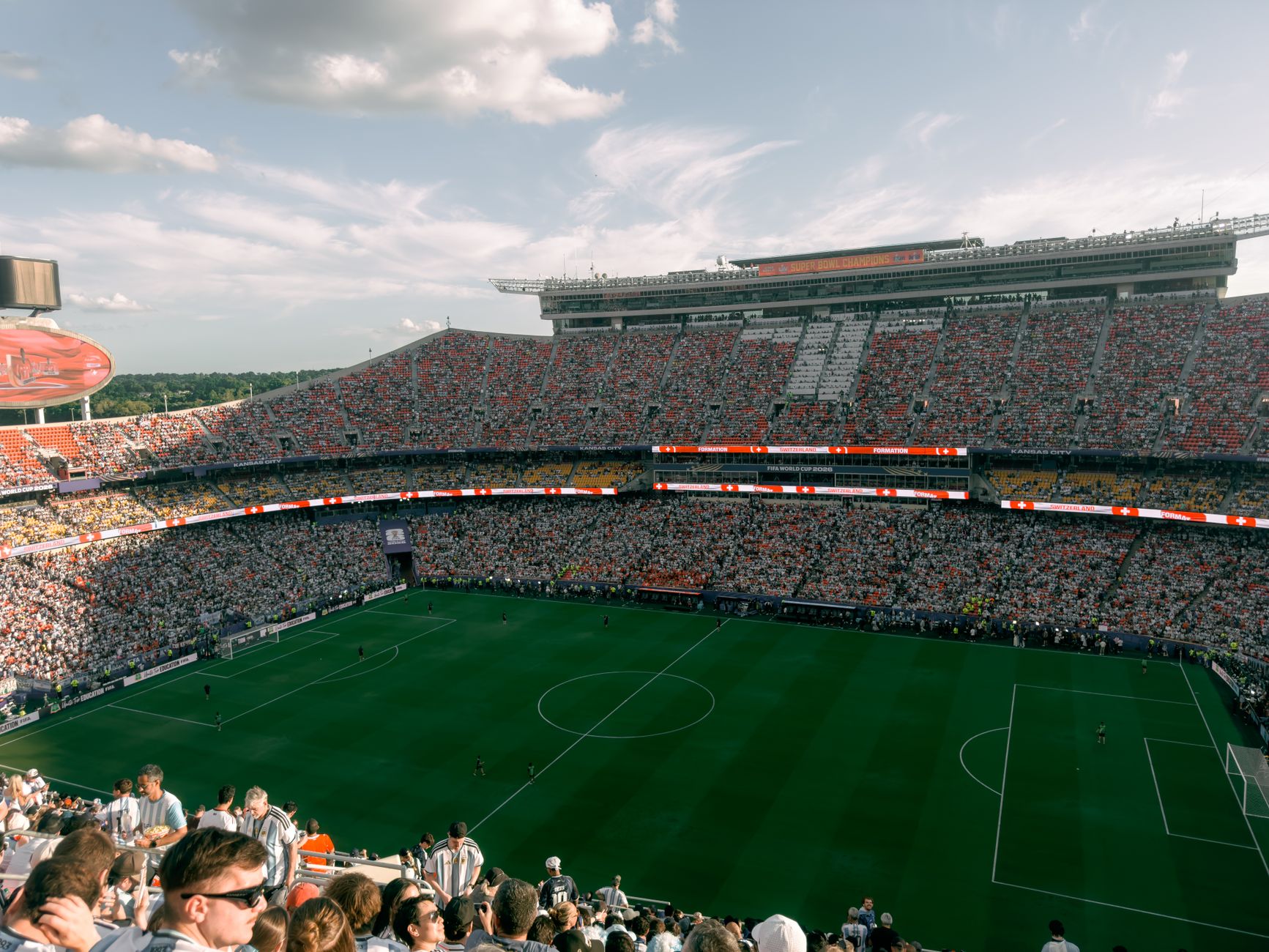
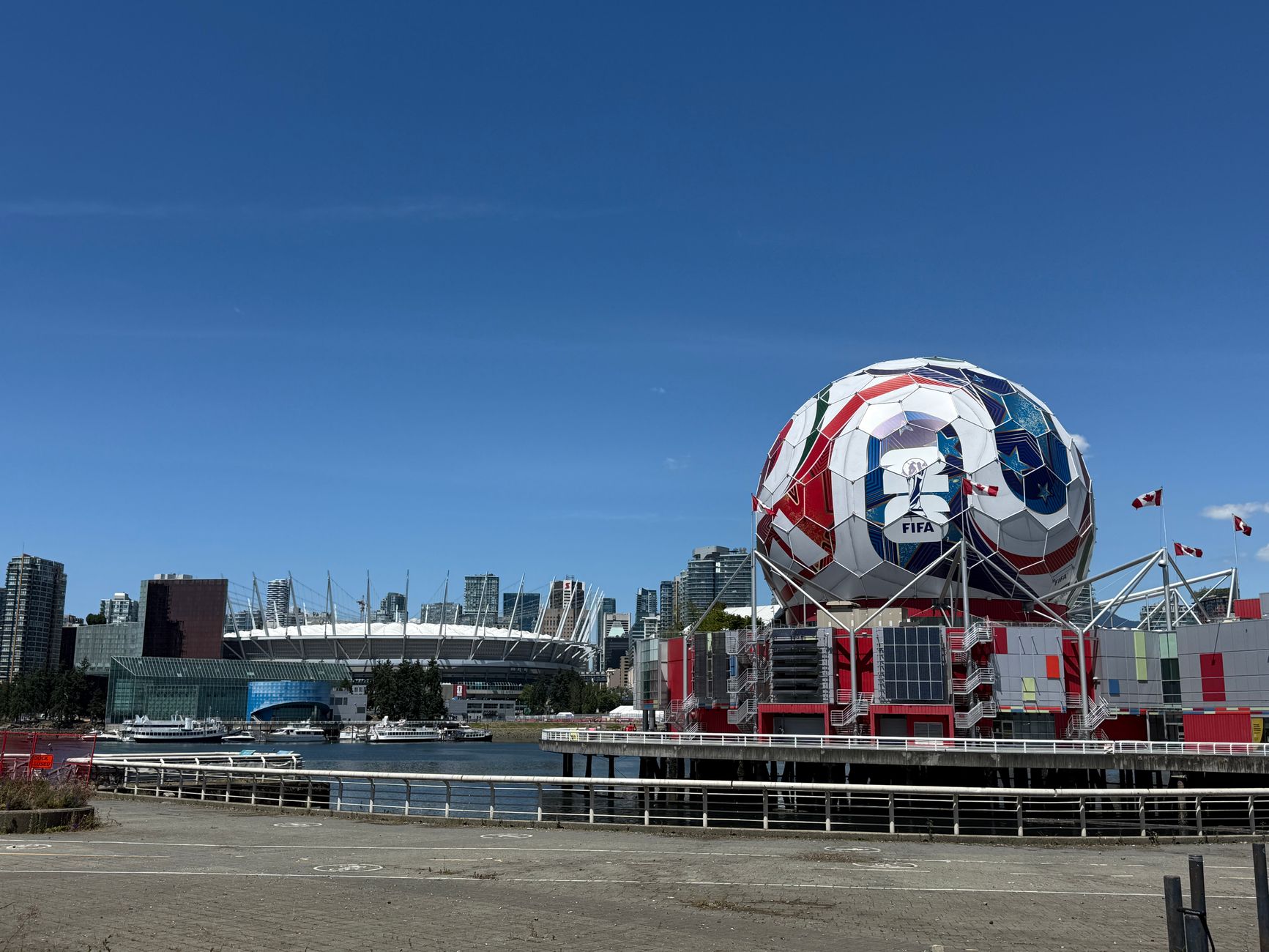
Detailed analysis of how America's NFL stadiums were engineered, modified, and transformed with natural grass for the 2026 FIFA World Cup.
Introduction: The Architectural Metamorphosis of American Sports Cathedrals
The staging of the 2026 FIFA World Cup across the United States, Mexico, and Canada represents the most ambitious logistical and engineering undertaking in the history of international sports. With the expanded 48-team tournament requiring 104 matches, the United States takes center stage, hosting the vast majority of fixtures across eleven iconic venues. However, preparing North America’s premier NFL coliseums for world football’s showpiece event has demanded a multi-million-dollar structural and agronomical revolution. These legendary arenas, originally engineered for the tactical violence and narrow boundaries of gridiron football, have undergone a breathtaking physical metamorphosis to meet FIFA's rigid pitch standards and spectator sightline requirements.
From the urban expanse of New Jersey’s MetLife Stadium to the futuristic, canopy-shielded bowl of SoFi Stadium in Los Angeles, American venue operators spent years solving a complex puzzle of spatial geometry, turf science, and structural modification. The scale of this transition cannot be overstated. Converting artificial turf fields surrounded by concrete walls into sprawling, pristine natural grass pitches capable of enduring weeks of high-intensity tournament play required unprecedented collaboration between structural engineers, agronomists, and FIFA pitch consultants. Exploring How US Stadiums Were Transformed for World Cup 2026 reveals a story of technological innovation that redefines what modern sports infrastructure can achieve when global football arrives on American soil.
Background & Context: Bridging the Divide Between Gridiron and Global Football
To understand the magnitude of this physical transformation, one must examine the legacy of the 1994 FIFA World Cup in the United States. Thirty-two years prior, organizers famously installed temporary natural grass over artificial turf inside the Pontiac Silverdome—a landmark moment that proved indoor grass pitches were technically feasible. Yet, the expectations of modern football in 2026 operate on a completely different plane. Today’s top international players demand lightning-fast, uniform playing surfaces with precise ball roll, optimal traction, and consistent firmness, leaving zero room for the compromises of the past.
The primary conflict between American football venues and FIFA standards stems from field geometry. Standard NFL playing surfaces measure 53.3 yards (48.8 meters) in width, whereas FIFA mandates a strict pitch dimension of 105 by 68 meters (115 by 74 yards) for World Cup matches, along with substantial auxiliary run-off zones for assistant referees, broadcasting equipment, and warm-up areas. Most modern NFL stadiums were constructed with steep lower-bowl seating designed to bring fans close to the gridiron sidelines, leaving insufficient width for standard international soccer boundaries. Overcoming these spatial constraints required stadium owners to invest hundreds of millions of dollars into structural re-engineering, removing thousands of permanent lower-deck seats and redesigning concrete bowl frameworks.
This physical overhaul occurred against a broader background of international football governance and diplomacy. While venue construction crews worked around the clock, institutional debates regarding host city allocations and commercial distributions stirred vibrant dialogue within world football. Political maneuvering and administrative governance remained central to the build-up, highlighted during contentious FIFA congresses where figures like Norway FA Tells FIFA President Infantino to Resign | World Cup 2026 brought global media spotlight to the governing body’s operational vision. Despite off-field political friction, the commitment of North American host cities to delivering world-class playing surfaces remained unyielding.
Key Details & Analysis: The Engineering Marvels of Turf, Geometry, and Infrastructure
The technical overhaul of America's greatest stadiums can be categorized into three major domains: pitch engineering, bowl widening, and micro-climate control. The most crucial aspect of this project was eliminating artificial turf. Venues such as AT&T Stadium in Arlington, MetLife Stadium in East Rutherford, Mercedes-Benz Stadium in Atlanta, and NRG Stadium in Houston were forced to replace their synthetic surfaces with custom-grown natural turf solutions. FIFA explicitly mandated 100% natural grass for all tournament pitches to guarantee uniform ball physics and minimize player injury risks.
To accomplish this without permanently destroying underlying NFL operational capabilities, stadium engineers devised state-of-the-art modular grass tray systems and vacuum-assisted sub-pitch infrastructure. At AT&T Stadium, home of the Dallas Cowboys, engineers elevated the entire playing field by nearly five feet using a custom metal deck support system. Raising the field level widened the usable surface area across the lower bowl, accommodating the required 68-meter pitch width while preserving pitch-side safety zones. Underneath the grass, complex SubAir aeration and drainage systems were integrated, capable of vacuuming thousands of gallons of water per minute during severe rainstorms and pumping oxygen directly to grass root zones to prevent turf decay during tight match schedules.
Key Stadium Transformations for World Cup 2026
MetLife Stadium (East Rutherford, NJ): Removed concrete corner seating sections to expand pitch dimensions; installed specialized grow-light arrays and hybrid natural grass designed for the July 19 World Cup Final.
SoFi Stadium (Inglewood, CA): Underwent major structural lower-bowl demolition to widen the floor space, installing a elevated pitch platform and temporary grass tray assembly.
AT&T Stadium (Arlington, TX): Raised the playing surface by 1.5 meters to broaden sideline dimensions, incorporating high-tech sub-pitch climate controls and temporary grass growth matrices.
Mercedes-Benz Stadium (Atlanta, GA): Transitioned from artificial turf to advanced natural grass systems utilizing mobile LED grow-light rigs and specialized sub-field aeration modules under its retractable roof.
The precision required for these pitches directly impacts match conditions. Smooth, dense turf surfaces allow ball movement to remain predictable and crisp, giving technical teams an optimal platform for fast-paced, high-level passing sequences. Pristine grass quality also enhances dynamic set-piece execution, ensuring that legendary moments like those featured in the Top 5 Free Kicks of World Cup 2026 can be staged under flawless conditions without uneven turf affecting execution.
Expert Perspective: Agronomists, Architects, and FIFA Technical Evaluators
The transformation effort relied heavily on scientific research led by leading turfgrass agronomists from Michigan State University and the University of Tennessee, who collaborated directly with FIFA's pitch management team. According to FIFA technical documents, research teams tested dozens of grass cultivars—primarily custom blends of Bermudagrass and Kentucky Bluegrass—to determine which varieties could withstand high traffic, shade under closed stadium roofs, and rapid pitch recovery times between multi-game match schedules.
Architectural experts from global venue design firm Populous noted that adapting American football stadiums presented unprecedented geometric hurdles. Unlike traditional European football cathedrals designed around rectangular, wide pitches with low, sloping stands, NFL venues feature oval-shaped stadium footprints built around high-density vertical seating. Engineers had to carefully recalculate sightlines to ensure spectators in the lower rows maintained unobstructed views of the corner flags and touchlines after structural modifications were completed. The removal of concrete risers at venues like MetLife Stadium proved that even concrete structures built a decade ago could be altered when backed by FIFA-grade capital investments.
The global governance supporting these monumental stadium investments required immense diplomatic harmony across federations. Powerful national bodies rallied behind the joint host committee to ensure financial and operational commitments were met without delay. This structural unity was particularly evident when continental giants lined up to support FIFA's leadership vision, as reported when Mexico & Argentina Back Infantino Amid FIFA Civil War | 2026 World Cup, ensuring that organizational focus remained firmly fixed on stadium readiness and operational excellence across North America.
Impact & Implications: Lasting Legacy for American Sports and Stadium Architecture
The massive capital expenditures funneled into American stadium transformations will produce lasting structural legacies long after the World Cup trophy is raised. For decades, the debate surrounding artificial turf versus natural grass in the NFL has sparked intense friction between player unions and team owners. The NFL Players Association (NFLPA) has repeatedly cited higher lower-extremity injury rates on synthetic turf, advocating for a league-wide shift to natural grass. The successful installation and maintenance of high-performance natural pitches in indoor NFL venues during the World Cup proves that indoor grass technology is viable, potentially accelerating permanent surface transitions across American professional sports.
Furthermore, these venue transformations set a new global standard for multi-purpose arena design. Future stadium developers will no longer build single-sport or rigid dual-sport facilities. Instead, architectural blueprints will inherently incorporate flexible floor plates, removable lower-bowl seating modules, and integrated sub-pitch aeration systems capable of hosting American football, international soccer, and major music concert tours within days of each other. The commercial viability of American venues has risen dramatically, creating unprecedented revenue possibilities for stadium operators.
The cultural resonance of these venues hosting football's elite cannot be overstated. When dominant football nations compete on these vast American stages, national pride shines bright. Soccer fever sweeping across host nations creates moments of immense historic significance, echoing how passionate fanbases honor footballing success—much like when Argentina Declares July 15 a National Football Holiday to Mark Its 202 operational triumph, demonstrating the profound cultural connection between global sports spectacles and national identity.
Looking Ahead: Test Matches, Grand Final Readiness, and Final Approvals
As the countdown to the opening match accelerates, converted host stadiums enter their critical testing phase. FIFA’s technical pitch team, alongside local organizing committees, has scheduled a rigorous series of international friendlies and test events during the warm summer months preceding the tournament. These test fixtures allow stadium managers to analyze how modified drainage networks, grow lights, and tray systems handle real-match wear, extreme thermal fluctuations, and heavy rain, ensuring pitch integrity remains flawless for the main event.
All eyes will naturally fall upon MetLife Stadium in East Rutherford, New Jersey, which was selected to host the World Cup Final on July 19, 2026. Having undergone extensive lower-bowl structural alterations to widen its floor, the stadium’s pitch will be monitored daily using soil sensors and high-resolution cameras to track root depth, turf density, and traction metrics. Detailed schedule information, ticketing updates, and venue profiles remain accessible via official football channels like FIFA.com, offering supporters worldwide a complete guide to every transformed arena.
Similarly, key knockout venues like AT&T Stadium in Texas and SoFi Stadium in California will host crucial semi-final and quarter-final clashes, serving as primary platforms for the tournament’s defining moments. Broadcasters and news agencies such as ESPN continue to track host city preparations, highlighting how North America's converted coliseums are fully equipped to deliver an unforgettable theatrical setting for global football fans.
Conclusion: The Ultimate Stage for World Football
The transformation of America’s greatest sports stadiums for the 2026 FIFA World Cup stands as a masterclass in modern engineering, agronomical science, and logistical ambition. Confronted with the monumental task of converting narrow gridiron coliseums into wide, pristine natural grass pitches, host cities, stadium owners, and architectural teams rose to the challenge. By removing thousands of concrete seats, elevating playing floors, and engineering state-of-the-art turf management systems, North America has crafted an elite collection of venues capable of delivering world-class football.
When the world tunes in to watch 48 nations compete across 104 thrilling matches, the physical stage will match the historic prestige of the tournament itself. These eleven transformed American cathedrals not only bridge the cultural gap between gridiron spectacle and association football, but they also establish a fresh benchmark for multi-purpose stadium design that will endure for generations to come. The stage is set, the natural grass is lush, and America's legendary arenas are officially ready to welcome the world.
World Cup 2026 stadium transformationsFIFA World Cup 2026 venuesUS stadiums World Cup 2026MetLife Stadium pitch conversionSoFi Stadium World Cup modificationsAT&T Stadium grass pitch engineering