UEFA, AFC, and CONCACAF unite against Gianni Infantino's controversial plan to privatise FIFA World Cup assets and sell equity to private investors.
1. Introduction
A seismic political battle has erupted at the very top of international football governance, as three of the world’s most powerful continental confederations—UEFA, the Asian Football Confederation (AFC), and CONCACAF—have formed a unified front to forcefully reject FIFA President Gianni Infantino’s latest proposal to privatise key commercial assets of the FIFA World Cup. The unprecedented pushback comes after leaked internal documents and high-level briefing papers revealed secretive discussions between FIFA leadership and multinational private equity firms regarding the creation of a standalone commercial vehicle designed to monetise future tournament rights.
The joint resistance marks one of the most severe institutional crises for FIFA since the corruption scandals of 2015. Leaders across Europe, Asia, and North America have expressed profound alarm over what they characterize as an existential threat to the democratic structure of global sport. By attempting to sell off partial control of broadcast rights, digital properties, and sponsorship vehicles to private investors, Infantino stands accused of attempting to bypass traditional confederation oversight in pursuit of immediate capital injections. The resulting backlash threatens to cast a heavy shadow over the administrative run-up to the expanded 48-team mega-event scheduled across Canada, Mexico, and the United States.
2. Background & Context
This escalating civil war within FIFA is not occurring in a vacuum, but rather represents the boiling point of tensions that have been simmering since Gianni Infantino took office in 2016. Throughout his presidency, Infantino has consistently prioritized aggressive financial expansion, constantly seeking untraditional capital streams to fund his ambitious global development promises. Previous flashpoints included the aborted $25 billion project backed by SoftBank to overhaul the Club World Cup and Global Nations League, as well as controversial proposals for a biennial World Cup cycle that was soundly rejected by both UEFA and CONMEBOL.
The current dispute strikes at the core identity of international football. Historically, the FIFA World Cup has operated as a public trust of sorts—a quadrennial festival belonging to the global football community, where revenues generated are redistributed among 211 member associations to foster grass-roots development. Moments that define the sport’s cultural heritage, such as iconic dramatic encounters like the historic 🔴 HIGHLIGHTS JAPAN vs SENEGAL | UNBELIEVABLE DRAMA & SPECTACULAR GOALS match or unforgettable set-piece wizardry featured in the Top 5 Free Kicks of World Cup 2026 retrospectives, have always been anchored in a public governance model. The introduction of institutional private equity, critics argue, fundamentally alters this dynamic by placing quarterly profit demands above the long-term stewardship of the global game.
3. Key Details & Analysis
At the center of the controversy is a proposed restructuring that would hive off FIFA’s primary commercial, licensing, and broadcast apparatus into a newly formed subsidiary entity. Under the strategic framework presented to select stakeholders, private investment consortiums would be granted minority equity stakes ranging between 15 and 25 percent in exchange for billions of dollars in upfront cash. In theory, FIFA management argues this cash injection would guarantee unprecedented dividend payouts for national associations while mitigating future market volatility in the global media landscape.
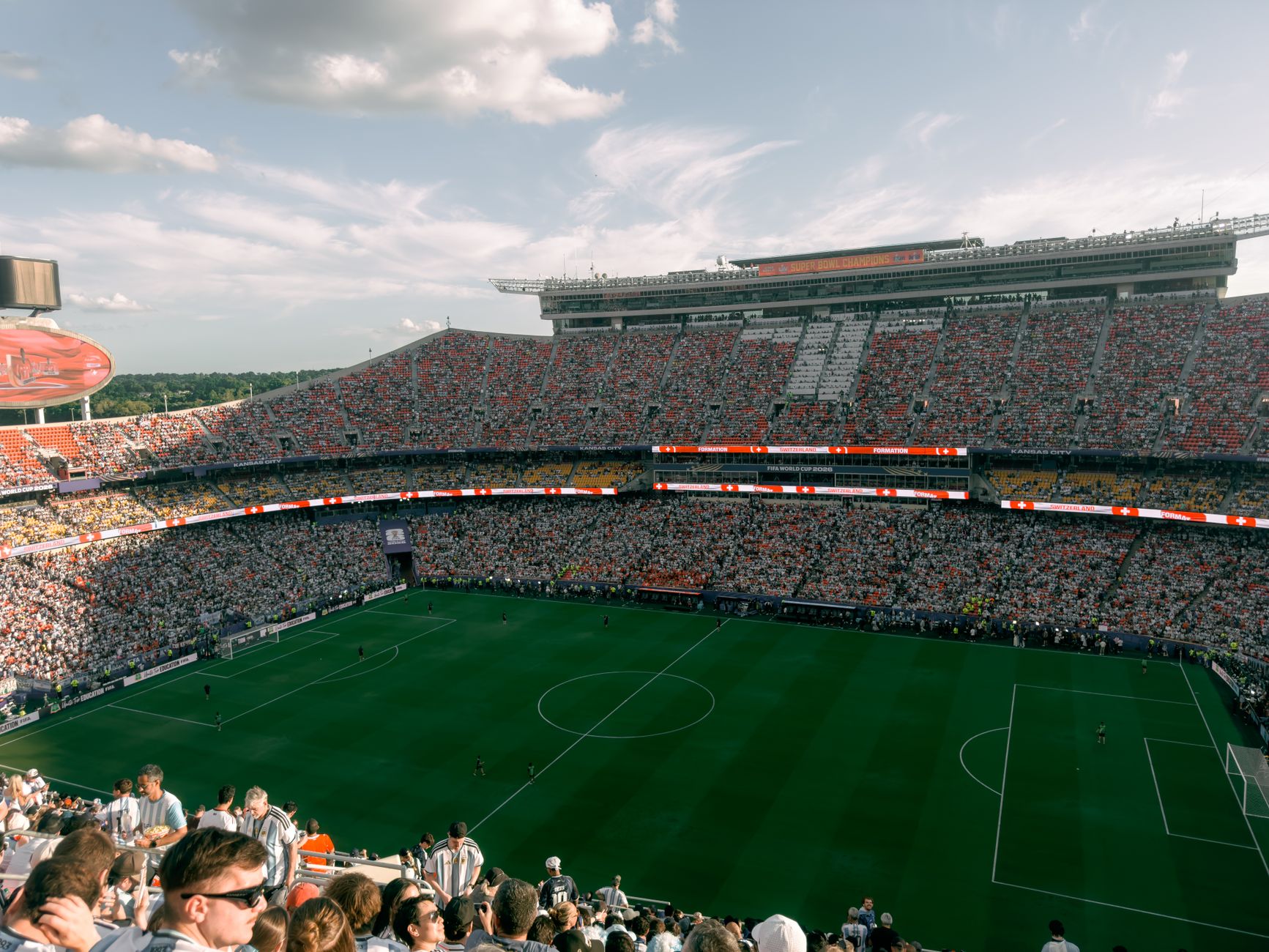
However, an in-depth analysis of the internal mechanics reveals deep structural flaws that have alarmed confederation executives. By ceding equity and board seats to private equity firms, FIFA would effectively contractually obligate itself to prioritize commercial yield, potentially leading to inflated ticket prices, aggressively paywalled broadcast models, and an unmanageable expansion of match calendars. Furthermore, the involvement of CONCACAF—the co-host region for 2026—is particularly telling. Organizers who have spent years overseeing local infrastructure transformations, as detailed in How America's Greatest Stadiums Transformed for World Cup 2026, fear that privatising tournament operations will strip host cities of promised municipal benefits and local commercial autonomy.
The financial mechanics of the proposed deal reflect a broader trend of private capital aggressively entering professional sports, yet its application to an international governing body is unprecedented. Analysts point out several key friction points that have fueled the opposition from UEFA, AFC, and CONCACAF:
Loss of Operational Control: Private equity investors typically demand veto power over major operational decisions, broadcasting negotiations, and venue selection criteria to protect their yield.
Distortion of Revenue Distribution: Fixed financial returns promised to private funds could starve grassroots development programs during unexpected global economic downturns.
Disruption to Continental Competitions: Privately backed FIFA ventures are incentivized to continuously expand FIFA-branded tournaments, directly cannibalizing continental events like the UEFA Euros, AFC Asian Cup, and CONCACAF Gold Cup.
Governance Dilution: Decision-making authority would shift away from the elected FIFA Council and toward non-transparent corporate boardrooms driven purely by return on investment (ROI).
4. Expert Perspective
The swiftness and severity of the joint pushback from UEFA, AFC, and CONCACAF reflect deep-seated concerns among veteran sports executives and governance specialists. Prominent football analysts reporting for major global outlets, including BBC Sport, have noted that this rare alliance between Europe, Asia, and North America represents a critical tipping point that deprives Infantino of his typical strategy of dividing confederations against one another to secure voting majorities.
Legal scholars specializing in international sports governance emphasize that FIFA’s statutes specifically designate the World Cup as a collective global asset intended to benefit the entirety of the sport, rather than a corporate vehicle to be monetized for private capital appreciation. Leading sports economists warn that private equity funds operate under strict time horizons, usually seeking to exit investments within five to seven years after extracting maximum value—a timeframe fundamentally incompatible with the decades-long development cycles required for sustainable football growth in emerging nations.
Fan advocacy organizations across all three objecting continents have also voiced strong support for the confederations' stand. Independent supporters' trusts argue that privatising World Cup rights would accelerate the pricing-out of traditional match-going supporters, turning the sport's showpiece event into an exclusive playground for corporate hospitality entities. The prevailing sentiment among governance experts is clear: allowing financial funds direct influence over tournament structures threatens to dismantle the fragile socio-economic equilibrium that has sustained international football for over a century.
5. Impact & Implications
The geopolitical ramifications of this impasse are immense and threaten to disrupt preparations across the entire international football ecosystem. On a political level, the rift creates a profound deadlock within the FIFA Council. UEFA, AFC, and CONCACAF collectively represent a decisive majority of both commercial influence and competitive weight. If these three bodies maintain their unified opposition, Infantino will lack the institutional consensus required to push through any statutory changes or ratify major commercial partnerships during upcoming executive congresses.
On the ground, this governance battle intersects directly with the logistically complex preparations underway for 2026. National teams and host city organizing committees across North America are operating amid heightened operational uncertainty. From university-based elite training hubs highlighted in UT Austin Longhorns Summer 2026 News: World Cup Connection to metropolitan stadium authorities, stakeholders are anxious to know whether local revenue agreements and ticketing structures will be altered by overarching corporate mandates from Zurich.
Furthermore, the conflict threatens to exacerbate the growing competitive gap between elite football nations and developing federations. While private equity capital promises immediate cash payouts that are tempting for cash-strapped smaller associations, the long-term cost—in the form of paywalled broadcasts and reduced central distribution funds—could permanently entrench financial inequality, making it increasingly difficult for nations outside the established elite to compete on the global stage.
6. Looking Ahead
The immediate road ahead is fraught with diplomatic maneuvering as the global football community prepares for the next formal gatherings of international sports leadership. FIFA official communications, monitored closely on platforms like FIFA.com, indicate that emergency consultation sessions are being scheduled in an attempt to de-escalate tensions and present a unified facade ahead of upcoming regional meetings. However, sources close to UEFA and CONCACAF indicate that neither organization is willing to compromise on the core principle of keeping World Cup commercial rights under strictly public, non-privatised governance.
In the coming months, several crucial milestones will dictate whether this governance crisis resolves amicably or devolves into unprecedented legal warfare:
The FIFA Extraordinary Council Session: Where Infantino is expected to present a revised, watered-down commercial proposal in an effort to break the confederation blockade.
Regional Confederation Congresses: UEFA, AFC, and CONCACAF will hold individual summit meetings to formalize binding bloc-voting agreements against privatisation statutes.
Legal Challenges at the Court of Arbitration for Sport (CAS): Should FIFA attempt to force through private equity deals without required confederation approvals, formal legal injunctions are highly likely.
Sponsorship and Media Rights Auctions: Commercial partners preparing to bid on post-2026 international broadcast packages may pause negotiations until governance stability is restored.
7. Conclusion
The fierce opposition mounted by UEFA, AFC, and CONCACAF against Gianni Infantino’s World Cup privatisation agenda represents a defining moment in modern sports history. It is a battle that goes far beyond executive politics or administrative turf wars; it is a fundamental struggle over the soul, purpose, and ownership of international football. As private capital continues to swallow up domestic clubs and leagues across the globe, the FIFA World Cup has stood as the final bastion of international athletic competition managed under a public mandate.
By uniting against the commercialization and privatisation of the game's crown jewel, the three confederations have sent an unmistakable signal to FIFA leadership: international football cannot be treated as a venture capital portfolio. As the clock ticks down toward the historic expanded tournament in North America, preserving the delicate balance between commercial growth and democratic, public stewardship remains the single most important challenge facing the world's most popular sport. The outcome of this high-stakes showdown will echo far beyond the 2026 tournament, shaping the structure of global athletics for generations to come.
FIFA World Cup privatisationGianni Infantino UEFA conflictCONCACAF AFC FIFA disputeWorld Cup 2026 governanceprivate equity in footballWorld Cup commercial rights