Lionel Messi's performance at the FIFA World Cup 2026 is a footballing masterpiece of tactical genius, showing how the maestro has evolved beyond his Qatar coro
Introduction: From the Weight of Lusail to the Canvas of North America
Four years ago under the golden, shimmering canopy of the Lusail Iconic Stadium in Qatar, Lionel Messi finally touched the sky. It was a moment of pure, unadulterated release—a coronation that felt more like an exorcism of decades of national anxiety, comparisons to Diego Maradona, and the crushing weight of personal expectation. In Qatar, Messi did not just play football; he dragged an entire nation across the finish line through sheer force of will, scoring seven goals, converting crucial penalties, and solidifying his status as the undisputed greatest of all time. It was the crowning achievement of a legendary career, a final, dramatic box ticked in a resume that lacked nothing else.
Yet, as the FIFA World Cup 2026 descended upon the United States, Mexico, and Canada, the footballing world realized that Qatar was merely the climax of his struggle, while this tournament has become the exhibition of his art. Playing with the serene freedom of a man who has nothing left to prove, Messi has transformed Argentina’s campaign into a moving, living masterpiece. Free from the suffocating pressure that characterized his previous four World Cup appearances, the 39-year-old playmaker is operating in a state of pure footballing nirvana, orchestrating matches not with explosive bursts of speed, but with an unparalleled cerebral mastery of space and time.
Background & Context: The Evolution of a Maestro
When Messi hoisted the trophy in December 2022, many assumed it was the perfect curtain call. His subsequent move to Inter Miami in Major League Soccer was widely interpreted as a transition into the twilight of his career—a comfortable, less demanding environment to wind down his playing days. However, those who expected his competitive fire to dim underestimated both his love for the Albiceleste and his unique physiological longevity. Under the careful stewardship of Lionel Scaloni, Messi has been integrated into a highly functional, energetic ecosystem designed to maximize his remaining years at the international level.
The landscape of the 2026 World Cup is vastly different from any tournament that preceded it. With 48 teams competing across a sprawling continent, the sheer physical demands on players have reached an all-time high. As the tournament gripped the host nations, it became a cultural phenomenon of unprecedented scale, dominating headlines and capturing the attention of millions of fans, with some economic analysts noting that the World Cup 2026 Costs Employers $11.7 Billion in Losses due to the global distraction of mid-day matches. Amidst this high-octane, chaotic environment, Messi's calm, measured presence has stood out as a stark contrast to the relentless athleticism of modern football.
Unlike the squad of 2022, which was fueled by an intense, almost desperate desire to win the trophy for their captain, the 2026 iteration of Argentina is a group of established champions. Players like Enzo Fernández, Alexis Mac Allister, and Julián Álvarez are no longer young prospects eager to please their idol; they are seasoned European stars who have won the highest honors in club football. This shift in squad dynamics has liberated Messi. He is no longer required to be the savior of every possession; instead, he has become the director of a highly sophisticated footballing orchestra.
Key Details & Analysis: Tactical Genius in the Half-Spaces
Tactically, Messi’s role in this tournament is a fascinating study in economic efficiency. He is no longer the false nine of his Barcelona youth, nor is he the cutting-inside winger of his prime. In 2026, Scaloni has deployed him as an advanced playmaker who spends large portions of the match walking, scanning, and analyzing the opposition's defensive block. According to tracking data from FIFA.com, Messi covers less distance than almost any outfield player in the tournament, yet his impact per touch is higher than at any point in his career.
He operates primarily in the right half-space, occupying a zone that coaches refer to as the "corridor of uncertainty." When Argentina are out of possession, his teammates shift into a compact mid-block, effectively defending with ten men to preserve Messi's energy. Once possession is regained, the transition is instantaneous. The ball is funneled to Messi, who uses his immaculate first touch to freeze defenders. His ability to thread defense-splitting passes to overlapping full-backs or runners like Lautaro Martínez has become Argentina's primary offensive weapon.
The Statistics of a Genius
Key Passes per 90: 4.2 (Highest in the tournament)
Passing Accuracy in the Final Third: 89.4%
Expected Assists (xA): 3.8 across the group and early knockout stages
Dribbles Completed: 2.1 per match (focused on short, tight-space escapes rather than long runs)
What makes this performance a "masterpiece" rather than a standard campaign is the aesthetic quality of his play. In previous tournaments, Messi's brilliance was often born of necessity—individual moments of magic designed to rescue a struggling team. In 2026, his play is characterized by a deliberate, rhythmic elegance. He dictates the tempo of matches, slowing the game down to a walking pace before suddenly accelerating the play with a single, perfectly weighted pass. It is a masterclass in spatial awareness, demonstrating that in football, the mind is ultimately more powerful than the body.
Expert Perspective: The Pundits and the Public React
The global sports media has ran out of superlatives to describe Messi’s performances in North America. Writing for the Washington Post, prominent journalists have noted that while Qatar was an epic of struggle and triumph, the 2026 tournament feels like an artist painting his final, perfect canvas. Football analysts across major networks like ESPN have marveled at his ability to remain the most influential player on the pitch while physical attributes naturally decline with age.
"We are watching a player who has completely solved the game of football," remarked one prominent European pundit during a post-match broadcast. "He doesn't need to run because he is already where the ball needs to be. He is playing three moves ahead of everyone else on the pitch. It is beautiful, almost hypnotic to watch." This sentiment is shared by opposing managers, who find themselves in a tactical paradox: if they press Messi, they leave space for Argentina's dynamic runners; if they drop off, he punishes them with his surgical passing range.
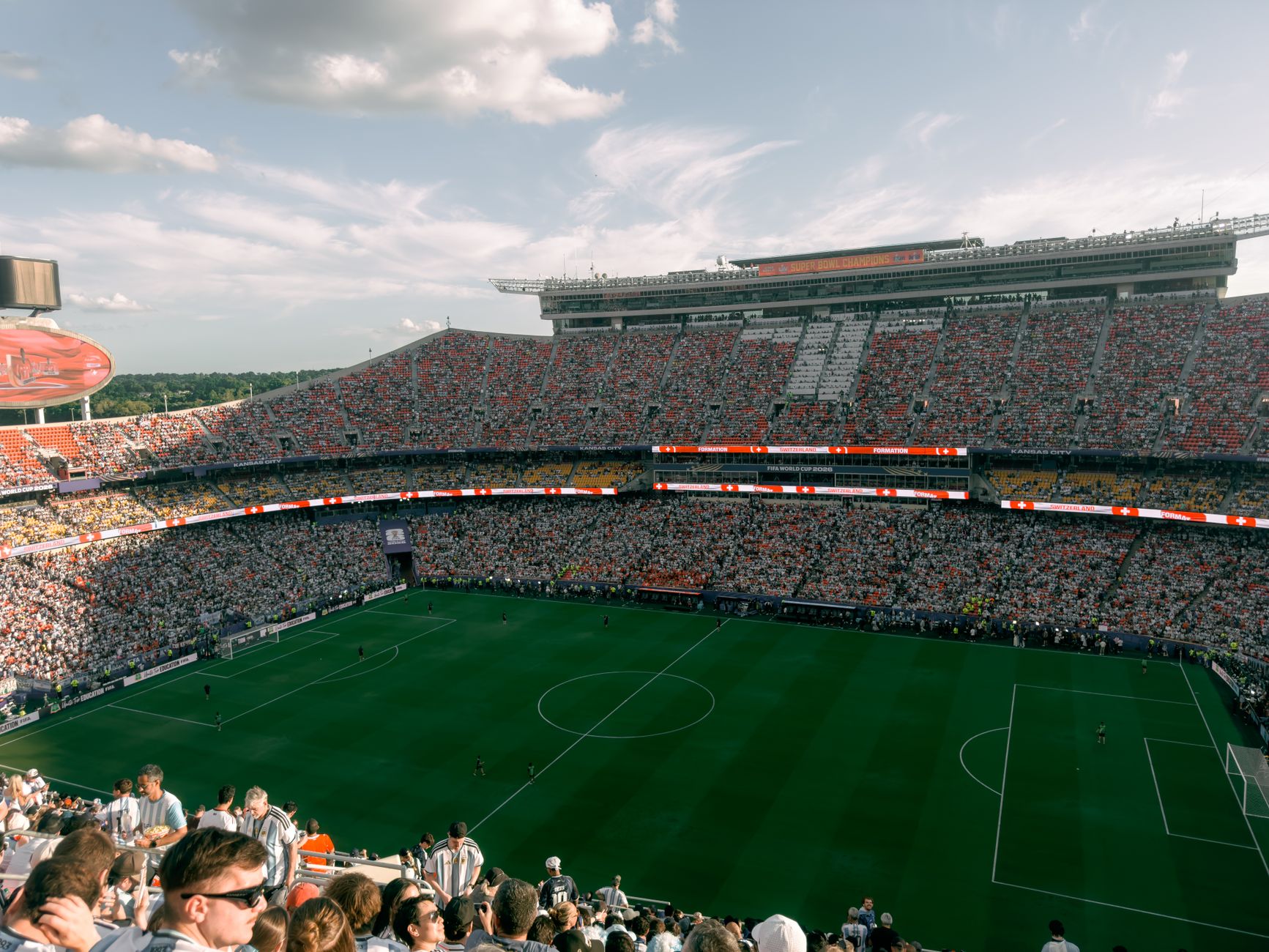
Fan reaction has reached a fever pitch across the host cities. In stadiums from Atlanta to Los Angeles, crowds have been filled not just with Argentinian supporters, but with neutral fans eager to witness what is likely the final World Cup run of the game's greatest icon. Every touch is met with a collective gasp, and every successful pass is celebrated like a goal. The atmosphere is less of a tense competitive fixture and more of a celebration of footballing royalty, a collective acknowledgement that we may never see a player of this caliber again.
Impact & Implications: Shifting the Balance of Power
Messi’s sublime form has kept Argentina at the absolute pinnacle of international football, showing no signs of the post-championship hangover that has plagued previous World Cup winners. While other traditional powerhouses have struggled to find consistency in this expanded, highly competitive tournament, Argentina has navigated their fixtures with a sense of calm authority. They have avoided the chaotic, high-scoring matches that have characterized other brackets of the tournament.
The implications of this tournament extend far beyond the pitch. Messi's presence in the United States has accelerated the growth of soccer in North America to unprecedented levels. His masterclass on the world stage has validated the quality of players playing in non-European leagues, challenging the traditional Euro-centric narrative of footballing excellence. For Argentina, a successful defense of their crown would cement this generation as one of the greatest dynasties in the history of international football, matching the achievements of Pelé’s Brazil and Spain's golden generation of 2008-2012.
Looking Ahead: The Final Brushstrokes of the Master
As the tournament enters its deep knockout stages, the difficulty level will inevitably rise. Argentina will face tactical setups specifically designed to nullify Messi’s influence, utilizing physical man-marking and low defensive blocks to deny him space in the final third. However, as he has shown throughout his career, stopping Messi is a task easier said than done. His versatility allows him to drop even deeper into midfield, acting as a deep-lying playmaker alongside Enzo Fernández if the space between the opposition midfield and defense is closed off.
The upcoming matches promise to be tactical chess matches of the highest order. Argentina’s coaching staff will need to carefully manage Messi's minutes to ensure he remains fresh for the high-intensity moments of the semi-finals and finals. The world will be watching to see if his physical reserves can hold up under the grueling travel schedule of a North American summer, but if his performances so far are any indication, he is more than prepared for the challenge.
Predictions for the remainder of the tournament heavily favor the Albiceleste, largely because of the psychological advantage Messi provides. Opponents do not just play against Argentina; they play against the aura of Lionel Messi. His teammates operate with immense confidence, knowing that as long as they do their defensive duties, their captain will find a way to unlock the opposition. It is this belief that makes Argentina the team to beat as the tournament approaches its grand finale.
Conclusion: The Ultimate Legacy of the Artist
In the final analysis, the comparison between Qatar 2022 and North America 2026 is a comparison between achievement and expression. Qatar was a historical necessity—a task that Messi had to complete to satisfy the demands of his country and his own legacy. It was an epic written in sweat, tension, and relief. This 2026 World Cup, however, is a gift to the game of football. It is an exhibition of pure, unburdened genius, played by a man who has conquered his mountains and now simply wishes to enjoy the view.
When the history books are written, Messi's 2026 campaign will be remembered as his masterpiece. It is the tournament where he proved that football is not merely a game of physical dominance, speed, and endurance, but a game of intellect, vision, and art. Whether Argentina lifts the trophy once again or falls short in the final matches, Lionel Messi has already painted his definitive portrait on the global stage, leaving an indelible mark on the sport that will be studied, admired, and cherished for generations to come.
Lionel Messi World Cup 2026Messi Argentina 2026 tactical analysisFIFA World Cup 2026 newsLionel Messi legacyArgentina national football team 2026Messi vs Maradona legacy World Cup