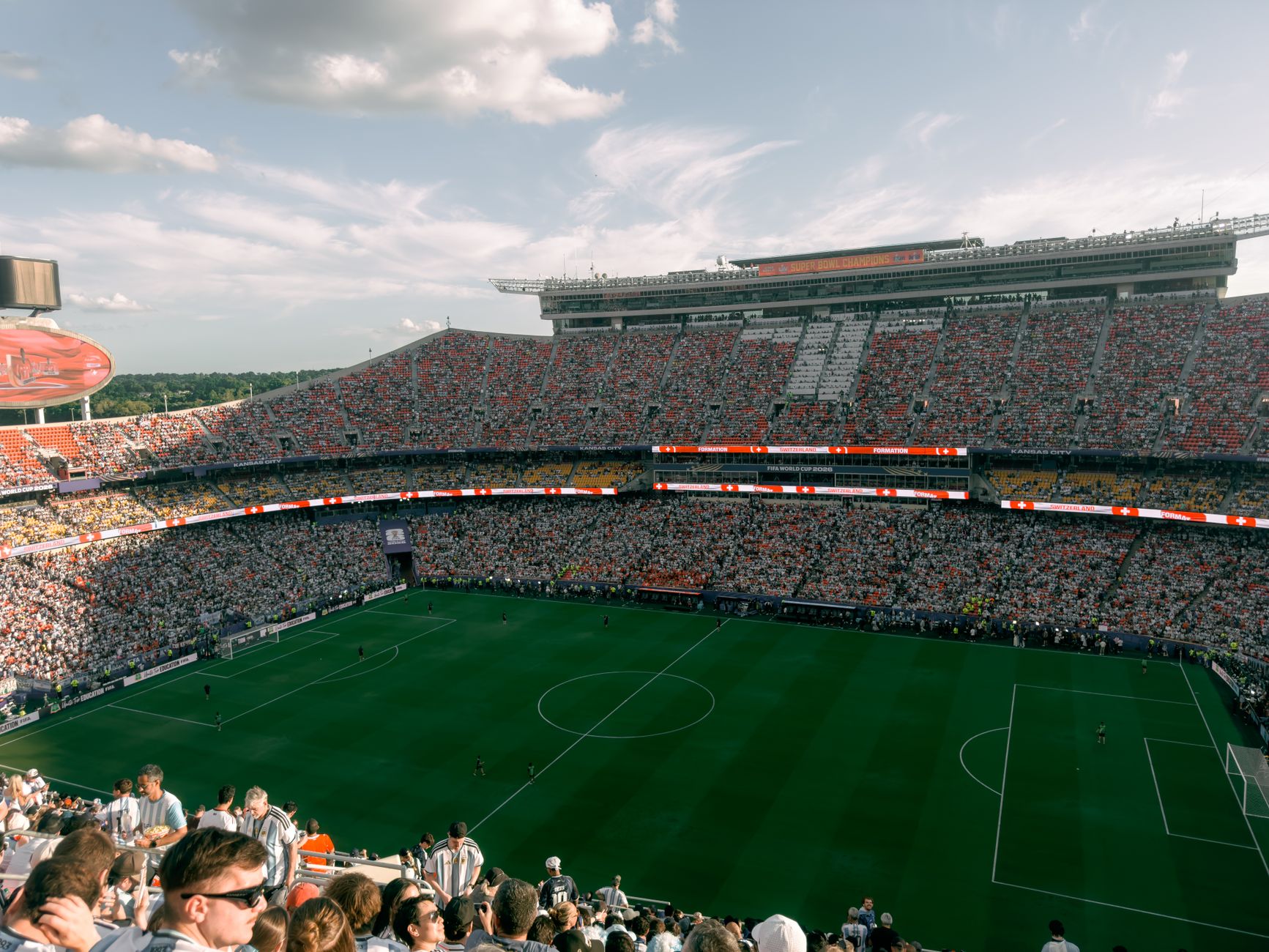
All You Need To Know About The FIFA World Cup 2026 Final Venue | In Pictures News18
Introduction: The World’s Greatest Stage Awaits
The eyes of the global sporting community are officially fixed on the summer of 2026. In an announcement that sent shockwaves of excitement through the international football landscape, FIFA confirmed that the final of the expanded, historic 48-team FIFA World Cup 2026 will take place at the iconic MetLife Stadium in East Rutherford, New Jersey. Officially designated as the "New York New Jersey Stadium" for the duration of the tournament to comply with FIFA's strict commercial and non-sponsor guidelines, this colossal venue will host the pinnacle of world football on Sunday, July 19, 2026. The decision caps off years of intense bidding, speculation, and anticipation, positioning the metropolitan tri-state area at the absolute center of the sporting universe.
For football purists and casual fans alike, the selection of this venue represents a fascinating convergence of American sporting infrastructure and global football culture. As the tournament expands to include more teams, more host cities, and an unprecedented level of logistical complexity across three host nations—the United States, Canada, and Mexico—the final match requires a venue capable of handling immense global scrutiny. The New York New Jersey Stadium promises to deliver an unparalleled spectacle, offering a backdrop that combines the glittering skyline of New York City with the state-of-the-art facilities of East Rutherford. This article provides a comprehensive, deeply analytical look at everything you need to know about the venue that will crown the next world champion.
To fully appreciate the gravity of this selection, one must understand the sheer scale of the 2026 tournament. With 104 matches played over 39 days, this iteration of the World Cup will be the largest and most diverse in history. The final at MetLife Stadium will not just be a game; it will be a cultural phenomenon. From its structural engineering marvels to its historical soccer milestones, and from the complex transit systems to the massive pitch modifications required by FIFA, we break down every element that makes this venue a worthy host for the final whistle of the 2026 FIFA World Cup.
Background and Context: The Path to the Final Designation
Opened in 2010 to replace the legendary Giants Stadium, MetLife Stadium was constructed at a staggering cost of approximately $1.6 billion, making it one of the most expensive sporting venues ever built at the time. Designed as a joint venture to house both of New York's National Football League (NFL) franchises—the Giants and the Jets—the stadium has spent over a decade hosting high-profile American football games, massive concert tours, and historic international soccer friendlies. However, securing the crown jewel of the 2026 World Cup was far from a foregone conclusion. The bidding war for the final was a fierce, multi-year battle that pitted the New York-New Jersey bid against heavy competition from Dallas (AT&T Stadium) and Los Angeles (SoFi Stadium).
Dallas offered a climate-controlled, retractable-roof stadium with a massive seating capacity and central geographic convenience, while Los Angeles boasted the ultra-modern luxury of SoFi Stadium in the heart of the entertainment capital of the world. Yet, the local organizing committee for New York and New Jersey leveraged several critical advantages. The region's unmatched international diversity, its status as a premier global media hub, and its highly favorable timezone for European, African, and South American television broadcasts ultimately won over FIFA’s leadership. The decision to award the final to the New York New Jersey Stadium reflects FIFA's desire for a globally accessible, iconic location that can seamlessly connect with fans across every continent.
This is not the first time the Meadowlands sports complex has stepped onto the global soccer stage. The old Giants Stadium hosted matches during the 1994 FIFA World Cup, including the dramatic semifinal clash between Italy and Bulgaria, as well as several matches during the 1999 Women's World Cup. More recently, the current stadium hosted the final of the 2016 Copa América Centenario, a historic tournament that saw Chile defeat Argentina in a tense penalty shootout. That fateful night is etched into football history as the match that prompted a devastated Lionel Messi to briefly retire from international football. The stadium's rich history of hosting high-stakes international matches serves as a direct bridge to the modern era, where players will look to emulate or transcend past legends. For a deeper look into how the legendary Argentine playmaker has transitioned from that heartbreaking night in New Jersey to his modern career status, explore our detailed feature on Lionel Messi's 2026 World Cup Masterpiece: Beyond Qatar.
Key Details and Analysis: Technical Specifications and Transformations
To meet the rigorous demands of hosting a FIFA World Cup Final, the New York New Jersey Stadium is undergoing a series of major structural and operational transformations. Currently, the stadium boasts a seating capacity of roughly 82,500 for NFL games, featuring a modern, open-air design wrapped in outer aluminum louvers that change color depending on which team is playing. However, FIFA's strict regulations regarding pitch dimensions and playing surfaces have forced the venue’s management to undertake some of the most complex engineering projects in the stadium's history.
The most significant modification involves the playing surface itself. Throughout its existence, MetLife Stadium has utilized synthetic turf (specifically FieldTurf Core), which has frequently drawn criticism from both NFL players and international soccer stars concerned about injuries. FIFA mandates that all World Cup matches must be played on natural grass. To achieve this, the venue is installing a highly sophisticated, temporary natural grass system. This is not simply a matter of laying sod over the existing turf; it requires the installation of a state-of-the-art drainage, vacuum, and ventilation system beneath the grass, alongside specialized grow-light technology to ensure the pitch remains in pristine, world-class condition despite the harsh summer heat and the deep shadows cast by the stadium's towering stands.
Furthermore, the dimensions of a standard American football field are narrower than the international soccer pitch width required by FIFA. To accommodate the wider soccer field without compromising sightlines, workers must temporarily remove several rows of seats in the lower bowl, particularly around the corners of the field. This adjustment will slightly reduce the overall capacity for the final, bringing it closer to 80,000 spectators, but it will guarantee a playing area that complies perfectly with international standards. These modifications represent a massive financial and logistical undertaking, but they ensure that the players on July 19, 2026, will perform on a pitch that is technically flawless.
From a logistical standpoint, the venue's location in East Rutherford presents both opportunities and challenges. While it sits just five miles west of New York City, transporting tens of thousands of international fans to and from the Meadowlands requires a highly coordinated transit plan. The New Jersey Transit system, via the Meadowlands Rail Line, will serve as the primary artery, connecting spectators from major hubs like Secaucus Junction and New York Penn Station directly to the stadium's front gates. Local authorities are also planning dedicated bus rapid transit corridors, enhanced rideshare zones, and extensive security screening perimeters to manage the massive influx of visitors safely and efficiently.
Expert Perspective: Tactical Environments and Global Reactions
The selection of an open-air northeastern stadium for a mid-July final introduces unique environmental and tactical variables that teams must prepare for. Pundits and coaches have already begun discussing the potential impact of the New York-New Jersey summer climate. July in the metropolitan area is notorious for high humidity and temperatures that can easily exceed 90 degrees Fahrenheit (32 degrees Celsius). Unlike the air-conditioned, dome environments of Dallas or Houston, the open-air design of the New York New Jersey Stadium means players will be fully exposed to the elements. This could favor teams that rely on high-tempo, physical play, or conversely, demand a more conservative, possession-based tactical approach to conserve energy over 90 or 120 minutes of intense football.
According to tactical analysts at major sports networks like Sky Sports, the environmental conditions could play a massive role in squad rotation and in-game management during the knockout stages leading up to the final. "Playing a World Cup final in the humid summer heat of the US Northeast requires a level of physical conditioning and squad depth that will test even the world's elite teams," notes one prominent European football analyst. "Coaches cannot simply rely on their starting eleven; they will need a tactically flexible squad capable of adapting to fluctuating weather conditions, heavy pitch surfaces, and intense travel schedules across multiple time zones."
Fan and media reactions to the venue announcement have been overwhelmingly positive, though not without some local debate. While New Jersey residents take immense pride in the physical location of the stadium, the global marketing heavily emphasizes the "New York" brand. This dual identity has sparked friendly local banter, but on a global scale, the allure of New York City remains an unmatched draw. For fans traveling from South America, Europe, and Asia, the opportunity to combine a World Cup final with a visit to one of the world's most famous cultural, culinary, and historical cities is a dream scenario. The local organizing committees are capitalizing on this by planning massive fan zones across both states, including major hubs in Manhattan's Central Park and along the scenic waterfront of Jersey City.
Impact and Implications: Economic and Cultural Footprints
The economic impact of hosting the FIFA World Cup 2026 Final is projected to be staggering, bringing billions of dollars in economic activity to the New York-New Jersey region. Hotels, restaurants, public transit systems, and local businesses are preparing for