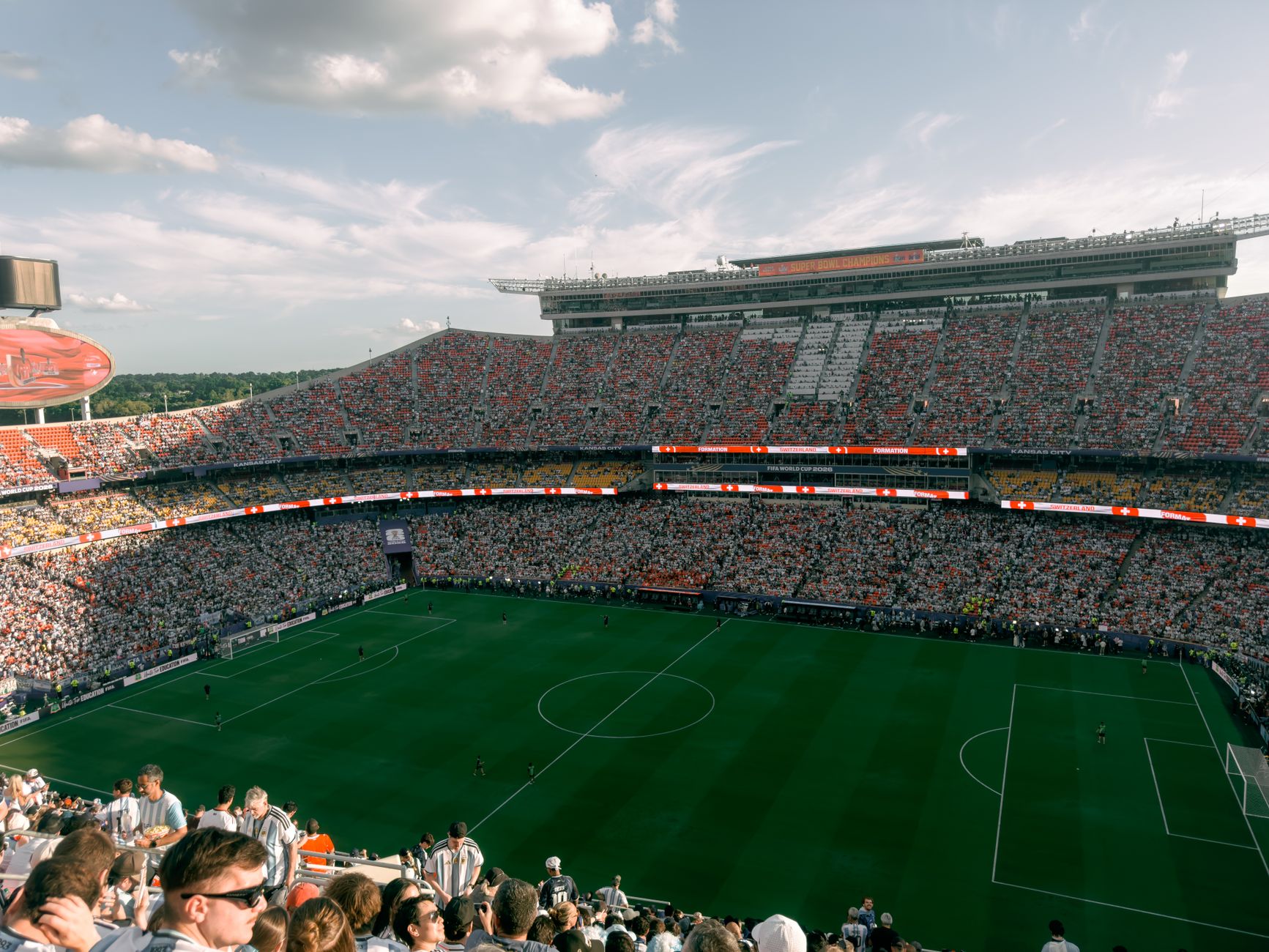
A historic $4 million luxury ticket package has been sold for the FIFA World Cup 2026 Final at MetLife Stadium, marking a new era of sports entertainment.
Introduction: The Dawn of the Multi-Million Dollar Matchday
The intersection of elite global sports and Hollywood-style luxury has officially reached its zenith. As anticipation builds for the FIFA World Cup 2026, a groundbreaking transaction has sent shockwaves through both the sporting and entertainment worlds. According to a bombshell report by The Hollywood Reporter, an ultra-exclusive hospitality ticket package for the upcoming World Cup Final has been sold for an astronomical, record-shattering $4 million. This transaction marks a historic milestone in the commercialization of international football, signaling that the upcoming tournament in North America will not merely be a sporting event, but the most lucrative entertainment spectacle in human history.
The historic purchase, secured by an undisclosed high-net-worth individual or corporate entity, grants unprecedented access to the tournament’s crowning match on July 19, 2026, at MetLife Stadium in East Rutherford, New Jersey. In a country accustomed to the glitz, glamour, and high price tags of the Super Bowl, this transaction elevates the FIFA World Cup to a completely different stratosphere of luxury. As the United States, Canada, and Mexico prepare to co-host a expanded 48-team tournament, this eye-watering sale serves as a definitive statement: the 2026 World Cup will redefine the boundaries of sports hospitality, entertainment, and corporate engagement on a global scale.
Background and Context: The Evolution of World Cup Hospitality
To understand the sheer magnitude of a $4 million ticket package, one must look at the historical trajectory of VIP hospitality at major sporting events. Historically, the FIFA World Cup was a tournament defined by the passion of the everyday working-class fan. Decades ago, securing a seat at a World Cup Final required patience, luck in a paper ballot, and a modest financial commitment. However, as the global appeal of football exploded in the late 20th and early 21st centuries, FIFA recognized the immense revenue potential locked within corporate hospitality. By the time the tournament arrived in South Africa in 2010, followed by Brazil in 2014 and Russia in 2018, corporate suites and premium seating had become multi-million dollar revenue drivers for the governing body.
The 2022 World Cup in Qatar pushed the boundaries of luxury even further, utilizing state-of-the-art stadiums with five-star hotel-style suites overlooking the pitch. Yet, the North American market represents an entirely different beast. The United States is the spiritual home of the modern sports franchise model, where stadium architecture is designed around premium clubs, luxury loge boxes, and high-end culinary experiences. With MetLife Stadium selected to host the final, the local organizing committee and FIFA have tapped into the immense wealth of the New York-New Jersey metropolitan area, a region home to Wall Street giants, international conglomerates, and Manhattan’s elite. This environment has created a perfect storm, allowing ticket packages to command prices that would have been unimaginable just a decade ago.
Furthermore, the 2026 tournament is set to be the largest in history, featuring 104 matches across 16 iconic host cities. This massive expansion has forced FIFA to scale up its commercial operations to unprecedented heights. By partnering with premium hospitality agencies, the governing body has designed tiered packages that cater to the world's ultra-wealthy. The $4 million sale reported by The Hollywood Reporter is the crown jewel of this strategy, proving that the demand for elite, once-in-a-lifetime experiences in North America is virtually limitless. For more context on how this tournament is breaking records across the board, fans can explore the 2026 FIFA World Cup: Stat-Stuffed Headlines and Expert Analysis to understand the economic and athletic scale of this historic event.
Key Details and Analysis: Inside the $4 Million Package
While the identity of the buyer remains closely guarded under non-disclosure agreements, details regarding what a $4 million package actually entails have begun to emerge. This is not simply a row of premium seats near the halfway line; it is an all-encompassing, ultra-luxury experience designed to cater to every conceivable desire of the world’s elite. Industry insiders suggest the package includes a private, custom-designed luxury penthouse suite at MetLife Stadium, capable of hosting a large group of guests in complete privacy. The suite is expected to feature bespoke interior design, private curation of fine dining by Michelin-starred chefs, and a continuous flow of the world’s most exclusive vintage wines and spirits.
Beyond the match itself, the package extends far past the stadium walls. It is understood to include private jet transfers to and from New York, luxury limousine escorts bypass-routing stadium traffic, and five-star penthouse accommodations in Manhattan. Guests will also enjoy unprecedented behind-the-scenes access, including pre-match pitch-side walks, meet-and-greets with living legends of the sport, and entry to exclusive, invite-only gala events hosted by FIFA and major entertainment figures. Crucially, the package also includes premium access to the highly anticipated entertainment elements of the final, which are being designed to rival the iconic Super Bowl halftime shows. For those wondering how the entertainment spectacle will unfold, detail-oriented guides are already emerging on How to Watch 2026 World Cup Final & Halftime Show Live, highlighting the seamless integration of sport and pop culture.
From an analytical standpoint, this sale represents a paradigm shift in how major sporting events are monetized. Historically, sports franchises and governing bodies relied heavily on domestic television rights and general admission ticket sales. In the modern era, however, the "whales" of corporate hospitality generate a disproportionate share of matchday revenue. By selling a single package for $4 million, FIFA can offset lower-priced tickets in the upper decks, theoretically maintaining some level of accessibility for ordinary fans while maximizing overall profit margins. It is a highly calculated economic strategy that treats the World Cup Final not just as a game, but as a premium luxury asset class, akin to high-end real estate or rare art.
Expert Perspective: The "Super Bowl-ization" of Global Football
Sports marketing experts and industry analysts have watched the sale of this multi-million dollar package with a mixture of awe and caution. Many pundits point to this transaction as the ultimate realization of the "Super Bowl-ization" of global football. For decades, the NFL's championship game has been the gold standard for corporate hospitality, where the game itself often feels secondary to the commercials, the halftime show, and the celebrity-studded suites. By bringing the World Cup Final to New York, FIFA is deliberately importing this American entertainment model to the global stage, aiming to capture the cultural zeitgeist in a way that transcends traditional sports broadcasting.
According to prominent sports business consultants, this trend is a double-edged sword. On one hand, the influx of capital from Hollywood, Wall Street, and Silicon Valley elevates the production values of the tournament to levels never seen before. It funds state-of-the-art stadium renovations, enhances the fan festival experiences across North America, and provides FIFA with the capital necessary to develop grassroots football globally. On the other hand, traditional football purists argue that this hyper-commercialization threatens to alienate the core fanbase that forms the lifeblood of the sport. When a single suite costs more than the lifetime earnings of an average supporter, there is a very real risk of creating a sterile, corporate atmosphere inside the stadium, devoid of the organic passion and deafening chants that define World Cup history.
Despite these concerns, the momentum behind luxury sports tourism shows no signs of slowing down. Major broadcasters and media outlets, including ESPN, have noted that the demand for high-end hospitality at the 2026 World Cup is pacing significantly ahead of previous tournaments. The allure of being seen at the World Cup Final in New York has captured the imagination of the global elite, turning the event into the ultimate status symbol. As one prominent sports marketing executive remarked, "In 2026, MetLife Stadium won't just be a football venue; it will be the most exclusive red carpet on the planet."
Impact and Implications: A New Benchmark for Global Sports
The sale of this $4 million ticket package has profound implications that stretch far beyond the boundaries of MetLife Stadium. First and foremost, it sets an entirely new financial benchmark for future mega-events. The organizers of the Los Angeles 2028 Olympic Games, as well as future World Cup host nations, will undoubtedly look at this transaction as proof of concept. The willingness of high-net-worth individuals to pay astronomical sums for curated, ultra-luxury experiences will encourage organizing committees to allocate even more stadium real estate to premium suites and exclusive clubs, potentially altering the physical design of future sports arenas worldwide.
Furthermore, this commercial frenzy highlights the massive stakes on the pitch. The teams that navigate the grueling tournament bracket to reach the final will be playing under an unprecedented spotlight of wealth and celebrity. The pressure on the players will be immense, knowing that their performances are being watched by an audience that includes the most influential figures in global business, tech, and entertainment. Imagine the atmosphere if the final features a legendary matchup, reminiscent of the high-stakes drama seen in historic semi-finals like the Argentina vs England 2-1 Highlights & Goals | FIFA World Cup 2026 Semi. The contrast between the raw, historic football rivalries on the pitch and the ultra-modern luxury in the stands will make for an unforgettable, highly dramatic narrative.
For FIFA, the success of these high-end hospitality sales validates their decision to expand the tournament and bring it to North America. The revenue generated from these premium packages will bolster FIFA's financial reserves, allowing the organization to invest heavily in the growth of the sport in emerging markets. It also strengthens the commercial footprint of soccer in the United States, proving to domestic sponsors and broadcasters that the beautiful game can generate premium revenue streams that rival, or even surpass, established American sports leagues like the NFL, NBA, and MLB.
Looking Ahead: The Countdown to MetLife Stadium 2026
As the countdown to the summer of 2026 continues, the local organizing committees in New York and New Jersey are working tirelessly to ensure that MetLife Stadium is prepared to host this historic event. Significant infrastructure upgrades are already underway, designed to meet FIFA’s strict stadium requirements and to accommodate the influx of high-profile visitors. From upgrading transit links between Manhattan and the Meadowlands to installing a state-of-the-art natural grass pitch over the stadium's traditional artificial turf, every detail is being meticulously managed to ensure a flawless tournament experience.
In the coming months, FIFA is expected to roll out subsequent phases of ticket sales, including the highly anticipated general public ballots. While the multi-million dollar corporate suites have captured the headlines, the vast majority of the 80,000-plus seats at MetLife Stadium will be occupied by passionate fans from every corner of the globe. Balancing the needs of these everyday supporters with the demands of the ultra-wealthy corporate sponsors will be one of the host city's greatest logistical and cultural challenges. Security operations will also be scaled up to unprecedented levels, coordinating local, state, and federal agencies to protect the high-profile dignitaries and celebrities attending the final.
Meanwhile, other host cities across North America are watching the New York-New Jersey market closely. Cities like Los Angeles, Dallas, and Miami are preparing their own unique hospitality offerings, aiming to attract the same caliber of international jet-setters. As national teams battle through the qualifying rounds to secure their place in the tournament, the off-pitch battle for commercial supremacy is already well underway, setting the stage for a World Cup that will be remembered as much for its cultural and financial impact as its sporting drama. Fans can stay updated on all official announcements, scheduling, and ticketing phases directly through FIFA.com.
Conclusion: The Ultimate Intersection of Sport and Spectacle
The sale of a $4 million ticket package for the FIFA World Cup 2026 Final, as revealed by The Hollywood Reporter, is a watershed moment in the history of modern sports. It serves as a stark, fascinating illustration of how far the beautiful game has traveled from its humble, community-focused origins. Today, the World Cup Final is no longer just a match to determine the best football team on the planet; it is a global cultural summit, a playground for the ultra-wealthy, and the ultimate convergence of athletic excellence and Hollywood spectacle.
While the astronomical price tag may spark debate about the accessibility and soul of the sport, there is no denying the electric excitement that this news generates. It underscores the unmatched global appeal of football, a sport capable of commanding millions of dollars for a single afternoon of entertainment. When the referee blows the whistle to kick off the final at MetLife Stadium on July 19, 2026, the eyes of the entire world—from the passionate fan watching in a local pub to the billionaire sitting in a $4 million luxury suite—will be united in suspense. Ultimately, whether sitting in the highest row of the stadium or the most opulent penthouse, the magic of the World Cup remains the same: the hope of witnessing history unfold on the green grass below.
World Cup 2026 ticket package$4 million World Cup ticketMetLife Stadium World Cup FinalFIFA World Cup luxury hospitalityHollywood Reporter World Cup2026 World Cup VIP tickets