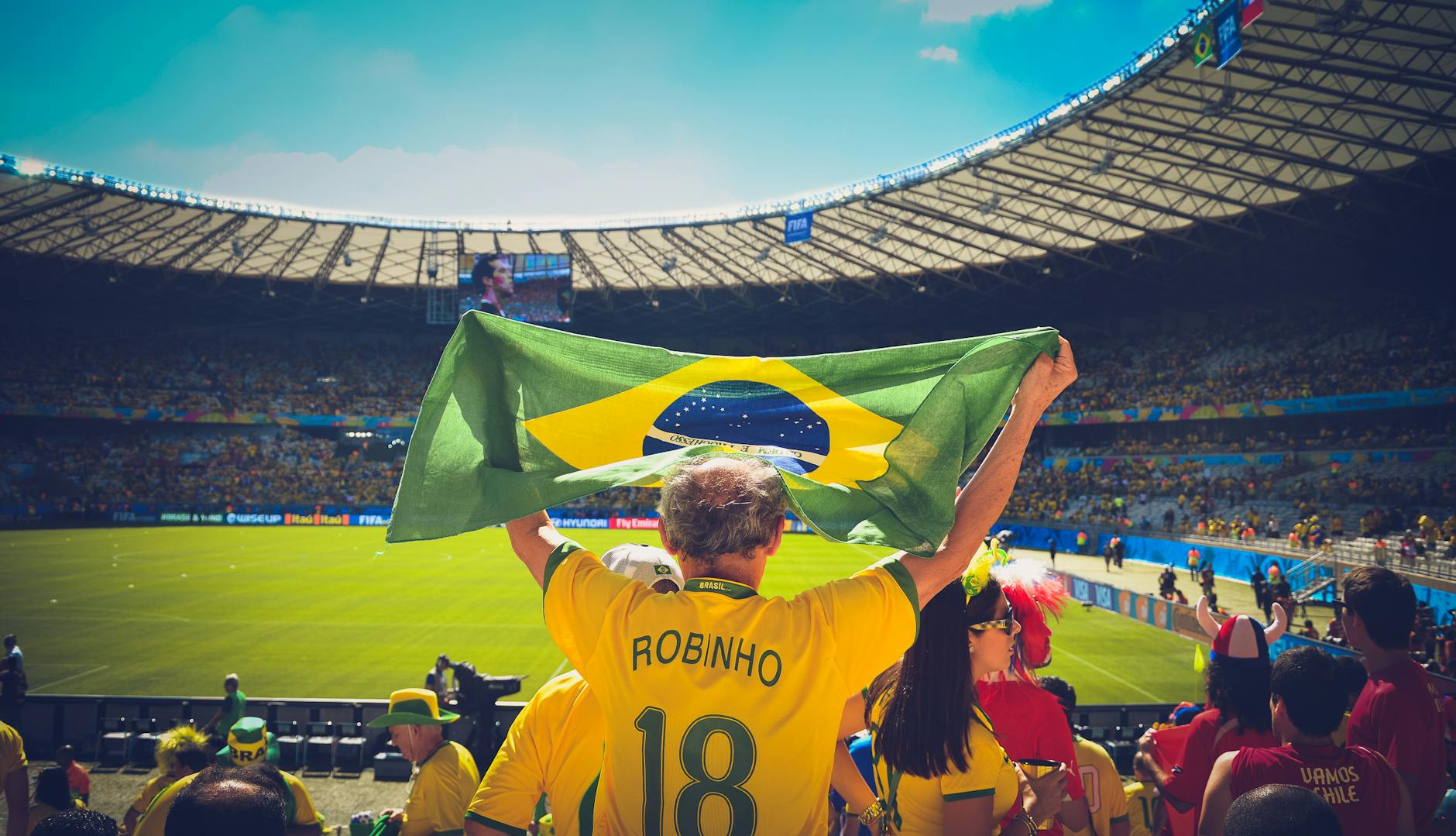
Spain defeats Argentina 2-1 in a historic FIFA World Cup 2026 Final to become world champions. Read our full match report, tactical analysis, and highlights.
Spain Conquers the World: La Roja Defeats Argentina in Thrilling FIFA World Cup 2026 Final
In a final destined to be remembered alongside the greatest spectacles in sporting history, Spain was crowned champion of the world after a breathtaking tactical and athletic triumph over defending champions Argentina. The atmosphere inside the stadium crackled with electric intensity as two footballing superpowers collided, showcasing the very pinnacle of modern football. From the opening whistle, the contest delivered on every ounce of pre-match anticipation, blending sublime individual skill, unrelenting physical commitment, and masterclass tactical execution. When the final whistle sounded, confirming Spain’s 2-1 victory, tears flowed freely on both sides, signaling the coronation of a new golden era for Spanish football and bringing an extraordinary close to the 48-team tournament.
Spain’s triumph marks their second-ever FIFA World Cup trophy, adding to their historic 2010 triumph in South Africa. The victory was forged through fearless attacking verve, precision passing, and an unshakable collective identity that dismantled one of the most resilient tournament teams in modern history. Argentina fought with the heart, grit, and defensive ferocity that carried them to the summit in 2022, but they ultimately could not contain the relentless wave of youthful energy and positional superiority engineered by La Roja. As confetti rained down and the iconic golden trophy was hoisted into the night sky, Spain firmly re-established itself as the benchmark of international football.
Background and Context: Two Contrasting Dynasties Collide
The journey to the 2026 final was paved with high drama, tactical evolution, and immense pressure for both nations. Argentina arrived at the showpiece fixture carrying the immense weight of defending their crown, having navigated a gruelling knockout stage that tested every ounce of their psychological resilience. Their semifinal encounter had already generated massive global headlines, as seen in the Argentina vs England Highlights | FIFA World Cup 2026, where the Albiceleste demonstrated their trademark defensive tenacity and clinical finishing under extreme duress. That victory cemented Argentina’s status as tournament favorites, driven by a blend of battle-hardened veterans and a hungry supporting cast eager to preserve their global supremacy.
Spain, on the other hand, arrived in North America riding a wave of unstoppable momentum that began with their continental triumph at UEFA Euro 2024. Under a refined tactical philosophy, the Spanish side had successfully merged their traditional possession-based ideology with explosive direct wing play and aggressive vertical pressing. The tournament itself had captured unprecedented global attention, breaking commercial and attendance records while sparking widespread debate across host nations regarding the economics of the expanded 48-team format. The unprecedented ticket demand and corporate investment surrounding the competition even led analysts to explore whether FIFA World Cup 2026: Should It Belong to Fans or Super-Rich Investors?. Amid this dizzying commercial backdrop, the final match between Spain and Argentina stood out as pure sporting theatre at its most unblemished.
Historically, matches between European and South American giants in World Cup finals carry an aura unlike any other fixture in sport. Argentina aimed to become the first nation to retain the World Cup since Brazil achieved the feat in 1962, whereas Spain sought validation for a dynamic new generation of generational prodigies. With millions watching around the globe on platforms covered comprehensively by FIFA.com, the stage was perfectly set for an era-defining battle of philosophies, generations, and national pride.
Key Details & In-Depth Tactical Analysis
The tactical narrative of the final was defined by Spain’s aggressive control of the central zones and their lightning-fast transitions out wide. Setting up in a fluid 4-3-3 formation, Spain utilized their midfield triumvirate to dictate the tempo of possession from the outset. Rodri operated as the orchestrating pivot, screening his central defenders while distributing pinpoint diagonal passes to stretch the Argentine backline. Meanwhile, Pedri and Gavi functioned as dual interior engines, combining incisive one-touch interplay with relentless counter-pressing that disrupted Argentina’s ability to build out from the back. The breakthrough arrived in the 34th minute, when Lamine Yamal orchestrated a breathtaking sequence down the right flank, cutting inside two defenders before unleashing a curling strike that deflected into the path of Nico Williams, who slotted home with clinical composure.
Argentina, lined up in a compact and disciplined 4-4-2, refused to capitulate. Their midfield pair of Enzo Fernández and Alexis Mac Allister worked tirelessly to plug passing lanes and initiate rapid vertical counters into the channels. Their persistence was rewarded early in the second half through a brilliantly orchestrated set-piece. In the 58th minute, a whipped corner caused chaos in the Spanish penalty area, allowing Julián Álvarez to pounce on a loose ball and rifle a ferocious half-volley into the top corner of the net, sending the Argentine supporters into pandemonium. The equalizer tilted the psychological momentum in Argentina's favor for a fifteen-minute spell, forcing Spanish goalkeeper Unai Simón into two world-class reflex saves to keep the scores level.
Statistically, the encounter reflected Spain’s territorial dominance, but also highlighted Argentina’s lethal efficiency on the break:
Ball Possession: Spain 61% – 39% Argentina
Total Shots: Spain 16 – 9 Argentina
Shots on Target: Spain 6 – 4 Argentina
Corner Kicks: Spain 7 – 3 Argentina
Passing Accuracy: Spain 89% – 78% Argentina
The decisive moment arrived in the 83rd minute through a sequence of pure tactical brilliance. Recognizing Argentina’s fatigue in wide defensive areas, Spain executed a rapid switch of play from left to right. Yamal received the ball in space, drew two defenders toward him with electrifying step-overs, and slipped a disguised reverse pass into the penalty box. Arriving late with perfect timing, Dani Olmo took a deft touch before burying a low, driven shot past Emiliano Martínez into the bottom corner. Despite a desperate, frantic late surge from Argentina featuring aerial bombardment and goalmouth scrambles, Spain held firm with supreme defensive discipline to seal their world championship crown.
Expert Perspective: Strategic Masterclass and Fan Reaction
Football analysts and pundits worldwide were quick to praise Spain’s strategic execution and the maturity displayed by their exceptionally young squad. Writing for mainstream global outlets such as BBC Sport, commentators highlighted how Spain has successfully transcended the static, repetitive possession football of previous decades, replacing it with an unpredictable, vertical attacking style that poses constant threats from all angles. Tactical analysts pointed out that the Spanish coaching staff outmaneuvered Argentina by constantly overloading the half-spaces, preventing Argentina’s full-backs from receiving adequate defensive cover from their wide midfielders.
Argentina’s technical staff was equally praised for their fighting spirit and proactive substitutions, yet pundits agreed that the relentless physical toll of their tournament run caught up with them in the final twenty minutes. The defensive exhaustion forced Argentina to drop into a deeper low block than intended, inviting sustained pressure from Spain’s creative playmakers. Across the host cities, the spectacle produced unforgettable scenes of fan celebration and cultural unity. The electric vibrancy across North America was particularly felt in key metropolitan centers, reinforcing reports where Miami Named Biggest Winner of FIFA World Cup 2026 due to its immense cultural resonance and unprecedented fan activations throughout the tournament.
Neutral observers universally celebrated the final as a benchmark for international football entertainment. Unlike previous defensive and cagey finals, this match featured end-to-end action, technical mastery of the highest order, and a remarkably low count of cynical stoppages. Fans inside the stadium and hundreds of millions watching across global broadcasts witnessed a showcase of pure footballing artistry, free from excessive controversy and elevated by magnificent sporting spirit from both sides.
Impact and Implications for International Football
Spain’s 2026 World Cup victory carries profound implications for the international football hierarchy. By securing their second world title, Spain joins an elite circle of multiple World Cup winners, affirming that their golden generation of the late 2000s was not an isolated miracle, but rather the foundation of an enduring, world-class football development ecosystem. The dominance of youthful talents like Lamine Yamal and Gavi proves that modern football belongs to teams capable of integrating elite technical fundamentals with peak physical athleticism and dynamic positional fluidity.
For Argentina, the defeat represents the conclusion of one of the most legendary, emotionally charged tournament runs in football history. While the sorrow of falling just short of retaining their title was palpable, the Albiceleste left the tournament with their heads held high, having sustained unprecedented competitive consistency across three consecutive major international cycles. The transition toward a new core centered on Julián Álvarez, Enzo Fernández, and emerging academy talents will ensure that Argentina remains a perennial powerhouse in South American and global football for years to come.
The wider impact on the global game is equally significant. The 2026 tournament demonstrated that the expansion to a 48-team format did not dilute the ultimate quality at the highest tier of the knockout rounds. Instead, it delivered historic matchups and demonstrated that tactical sophistication across the globe has risen to unprecedented heights, with European and South American heavyweights continuing to set the gold standard that the rest of the world aspires to reach.
Looking Ahead: The Next Cycle and Future Prospects
As the celebrations in Madrid, Barcelona, and across Spain continue long into the summer, attention will soon pivot toward the future of both national teams. Spain now enters the next four-year cycle as undisputed rulers of both Europe and the world. With key cornerstones of their squad still under the age of 24, La Roja possesses a terrifyingly bright future and could realistically dominate international football for the next decade. Their immediate objectives will shift toward defending their UEFA Nations League and European Championship titles, while preparing for the 2030 World Cup centenary tournament, where Spain will serve as one of the primary hosts.
Argentina faces a crucial period of squad evolution and strategic rejuvenation. With several experienced stalwarts likely stepping aside from international duty, the Argentine football association will focus on integrating top prospects from their domestic league and European youth academies ahead of upcoming CONMEBOL World Cup qualifiers and the next Copa América. The tactical framework established during this cycle provides a rock-solid foundation, ensuring that Argentina will remain formidable contenders in every tournament they enter.
The global football landscape will also digest the broader lessons of the 2026 tournament. With tactical trends leaning heavily toward high-pressing wingers, technically proficient ball-playing goalkeepers, and versatile hybrid midfielders, domestic clubs and national federations alike will adapt their coaching models to emulate Spain’s winning formula. The bar has officially been raised for what is required to achieve glory on the grandest stage.
Conclusion: Spain’s Enduring World Cup Legacy
Spain’s victory over Argentina in the 2026 FIFA World Cup Final stands as a masterpiece of modern sporting excellence. Over ninety minutes of pulsating football, Spain proved that courage, technical precision, and tactical clarity remain the ultimate ingredients for World Cup success. By overcoming a fiercely competitive and experienced Argentina team, La Roja authored a thrilling chapter in World Cup folklore that will be replayed, analyzed, and celebrated for generations.
As the curtain falls on an unforgettable World Cup in North America, football fans around the world will cherish the memory of a final that delivered everything it promised. Spain stands proudly at the summit of world football once again, adorned in gold, having given the world a brilliant masterclass in how beautiful the beautiful game can truly be.
Spain vs Argentina 2026 finalSpain world champion 2026FIFA World Cup 2026 final highlightsSpain Argentina match reportWorld Cup 2026 winners SpainLamine Yamal World Cup finalWorld Cup 2026 analysis