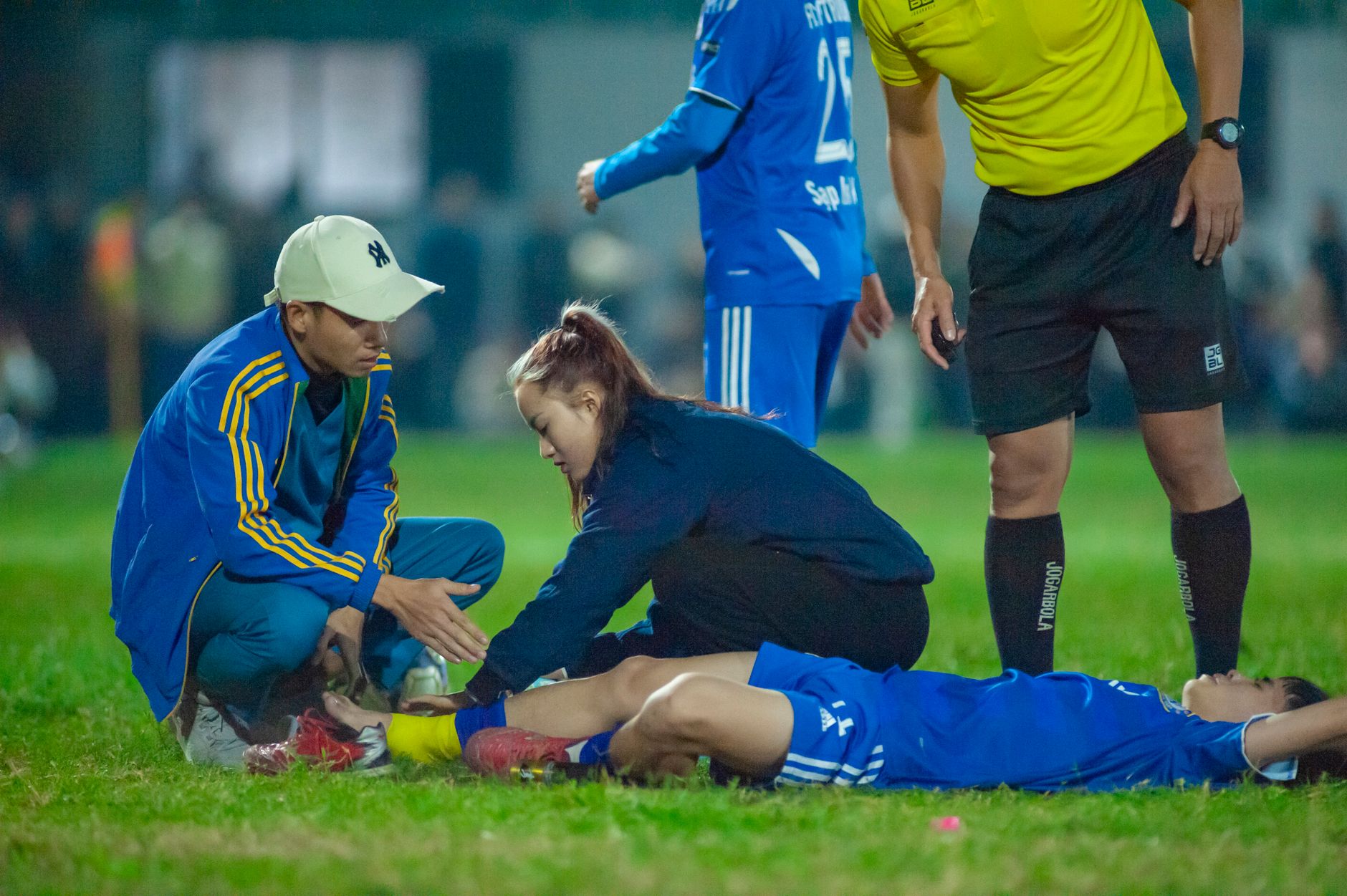
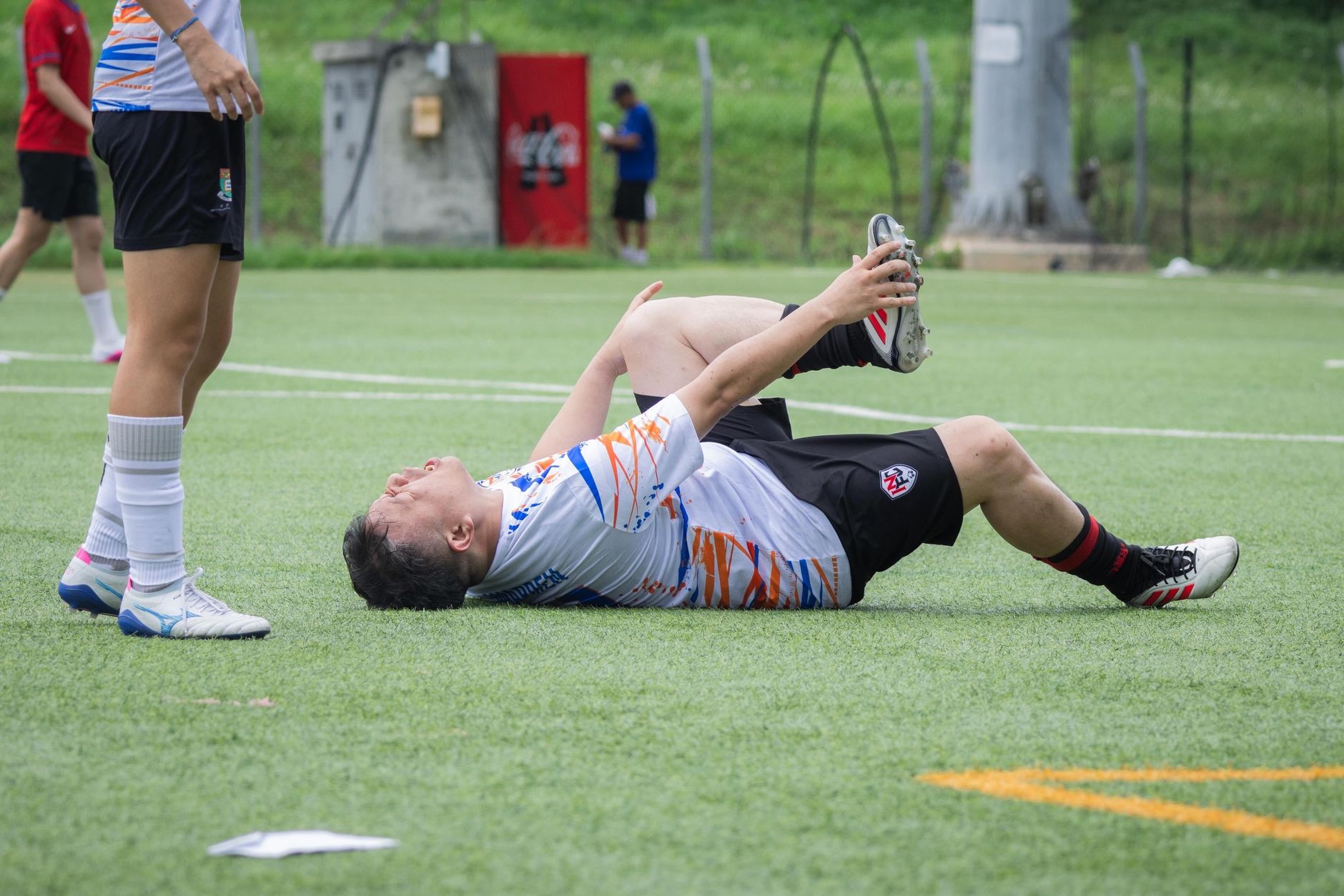
Christian Pulisic is ruled out of the USMNT clash against Australia due to injury. Read full tactical analysis, squad impact, and replacement options.
Introduction: Pulisic Sidelined for Crucial USMNT Test Against Australia
In a major setback for the United States Men's National Team, star forward and team captain Christian Pulisic has been officially ruled out of the upcoming international fixture against Australia. As reported by Reuters, the 26-year-old attacker sustained a muscular strain during a training session, prompting the technical and medical staff to immediately withdraw him from the matchday squad as a precautionary measure. The decision underscores the balance national teams must strike between securing short-term results and safeguarding the long-term health of their most critical assets ahead of the 2026 FIFA World Cup.
Pulisic's unexpected absence casts a shadow over what was anticipated to be a pivotal tactical test for the USMNT. As the primary creative spark and focal point of the American attack, his unavailability forces the coaching staff to dramatically recalibrate their offensive strategy against a notoriously disciplined and resilient Australian side. The timing of the injury creates immediate intrigue surrounding how the squad will adjust tactical structures, redistribute offensive responsibilities, and find alternative pathways to break down a compact defensive unit without their talismanic leader on the pitch.
Beyond the immediate challenge presented by Australia, news of Pulisic's physical setback raises familiar concerns regarding the player's history with muscular injuries. Having maintained a high workload across both European club competitions with AC Milan and international fixtures, managing Pulisic's physical recovery has become a central priority for both club and country. As news of his exclusion spread across the football community, analysts and supporters alike have shifted their focus to the broader implications for the USMNT's tactical identity and squad depth when deprived of their premier attacking talent.
Background & Context: The Weight of Expectations and Building Towards 2026
Christian Pulisic's importance to the United States soccer ecosystem can hardly be overstated. Ever since making his senior international debut as a teenager, the Hershey, Pennsylvania native has carried the mantle of American soccer's premier global star. His high-profile transfers from Borussia Dortmund to Chelsea, and subsequently to Italian giants AC Milan, have placed him under a perpetual spotlight. For the USMNT, Pulisic is not merely a gifted winger; he is the emotional heartbeat and primary goal-threat of a generation tasked with taking American soccer to unprecedented heights on the global stage.
This injury comes during a crucial phase of preparation for the USMNT as host nations build towards the 2026 FIFA World Cup in North America. Unlike traditional qualifying cycles where competitive stakes dictate selection, friendly fixtures and regional tournaments serve as vital laboratories for tactical experimentation and squad chemistry. With automatic qualification secured as co-hosts alongside Mexico and Canada, every international window represents a finite opportunity to refine pressing schemes, ball retention, and positional fluidity against diverse international opposition. Missing a fixture against an Asian Football Confederation powerhouse like Australia robs Pulisic and his teammates of valuable full-strength repetition.
The physical demands placed on top-tier international players have reached an all-time high, creating a nationwide discussion surrounding athlete load management across European leagues and international camps. Much like high-profile physical setbacks seen across elite European clubs—such as when Rodri Facing Extended Layoff with Back Injury After World Cup Win—managing muscular fatigue has become a primary challenge for modern coaching staffs. Similarly, top defensive talents face intense physical burdens during congested fixture lists, highlighted by how Arsenal Defender William Saliba Sidelined with Back Injury during critical phases of the domestic calendar. For Pulisic, who relies on explosive acceleration, sharp changes of direction, and high-intensity pressing, subtle muscular fatigue can quickly escalate into serious structural damage if not managed with absolute caution.
Australia, meanwhile, presents a unique and demanding test for the United States squad. Historically known for their robust physical presence, work ethic, and tactical organization, the Socceroos have consistently punched above their weight in global competitions. Having achieved memorable knockout-stage runs in recent international tournaments, Australia provides the exact style of low-block, counter-attacking football that has historically frustrated American sides. Facing such an opponent without Pulisic's elite 1v1 dribbling and line-breaking ability tests whether the USMNT possesses the structural maturity to overcome stubborn international opposition purely through collective system play.
Key Details & Analysis: Tactical Shift and Strategic Adjustments
Analyzing Pulisic's tactical impact reveals the sheer magnitude of the void his absence leaves on the left flank. In the standard 4-3-3 or fluid 4-2-3-1 formations utilized by the USMNT, Pulisic functions as an inverted winger who operates with extensive positional freedom. His ability to receive the ball wide, drift inward onto his stronger foot, and drive directly at opposing full-backs creates central overloads, opens up overlapping lanes for advancing full-backs, and forces defensive blocks to collapse inward. Without his gravitational pull on defense, opposing full-backs can maintain wider defensive positioning, narrowing the effective playing surface for the rest of the American attack.
To understand the tactical vacuum left by Pulisic, one must examine the underlying statistical metrics that define his national team performance:
Expected Goal Involvement (xGI): Pulisic consistently leads the USMNT in overall xGI per 90 minutes, directly contributing to over 40% of the team's open-play expected goals over the past two calendar years.
Progressive Carries & Dribbles: Averaging over 6.2 progressive carries per match, he serves as the primary mechanism for transitioning the ball from the middle third into the penalty area.
Fouls Drawn in High-Value Areas: His explosive first step draws an average of 3.1 fouls per 90 minutes near the opponent's penalty box, generating high-percentage set-piece opportunities.
Shot-Creating Actions (SCA): Pulisic generates over 4.5 shot-creating actions per game through a mix of key passes, individual dribbles, and rebound opportunities.
With Pulisic sidelined, the technical staff faces a fascinating tactical dilemma regarding his replacement on the left wing. The primary candidates offer vastly different profile characteristics, each forcing subtle shifts in overall team dynamics:
1. Giovanni Reyna: If deployed on the wing, Reyna offers elite vision, creative passing, and half-space manipulation. However, Reyna lacks Pulisic's raw dynamic pace, meaning the team would rely more on intricate combination play rather than direct, vertical transitions down the flank.
2. Tim Weah: Shifting Weah from his natural right-sided role to the left wing provides direct vertical running, stretching Australia's backline with raw speed. This adjustment maintains directness but alters the crossing angles into the penalty box.
3. Brenden Aaronson: Known for his relentless pressing, high-octane work rate, and defensive output, Aaronson provides intense counter-pressing energy. While he creates chaos for opposing defenders, he offers a different style of final-third penetration compared to Pulisic's refined dribbling.
4. Malik Tillman or Cade Cowell: Deploying Tillman offers midfield control and physical presence in tight spaces, whereas Cowell represents a raw, power-based direct runner capable of overpowering defenders in physical 1v1 duels.
Against Australia's compact defensive setup, the USMNT's central midfielders—particularly Weston McKennie and Yunus Musah—will be required to take on far greater creative responsibility. Without Pulisic to draw double-teams on the periphery, midfield ball distribution must be precise, rapid, and brave. Switching the point of attack quickly will be essential to shifting Australia's organized lines before they can reset their low block.
Expert Perspective: Managerial Decisions and Pundit Analysis
The decision to rule Pulisic out of the Australia fixture has drawn widespread analysis from football pundits, former international players, and medical experts across the globe. The consensus among analysts strongly favors the conservative approach taken by the USMNT medical staff. Given the relentless schedule of modern club football, risking a star player in an international friendly—regardless of the match's profile—is widely viewed as an unnecessary gamble that could compromise both player availability and club-country relations.
Prominent sports commentators have highlighted that Pulisic's injury represents a double-edged sword for the national team. On one hand, missing the team's primary match-winner naturally reduces the probability of a commanding offensive performance. On the other hand, it presents an indispensable stress-test for the squad's overall evolution. For too long, critics have pointed out that the USMNT becomes overly reliant on individual magic from Pulisic when collective attacking patterns stagnate. Removing him from the equation forces the coaching staff and supporting cast to demonstrate tactical maturity, positional discipline, and alternative problem-solving mechanisms.
Pundits draw parallels between this scenario and classic tactical masterclasses executed on the international stage. Just as tactical flexibility defines elite modern sides—such as when Spain Beat France to Reach World Cup Final | Tactical Analysis illustrated the power of a fully integrated collective system—the United States must prove that their success stems from a clear tactical philosophy rather than reliance on a single superstar individual.
Supporter sentiment across digital platforms has reflected a mix of cautious understanding and underlying anxiety. While fans recognize the paramount importance of keeping Pulisic fit for major tournament action, his recurring muscle issues remain a topic of persistent debate. Many supporters are eager to see how young attacking talents seize this unexpected vacuum, viewing the Australia clash as a high-stakes audition for fringe players desperate to secure their positions on the World Cup roster.
Impact & Implications: Squad Depth, Rankings, and Strategic Growth
The short-term impact of Pulisic's absence will be felt immediately on matchday against Australia. Without his threat in 1v1 situations, the Australian defense can adopt a more aggressive, forward-defending posture, pressing the American midfielders with greater confidence. The USMNT will need to find alternative ways to unlock set-piece opportunities and generate central penetration, putting added pressure on the starting center-forward—whether Folarin Balogun or Ricardo Pepi—to hold up play, engage physical center-backs, and link transitions effectively.
In terms of broader tournament preparation, this injury emphasizes the absolute necessity of building functional squad depth. A national team aspiring to reach the deep knockout rounds of a FIFA World Cup cannot rely solely on 11 primary starters. Over the course of a gruelling month-long tournament, injuries, yellow card suspensions, and physical exhaustion are guaranteed realities. Matches like this force secondary attacking options to step into lead roles, gaining invaluable experience under intense pressure.
From an international rankings and momentum perspective, every fixture carries weight. FIFA world rankings directly influence tournament seeding, group stage draw pots, and global standing. Winning high-level international friendlies without key players sends a powerful signal to opponents across the globe that the United States is developing into a deep, tactically resilient side capable of adapting to adversity.
The global football landscape is constantly shifting, with nation states and football federations around the world striving for competitive excellence. Contextualizing international competition, global qualifying landscapes undergo continuous shifts, as seen when 8 Countries Ruled Out of 2030 FIFA World Cup Qualifying highlighted the fierce margins of international football. For the USMNT, maximizing every opportunity during their host preparation phase is vital to ensuring they do not fall behind top-tier international standard setters.
Looking Ahead: Recovery Timelines and What to Watch
Looking beyond the Australia match, attention will quickly turn to Christian Pulisic's recovery timeline and return to action for AC Milan. Early reports from Reuters indicate that the muscular strain is relatively mild, suggesting a rehabilitation window of two to three weeks if managed properly. Both USMNT medical personnel and AC Milan's sport science department will remain in constant communication to monitor his progress, ensuring he undergoes a structured return-to-play protocol before re-entering competitive action in Serie A and European competitions.
For fans and tactical analysts tuning into the USMNT vs. Australia fixture, several key focal points will determine the success of the American performance in Pulisic's absence:
Wing Fluidity & Width: How effectively the starting wingers stretch the pitch and interact with overlapping full-backs Antonee Robinson and Sergiño Dest.
Central Midfield Creativity: Whether the central midfield trio can penetrate Australia's compact defensive lines with incisive forward passes rather than safe sideways distribution.
Set-Piece Execution: Capitalizing on dead-ball scenarios, which often serve as the primary game-breaker in tightly contested international matches absent open-play spark.
High-Press Intensity: The efficiency of the forward line's defensive pressing trigger to force turnovers deep inside Australia's defensive third.
The upcoming match represents more than just 90 minutes of international football; it serves as a critical temperature check for the entire USMNT program. Demonstrating that the team can perform with intensity, structure, and offensive potency without their captain will provide a massive confidence boost to the entire squad and technical leadership as the clock ticks closer to 2026.
Conclusion: A Proving Ground for the American Collective
While Christian Pulisic's injury against Australia is an undeniably frustrating development for fans, players, and coaches alike, it presents a necessary and valuable test for the United States Men's National Team. Elite international programs are defined by their ability to absorb physical setbacks and maintain a high standard of tactical performance regardless of individual availability. Relying on a single catalyst is a vulnerability that top-tier international opponents will eagerly exploit during major tournament football.
By taking a cautious approach with Pulisic's physical health, the USMNT leadership has demonstrated sound long-term vision prioritized around player welfare and major tournament readiness. The immediate spotlight now shifts entirely to the depth players tasked with stepping into the starting lineup against a strong, physical Australian side. Their ability to seize this opportunity will reveal much about the true growth, character, and depth of American soccer on the road to the 2026 FIFA World Cup.
Christian Pulisic injuryUSMNT vs AustraliaPulisic out USMNTUSA soccer newsFIFA World Cup 2026USMNT tactical previewChristian Pulisic AC Milan injuryUS men national team