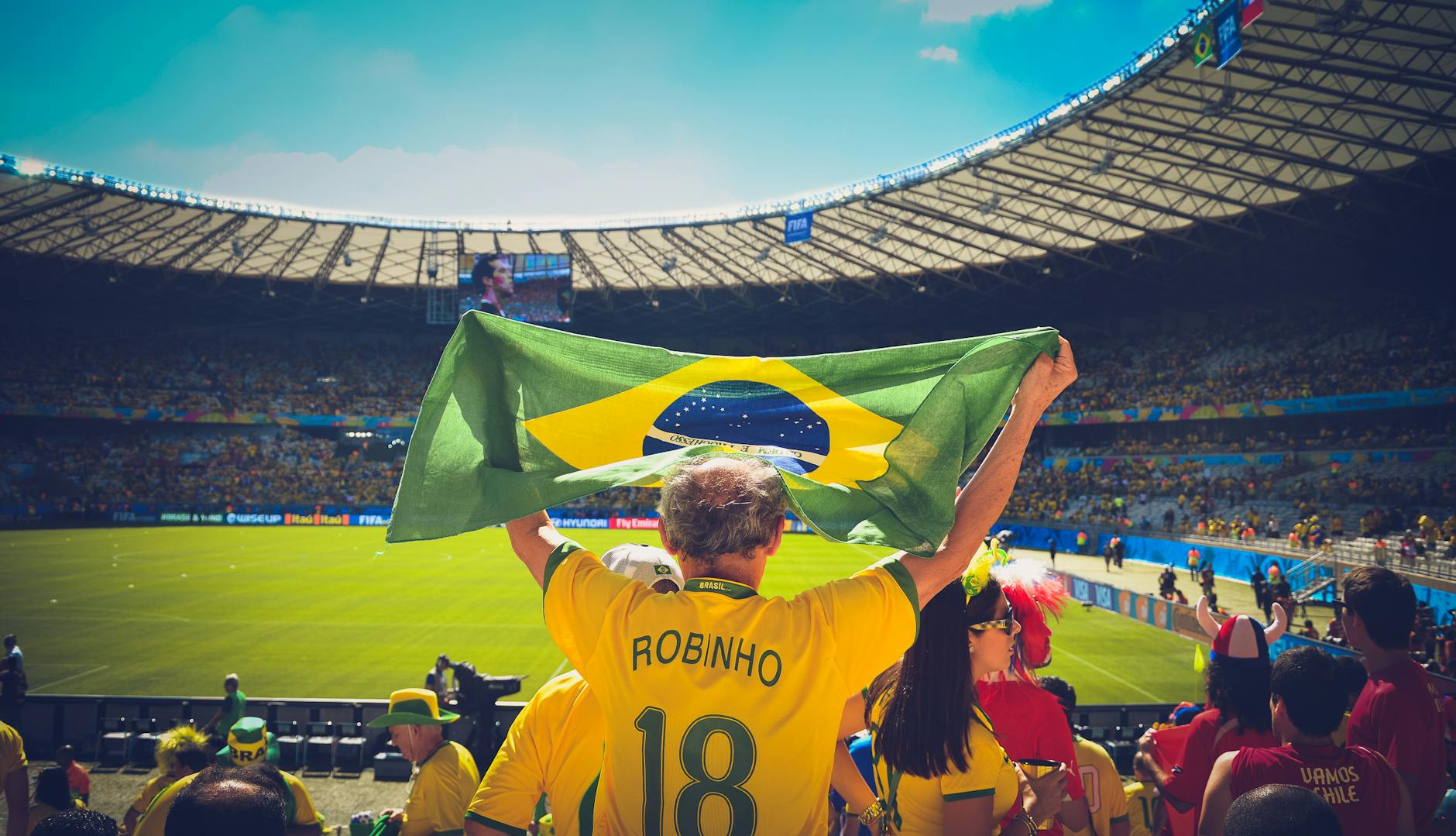
Explore how Lionel Messi, Kylian Mbappé, and Erling Haaland are dominating the 2026 FIFA World Cup with record-breaking performances and tactical brilliance.
Introduction
The 2026 FIFA World Cup across Canada, Mexico, and the United States has already cemented its status as a landmark tournament in football history. With an expanded 48-team format, the group stages have delivered an unprecedented level of drama, tactical evolution, and individual brilliance. However, amidst the chaotic narrative of underdogs rising and traditional heavyweights stumbling, three generational superstars have seized the spotlight. Kylian Mbappé, Erling Haaland, and Lionel Messi have all hit their absolute peak in the group stages, producing a series of breathtaking performances that have left fans, managers, and media pundits in absolute awe of their respective talents.
On the latest episode of the World Cup Daily podcast, host Max Rushden was joined by the familiar panel of Barry Glendenning, Ben Fisher, Lars Sivertsen, and Philippe Auclair to dissect a thrilling round of fixtures. The central theme of their discussion was how these three distinct icons—each representing a different phase of footballing supremacy—are shaping the destiny of their national teams. From Messi’s historic milestones to Mbappé’s terrifying athletic dominance and Haaland’s brute-force introduction to the world’s biggest sporting stage, the tournament is rapidly transforming into a battle of the titans. For those looking to relive the magic, the stunning France vs Senegal Highlights & Goals | FIFA World Cup 2026 offers a prime example of the high-octane football currently taking over North America.
Background & Context
To understand the magnitude of what we are witnessing in 2026, one must look at the unique trajectories of these three players coming into this tournament. For Lionel Messi, this World Cup was always going to be a historic victory lap. Having finally captured the elusive trophy in Qatar four years ago, the Argentine maestro entered this tournament free from the suffocating pressure that defined his international career for over a decade. Now operating in a highly specialized, deep-lying playmaker role, Messi’s presence on the pitch is less about explosive bursts of speed and more about a masterclass in spatial awareness, tempo control, and psychological dominance over opposing midfielders.
In stark contrast, Kylian Mbappé and Erling Haaland represent the absolute pinnacle of modern athletic and technical excellence. Mbappé, now the undisputed leader of a transitional French side, carries the burden of maintaining Les Bleus' status as the world's preeminent footballing superpower. Meanwhile, Haaland’s journey to the 2026 World Cup has been a narrative of national redemption. Having missed out on major tournaments in his early career due to Norway's qualifying struggles, the Manchester City goal-machine arrived in North America hungry to prove that his club-level dominance could be replicated on the grandest international stage. This clash of generations—the sunset of Messi's era and the roaring high-noon of the Mbappé-Haaland rivalry—has created a fascinating backdrop for every matchday.
For a deeper dive into how these off-pitch narratives are influencing on-pitch performances across all groups, readers can explore our comprehensive More than the Score analysis. This editorial hub provides crucial context on how squad harmony, tactical shifts, and national expectations are driving the results we see on the pitch every day.
Key Details & Analysis
Tactically, the performances of these three superstars have highlighted the diverse ways in which elite players can decide matches at the international level. Kylian Mbappé’s display against Senegal was a tactical masterclass in isolating defenders. Operating primarily from the left flank but consistently drifting inside, Mbappé utilized his devastating acceleration to disrupt Senegal’s low-block defense. By dragging the opposition right-back out of position, he opened up half-spaces for France's overlapping full-backs, while his clinical finishing ensured that any defensive lapse was instantly punished. The sheer speed of his transitions from the middle third to the penalty box has become France's primary offensive weapon, rendering traditional defensive structures obsolete.
Erling Haaland's impact for Norway has been entirely different but equally destructive. Rather than relying on intricate build-up play, the Norwegian forward has used his imposing physical frame to bully opposing center-backs. By acting as a focal point for direct long balls and quick transitions, Haaland has allowed Norway to bypass congested midfields entirely. His ability to shield the ball, bring his teammates into play, and then turn and sprint into depth makes him an impossible cover for defenders. Statistically, Haaland’s expected goals (xG) rating in the group stage has been remarkably high, driven by his intelligent movement inside the six-yard box and his uncanny knack for converting low-margin chances.
Meanwhile, Lionel Messi’s record-breaking performances for Argentina have been a lesson in efficiency. Dropping deep into the half-spaces between the opposition’s midfield and defensive lines, Messi has functioned as a central quarterback. His pass completion rate in the final third remains the highest in the tournament, and his vision has unlocked defenses that had previously looked impenetrable. Rather than running with the ball, Messi is letting the ball do the work, orchestrating Argentina’s attacks with subtle body feints, perfectly weighted through-balls, and an unparalleled understanding of game tempo. His ability to conserve energy for decisive moments has allowed him to remain influential over the full 90 minutes of high-intensity matches.
Expert Perspective
On the World Cup Daily podcast, the panel offered some fascinating insights into the tactical decisions of the respective national team coaches. Philippe Auclair pointed out that Didier Deschamps has constructed the entire French system to maximize Mbappé's strengths. "Deschamps has realized that you don't need Mbappé to defend," Auclair noted. "By deploying a hard-working midfield trio behind him, France can afford to leave Mbappé high up the pitch, ready to exploit the space left behind by opposing full-backs who dare to venture forward. It is a terrifying prospect for any defensive coordinator."
Lars Sivertsen focused heavily on the Norwegian camp, praising manager Ståle Solbakken for finding a way to feed Haaland without sacrificing defensive stability. "For years, the criticism of Norway was that they couldn't get the ball to Haaland in dangerous areas," Sivertsen explained. "Now, they are playing with much wider wingers who are instructed to cross early and often. It isn't always pretty, but when you have a physical anomaly like Haaland in the box, simple is highly effective." Barry Glendenning, in his characteristically pragmatic style, reminded listeners that while the individual brilliance of these stars is captivating, football remains a team game. Glendenning pointed out that tournaments are often won by the most cohesive defensive units, suggesting that Argentina and France must ensure their defensive structures do not become overly reliant on their attacking talismans to bail them out.
Impact & Implications
The stellar performances of Messi, Mbappé, and Haaland have sent shockwaves through the tournament brackets, forcing rival managers to completely rewrite their tactical game plans. For France, Mbappé’s red-hot form means they have comfortably secured passage to the knockout rounds, allowing Deschamps the luxury of rotating his squad and resting key players. This squad depth could prove crucial in the later stages of the tournament, where fatigue and minor injuries often dictate the outcome of tight matches. Senegal, despite their valiant efforts, were simply unable to cope with the sheer pace of the French attack, highlighting the gulf in class between the tournament favorites and the chasing pack.
For Norway, Haaland’s goal-scoring exploits have transformed them from tournament dark horses into genuine contenders that no top-seeded team wants to face in the round of 16. His presence on the pitch alters the psychological dynamic of the game, forcing opponents to defend deeper than they normally would, which in turn frees up space for Norway’s creative midfielders. Similarly, Argentina's reliance on Messi’s creative genius has paid off handsomely, but it raises questions about how the team will cope if an opponent successfully devises a system to man-mark him out of the game. The implications of these group stage results are clear: the path to the World Cup trophy will inevitably run through one of these three superstar-led nations.
To see how other nations are fared in their respective groups, football enthusiasts can read the Spain vs Cape Verde 2026 World Cup Highlights & Analysis, which details how other tournament heavyweights are attempting to find their rhythm in this highly competitive environment.
Looking Ahead
As we transition from the group stages to the high-stakes environment of the single-elimination knockout rounds, the pressure on these three players will only intensify. France faces a potentially tricky tie against a highly organized defensive unit, where Mbappé’s ability to find space in tight quarters will be tested to the absolute limit. Tactical analysts will be watching closely to see if opposing managers attempt to double-team the French captain, a strategy that could backfire if it frees up space for France's other world-class attackers.
Norway and Haaland face an equally daunting challenge as they prepare to meet one of the tournament's defensive powerhouses. The key matchup to watch will be how Haaland fares against elite, physically imposing center-backs who are capable of matching his strength and aerial prowess. For Argentina, the path forward will require Messi to continue his superhuman levels of consistency. Every match could potentially be his last on the international stage, adding an emotional weight to Argentina’s campaign that could either inspire the team to glory or crush them under the sheer scale of expectation. Fans can keep track of all the upcoming fixtures and potential upsets by visiting FIFA.com for official schedules and live match updates.
Conclusion
The 2026 FIFA World Cup is rapidly shaping up to be one of the most memorable editions of the tournament ever played. While tactical systems, VAR decisions, and team dynamics will always play a massive role in modern football, this tournament has reminded us that individual genius still possesses the power to capture the global imagination. Kylian Mbappé’s electrifying pace, Erling Haaland’s unstoppable power, and Lionel Messi’s timeless artistry have provided the defining images of the group stages, offering a beautiful contrast of styles and eras.
Whether we are witnessing the final, glorious chapter of Messi’s legendary career, the coronation of Mbappé as the undisputed king of world football, or the arrival of Haaland as a true international icon, the remaining matches promise to deliver unparalleled drama. As the knockout rounds begin, football fans around the globe can only watch in anticipation as these three extraordinary athletes continue their quest for football's ultimate prize. The stage is set, the stakes have never been higher, and the world is watching.