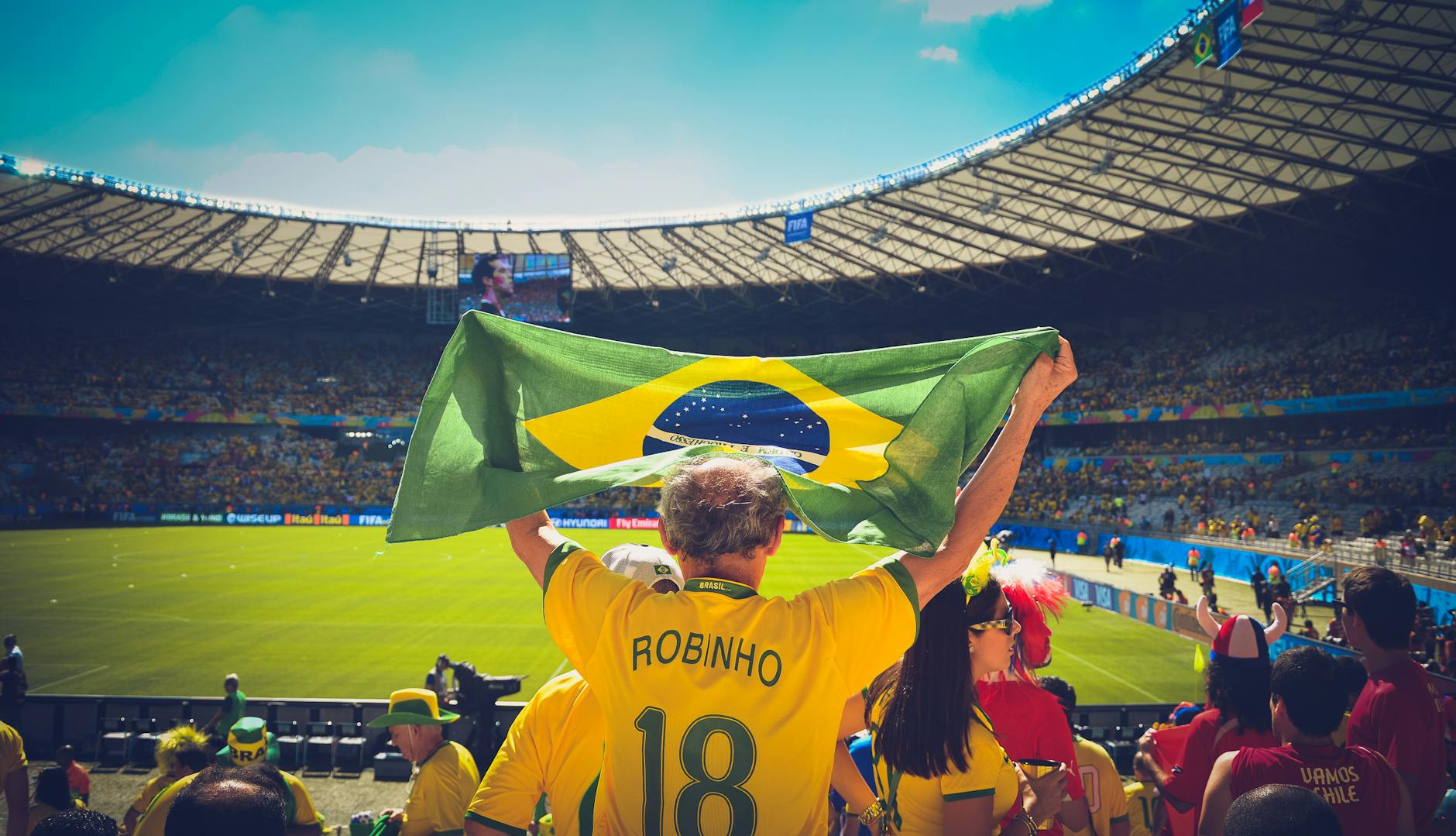
Relive every iconic Lionel Messi FIFA World Cup goal. Tactical breakdowns, video highlights, expert analysis, and his journey to glory.
Introduction: The Artistry of Lionel Messi’s World Cup Footprint
Few narratives in international sport resonate as deeply as Lionel Messi’s complicated, majestic, and ultimately triumphant relationship with the FIFA World Cup. For nearly two decades, the magician from Rosario bore the immense burden of an entire nation’s expectations, carrying Argentina through periods of bitter heartbreak before orchestrating one of the most sublime fairytale finishes in footballing history. Along this epic journey, Messi produced a catalog of goalscoring moments that did far more than simply change the scoreboard—they redefined what was thought possible on the grandest stage of all, stunning opposition defenses, delighting global audiences, and cementing his status as the game's ultimate maestro.
Every single one of Messi’s World Cup goals tells a distinct chapter of his career. From his debut strike as a soft-spoken teenager in 2006 to the emotional, high-stakes strikes during Argentina’s immortal run to glory in Qatar, his goals represent an unparalleled fusion of technical perfection, spatial intelligence, and ice-cold nerve under maximum pressure. As the footballing universe shifts its gaze toward North America for the expanded tournament, reviewing every goal Messi scored on the World Cup stage serves as a crucial reminder of the benchmark for individual excellence in international football.
For purists and casual fans alike, studying Messi's tournament archive is an essential exercise in understanding modern footballing genius. Whether it was a curling effort from outside the penalty box that rescued a struggling group-stage campaign or a pressure-packed penalty deep in extra time during a final, Messi's goals repeatedly left commentators searching for superlatives and spectators in absolute awe. As we count down the days to the next edition of the sport's showpiece event, the memory of these legendary strikes continues to shape how we view greatness in the world's game.
Background & Context: The Evolution of a Legend Across Five Tournaments
To fully appreciate the weight of Messi’s goalscoring feats, one must understand the immense contextual pressure that accompanied his World Cup career across five separate tournaments. When Messi made his World Cup debut in Germany in 2006, he was a precocious 18-year-old phenom wearing the number 19 shirt, entering as a substitute to put the finishing touches on a 6-0 thrashing of Serbia and Montenegro. At that moment, world football knew a special talent had arrived, but few could have predicted the harrowing emotional roller coaster that lay ahead over the next sixteen years.
By 2010 in South Africa under the management of Diego Maradona, Messi was already recognized as the finest player on the planet. Yet despite orchestrating Argentina's attack with brilliant dribbling and vision, he remarkably departed the tournament without scoring a single goal, striking the woodwork multiple times and facing brutal opposition low blocks. The 2014 tournament in Brazil marked a shift: Messi took the captain's armband and dragged Argentina to the final with four crucial goals in the group stage, only to suffer agonizing defeat to Germany in extra time. Four years later in Russia, amid tactical dysfunction and organizational chaos, Messi managed just one moment of magical brilliance against Nigeria before Argentina crashed out in the round of 16.
The narrative culminated in Qatar, where Messi achieved absolute redemption. Operating in a streamlined tactical framework designed by Lionel Scaloni, Messi played with a sense of destiny, scoring seven goals and providing three assists. This ultimate triumph took place amidst a changing global backdrop for international football. While governing bodies faced intense political debates—such as those detailed when UEFA Holds Emergency Meeting Over FIFA World Cup 2026 Plans to address structural and scheduling conflicts—Messi remained laser-focused on the pitch, executing a campaign for the ages that answered every lingering question about his international legacy.
Key Details & Analysis: Tactical Masterclasses and Iconic Strikes Broken Down
Analyzing Lionel Messi’s World Cup goals reveals a masterclass in spatial perception, biomechanical efficiency, and clinical finishing. Unlike traditional target forwards who rely on physical dominance inside the penalty area, Messi created his iconic moments through timing, deceleration, and an incredible ability to read defensive shapes seconds before they collapsed. His goals can be categorized into distinct tactical profiles, each demonstrating a different aspect of his extraordinary skill set.
Consider his sublime strike against Nigeria at the 2018 World Cup in Russia. Receiving a 40-yard lofted pass from Ever Banega while running at full speed, Messi executed a two-touch sequence that defies physics. He cushioned the ball on his left thigh without breaking stride, adjusted his angle with a delicate touch of his left foot, and unleashed an unstoppable right-footed drive past the goalkeeper before the ball touched the ground again. The goal combined elite tracking vision, instantaneous body control, and the bravery to finish with his weaker foot under intense physical pressure. Statistics from tracking data indicated that Messi had less than 0.8 seconds between his first touch and the shot, illustrating his world-class processing speed.
Equally mesmerizing was his tournament-reviving strike against Mexico in the 2022 group stage. With Argentina facing potential group-stage elimination after a shocking loss to Saudi Arabia, the match was deadlocked in a tense, claustrophobic battle. Positioned in a pocket of space twenty-five yards out, Messi received a crisp pass from Ángel Di María. Without hesitation, he used a single setup touch to shift the ball onto his left foot and fired a low, mathematically precise laser into the bottom corner of Guillermo Ochoa's net. According to expected goals (xG) metrics, the shot carried an xG value of just 0.03—meaning an average player would score from that position only three times out of a hundred. Messi made it look effortless, single-handedly shifting the momentum of Argentina’s entire tournament.
The dramatic flair of Messi’s individual moments mirrors the electric atmosphere found in classic tournament blockbusters, much like the thrillers fans rewatch in the Netherlands 2-2 Japan Highlights & Goals | FIFA World Cup 2026 package. In the 2022 World Cup Final against France, Messi showcased his composure at the ultimate level. Beyond converting his penalty in the shootout and a calm spot-kick during regulation, his goal in extra time was a masterclass in predatory positioning. Following a lightning-fast counter-attack, Messi adjusted his positioning to sweep home a rebound from close range, proving that his goalscoring instinct extended from long-range screeners to poacher's finishes in the six-yard box.
Expert Perspective: Coaches, Pundits, and the Global Fan Reaction
The consensus among elite tactical analysts, former players, and international coaches is that Messi’s World Cup goalscoring portfolio transcends standard performance benchmarks. Analysts on major broadcasting platforms like BBC Sport have repeatedly emphasized that Messi's genius lies not merely in the execution of his shots, but in how he manipulates opposition defensive structures before even touching the ball. By spending large portions of matches walking in designated pockets of space, Messi mentally maps the field, waiting for the precise moment when defender density decreases to strike with maximum lethality.
Tactical experts often point out how opposing managers spent years designing hyper-specific defensive schemes—dubbed "anti-Messi cages"—only for the Argentine captain to break them with a single stroke of brilliance. Former international defenders have remarked on the sheer impossibility of anticipating his intentions. Because Messi maintains identical body orientation whether he is preparing to pass, dribble, or shoot, goalkeepers and center-backs are constantly forced into reactive postures, leaving them helpless against his rapid shot release.
From a global fan perspective, Messi’s goals generated unprecedented worldwide reactions that transcended national borders. In Bangladesh, India, Argentina, and across North America, millions gathered in public squares to watch his matches, reacting with euphoric celebrations every time the ball hit the back of the net. Football commentators across diverse languages produced iconic calls during his strikes, with many reduced to breathless laughter or emotional tears as they witnessed history being written in real time. Messi did not just score goals for Argentina; he created shared cultural moments for the entire global footballing family.
Tactical Impact & Broader Implications for International Football
Messi’s goalscoring evolution across his World Cup career has permanently altered the tactical landscape of international football. In an era increasingly dominated by mechanized, highly regimented pressing systems and athletic wingers who hug the touchline, Messi demonstrated the enduring, decisive power of the classic playmaker operating with complete positional freedom. His success has forced tactical theorists to re-evaluate how teams integrate ultra-talented individual creators within modern defensive structures.
Furthermore, his performance in Qatar proved that age does not necessarily diminish a superstar's ability to decide international matches if the surrounding team is properly structured. Lionel Scaloni built a dynamic, hard-working midfield featuring young engines like Enzo Fernández, Alexis Mac Allister, and Rodrigo De Paul. This energetic engine room compensated for Messi’s defensive inactivity, allowing the captain to preserve his physical energy strictly for high-leverage attacking possessions. This tactical blueprint is now being copied by national teams worldwide as they construct squads for future international cycles.
The broader commercial and administrative environment surrounding the sport has also taken cues from the global fervor generated by Messi’s World Cup triumph. As official bodies like FIFA.com work to expand the tournament's reach, the demand for top-tier superstar narratives has never been higher. However, off-pitch commercial disputes continue to surface across the sports business landscape, reflected in ongoing discussions where Opposition Grows to FIFA World Cup Sell-Off Plan for 2026. These off-pitch developments highlight the delicate balance between commercial expansion and preserving the sacred integrity of footballing competitions that players like Messi elevate to pure art.
Looking Ahead: Argentina’s Transition and the Road to World Cup 2026
As the international football calendar advances toward the 2026 tournament hosted across Canada, Mexico, and the United States, the question on every supporter's mind is how Argentina will adapt to the inevitable shifting of the guard. While Messi continues to defy Father Time with mesmerizing domestic performances in Major League Soccer, the natural athletic transition of the squad is already underway. Argentina's coaching staff is actively integrating a vibrant new generation of talent capable of upholding the winning standards set during the 2022 campaign.
The upcoming tournament will feature an expanded 48-team format, presenting novel logistical challenges and tactical dynamics. European heavyweights, South American giants, and emerging football nations are all recalibrating their rosters. Fans eager to see how top continental squads are evolving ahead of the North American showpiece often keep track of club transitions, analyzing articles like Where To Find Spain's Stars After The 2026 World Cup to gauge the depth of Europe's next generation. For Argentina, replicating the incredible team chemistry and individual clutch scoring that characterized Messi’s magical run will require immaculate squad building and tactical flexibility.
Whether Messi features prominently on the pitch in 2026 or serves as a guiding veteran icon from the sidelines, his goalscoring blueprint will serve as the ultimate reference manual for future Argentine attackers. Young superstars stepping into the white and sky-blue shirt know that they are following in the footsteps of a legend who redefined international goalscoring excellence under the brightest spotlight imaginable.
Conclusion: A Timeless Legacy Written in Gold
When reflecting on Lionel Messi’s World Cup career, one is left with a profound appreciation for a player who consistently elevated his game when his country needed him most. His catalog of World Cup goals is not merely a collection of impressive statistical achievements; it is a body of artistic work that captures the emotional depth, technical beauty, and dramatic high stakes of elite football. From the innocence of his 2006 debut strike to the poetic finality of his goals in Lusail Stadium, Messi authored a legacy that will be studied and celebrated for generations to come.
As fans across the globe prepare for the return of World Cup football in 2026, re-watching every single Lionel Messi goal remains the ultimate celebration of the beautiful game. His strikes shocked the world, shattered long-standing records, and provided memories that time can never erase. Lionel Messi did not just play in the World Cup—he conquered it, leaving behind a gold-standard legacy that will forever inspire anyone who picks up a football.