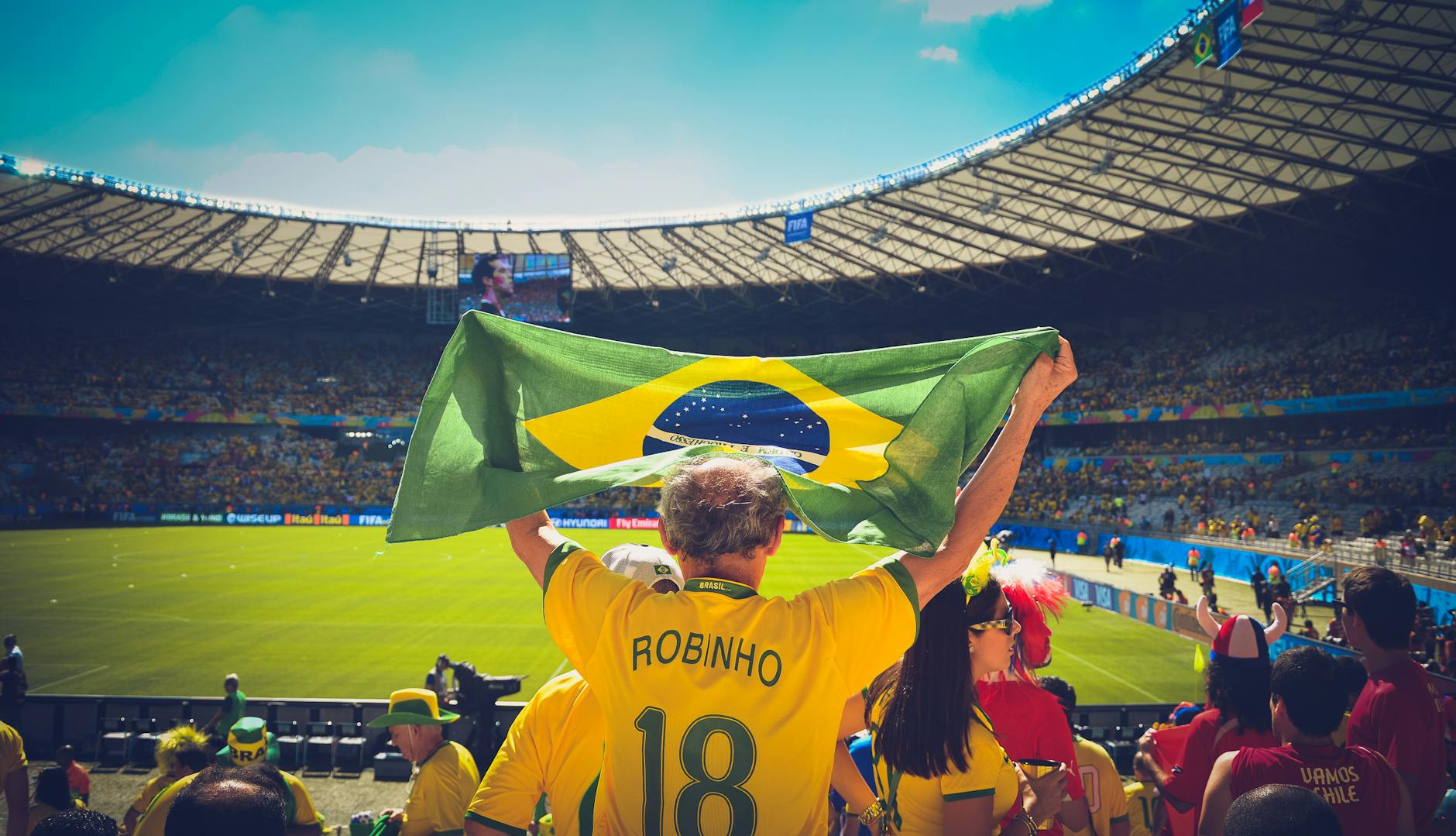
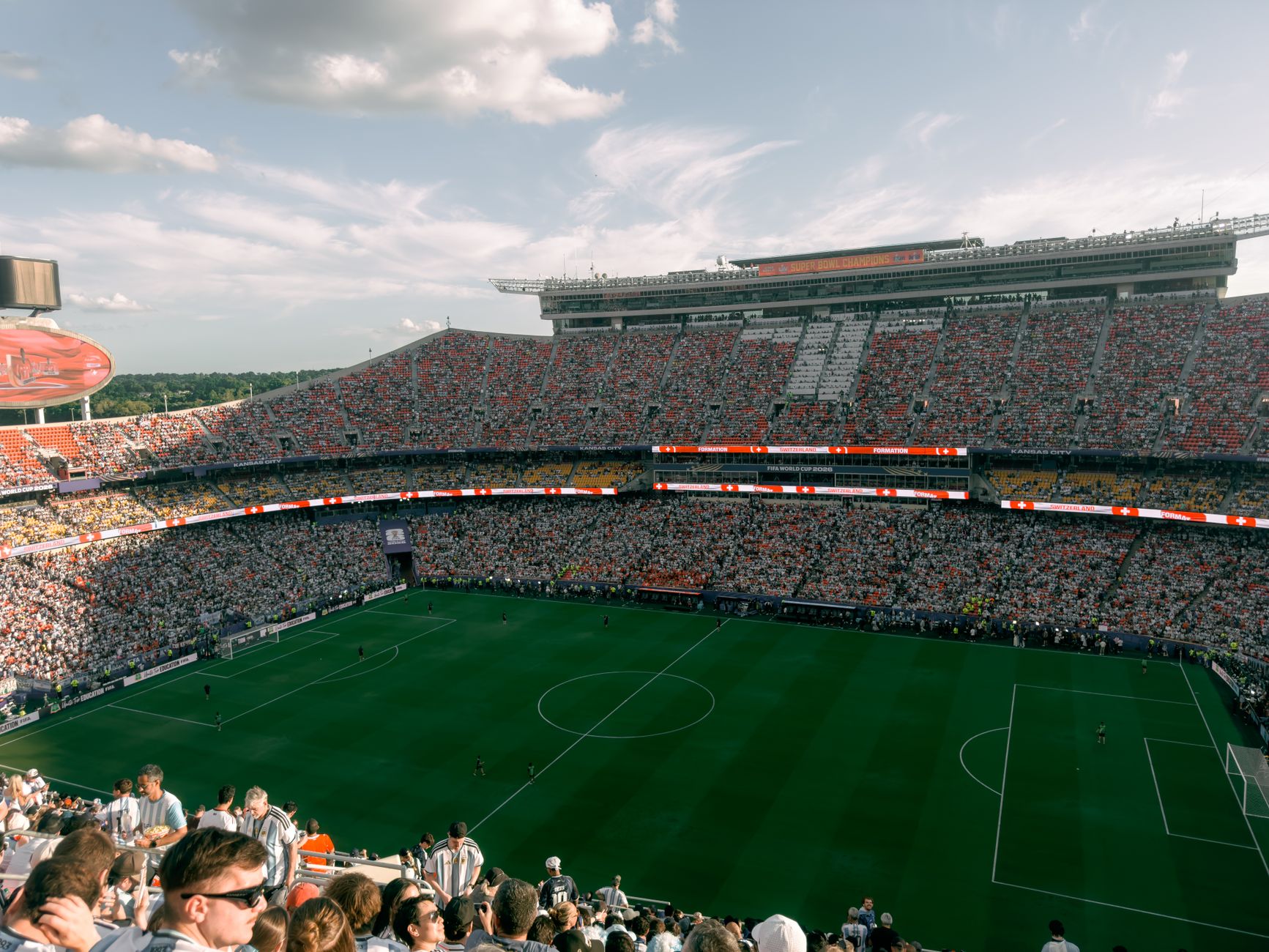
Watch match highlights as Argentina beats Jordan 3-1 in a World Cup 2026 encounter. Lionel Messi scores alongside Lautaro Martinez and Julian Alvarez.
Introduction
The defending global champions delivered another masterclass in tactical poise and individual genius as Argentina secured a convincing 3-1 victory over a spirited Jordan side in an exhilarating FIFA World Cup 2026 encounter. Played in front of a packed stadium vibrant with noise and color, the match lived up to its billing as an intriguing cross-confederation clash. Lionel Messi once again took center stage, providing a moment of unadulterated quality to anchor his country’s winning performance, while companion strikes from Lautaro Martínez and Julián Álvarez underlined the depth of attacking options available to the South American giants.
Despite the ultimate margin of defeat, Jordan earned immense respect from neutral observers and tactical analysts alike. The Chivalrous Ones, buoyed by their recent historic strides on the continental stage, refused to sit passively and accept an overwhelming defeat. Spearheaded by the energetic running of Montpellier winger Mousa Al-Tamari, Jordan breached the Argentine defense with a lightning-fast counter-attack in the first half, briefly sending shockwaves through the venue and serving notice that football's traditional hierarchies are increasingly being challenged on the world stage.
Ultimately, however, the technical supremacy, spatial awareness, and elite game management of Argentina proved decisive. Lionel Scaloni’s side controlled the tempo for vast stretches of the match, suffocating Jordan's passing lanes while ruthlessly exploiting transitional spaces. As the road toward the 2026 showpiece tournament intensifies, this 3-1 scoreline offers a fascinating snapshot of a champion side maintaining its elite standards while providing an underdog story that highlights the rapid rise of Asian football.
Background & Context
To fully understand the gravity of this contest, one must look at the divergent yet fascinating trajectories of both national teams heading into this pivotal international window. Argentina entered the fixture carrying the immense weight of expectation that naturally follows a World Cup winner. Having conquered the world in Qatar, Scaloni’s men have undergone a subtle evolution, integrating younger talents like Enzo Fernández, Alexis Mac Allister, and Alejandro Garnacho alongside hardened veterans like Nicolás Otamendi and Messi. Maintaining top-tier motivation and tactical sharpness after reaching the pinnacle of the sport is notoriously difficult, yet the Albiceleste have continually demonstrated an insatiable hunger for victory.
Jordan, on the other hand, arrived at this match enjoying the most prosperous era in their footballing history. Their astonishing run to the final of the AFC Asian Cup proved that Jordanian football has transcended its former regional limitations, establishing the nation as a legitimate force capable of competing with global heavyweights. Under meticulous tactical coaching, Jordan has perfected an organized, compact defensive structure coupled with explosive direct transitions. Facing the ranked number-one team in the world was not merely a test of endurance for Jordan, but a vital benchmark to measure their progress ahead of crucial international commitments on official FIFA.com tournament schedules.
Furthermore, the broader backdrop surrounding international football adds layers of intrigue to every fixture leading up to 2026. As the global stage prepares for an expanded 48-team tournament spread across the United States, Canada, and Mexico, non-sporting dynamics and institutional debates have frequently dominated headlines off the pitch. Political figures and sports administrators alike have voiced opinions on tournament governance, including notable instances where Donald Trump Issues 'Terrible Mistake' Warning over World Cup 2026 regarding international hosting protocols and security measures. Against this complex geopolitical backdrop, the action on the pitch serves as a unifying spectacle, reminding fans why the beautiful game continues to captivate billions across the globe.
Key Details & Analysis
From the opening whistle, the tactical dynamic of the match was clearly established. Argentina lined up in a fluid 4-3-3 formation that regularly morphed into a 3-2-5 in possession, with Nahuel Molina pushing high up the right flank while Marcos Acuña inverted on the left. Jordan responded with a disciplined 5-4-1 low block, denying central space and daring Argentina to break down a densely populated penalty area. For the first fifteen minutes, Jordan’s stubborn resistance frustrated the world champions, as passing lanes to Messi and Rodrigo De Paul were diligently shut down by Jordan's central midfield pairing.
The breakthrough for Argentina arrived in the 22nd minute through sheer technical precision. Mac Allister collected a loose ball forty yards from goal and delivered a perfectly weighted pass between Jordan’s center-backs. Lautaro Martínez timed his run to perfection, taking one touch to settle the ball before firing a low, driven shot into the bottom left corner past the outstretched arms of the Jordanian goalkeeper. It was a classic display of top-level forward play, requiring only half a second of hesitation from the defenders to alter the momentum of the game entirely.
Far from buckling under the pressure, Jordan produced a stirring response that stunned the stadium in the 34th minute. Intercepting a misplaced pass deep in their own half, Jordan executed a three-pass counter-attack of surgical efficiency. Al-Tamari received the ball on the right wing, used his explosive acceleration to cut past Acuña, and unleashed a curling left-footed strike into the top corner of Emiliano Martínez's goal. The equalizer sparked wild celebrations on the Jordanian bench and demonstrated the lethal threat posed by underdog sides capable of capitalizing on high turnover moments.
However, true champions excel at regaining composure under duress. Just before the halftime whistle, Messi showcased the timeless brilliance that continues to define his legendary career. Positioned on the edge of the D, the Argentine captain received a short lay-off from Álvarez, feints past two lunging defenders with a subtle dropped shoulder, and clipped an exquisite chip over the keeper into the roof of the net. The goal restored Argentina’s lead and illustrated the vast gap in individual magic that often separates good teams from great ones. In the second half, Argentina tightened their grip on the match, controlling 68% of overall possession and limiting Jordan to sporadic long-range efforts. The final blow came in the 78th minute when subbed-on midfielder Enzo Fernández threaded a ball to Álvarez, who comfortably slotted home Argentina's third goal to seal a 3-1 victory.
Possession: Argentina 67% – 33% Jordan
Total Shots: Argentina 18 – 6 Jordan
Shots on Target: Argentina 8 – 2 Jordan
Pass Accuracy: Argentina 91% – 78% Jordan
Corner Kicks: Argentina 7 – 2 Jordan
The tactical subplots of the match were equally compelling when analyzing individual rivalries and accolades across global football. As Messi continues to add to his staggering international goal tally, fans and analysts naturally compare his enduring brilliance to contemporary superstars competing on parallel tracks. Indeed, debates surrounding international goal-scoring charts often feature references to elite European forwards, such as discussions highlighting how 3 Golden Boots, 1 Season: Mbappé is Unstoppable! 🐐🤯 #shorts #trending in modern club and international competitions. Messi's ability to remain the focal point of Argentina's attack while adapting his game to a more cerebral, playmaking role ensures that Argentina remains an irresistible force as 2026 approaches.
Expert Perspective
Football pundits and tactical experts were unanimous in their praise for both teams following the final whistle. Broadcasters on ESPN noted that while Argentina was expected to dominate, Scaloni’s ability to manage player workloads while maintaining a winning rhythm remains his greatest asset as a manager. Analysts highlighted how Scaloni seamlessly rotated his squad in the second half, introducing fresh legs without compromising the team's defensive structure or positional fluidity. This level of squad depth is widely regarded as a primary reason why Argentina remains the team to beat in international football.
Conversely, sports journalists covering Asian football lauded Jordan’s brave performance. Former international coaches reviewing the match pointed out that scoring against Argentina’s primary defensive pairing is an achievement very few nations manage. Jordan’s compact structure, tactical discipline, and sharp transitions exposed rare moments of vulnerability in the Argentine backline, providing a blueprint that other aspiring nations will undoubtedly study. The performance confirmed that Jordan’s run to the Asian Cup final was no fluke, but rather the result of structural progress and tactical maturity.
Beyond the pitch, experts also commented on the high stakes surrounding international fixtures during a tumultuous administrative era for global sports governance. With expanding calendars, continental competitions, and political friction between governing bodies, football is navigating a complex landscape. Observers have noted that ongoing power struggles between regional federations and global leadership create unique pressures on teams, particularly when media attention wanders toward controversies detailed in reports such as Rebel World Cup Threat Emerges, FIFA in Crisis. Despite these off-field distractions, high-quality matches like Jordan vs Argentina serve as an emphatic reminder that the athletic narrative remains the sport's true beating heart.
Impact & Implications
The 3-1 result carries significant implications for both sides as they navigate their respective international schedules heading into the 2026 World Cup cycle. For Argentina, the victory reinforces their position at the pinnacle of global rankings, earning valuable FIFA ranking points that ensure top-seed placement for future tournament draws. More importantly, the match provided Scaloni with answers regarding his tactical variations. The successful integration of Álvarez and Martínez playing in close proximity demonstrated that Argentina can operate with dual central threats when facing stubborn low-block defenses.
For Jordan, the fixture serves as an invaluable learning experience that will undoubtedly pay dividends in competitive regional qualifiers. Facing world-class opposition exposes minor details in positioning, defensive tracking, and decision-making that are rarely punished at lower levels. Jordanian coaching staff will look at the video analysis with pride, recognizing that for over seventy minutes, they pushed the world champions into a genuine contest. The experience gained by younger squad members defending against the likes of Messi and Di Maria will prove priceless as Jordan pursues direct qualification for the expanded 2026 finals.
Furthermore, the high-profile nature of this encounter elevates the international standing of Jordanian players. Al-Tamari’s stunning goal and individual display against elite defenders will inevitably attract further interest from top European clubs, potentially opening doors for more Middle Eastern talents to ply their trade in elite leagues. The knock-on effect for football development in Jordan cannot be overstated; performing admirably against the world champions inspires grass-roots development and validates the investments made by the national federation into elite training facilities and youth academies.
Looking Ahead
As both nations look forward, the road to the 2026 FIFA World Cup promises to be relentless. Argentina will turn their focus back to South American qualification fixtures, where grueling away trips to high-altitude venues and hostile atmospheres await. Scaloni’s primary challenge will be managing the physical workload of key players who face demanding domestic campaigns in Europe and North America. Ensuring that veteran stars remain healthy while continuing to give meaningful minutes to emerging prospects will be crucial over the next eighteen months.
For Jordan, the immediate priority is securing early qualification points in the AFC preliminary rounds. With Asia receiving expanded direct entry spots for the 2026 tournament, Jordan is realistically positioned to secure their first-ever World Cup finals appearance. The tactical resilience and counter-attacking bite shown against Argentina must now be translated into consistent performances against continental rivals. If Jordan can maintain the level of intensity and tactical discipline displayed in this showcase match, their dream of walking out on the world stage in 2026 appears well within reach.
Additionally, host venues across North America are finalizing preparations as international teams conduct warm-up matches and tactical camps across the continent. University facilities, state-of-the-art stadiums, and local sports organizations are playing an increasingly active role in hosting visiting delegations. These collaborative efforts are highlighted in community sports reports, such as updates on how regional centers gear up, including stories like UT Austin Longhorns Summer 2026 News: World Cup Connection, which illustrate the widespread enthusiasm building across host communities ahead of the main event.
Conclusion
In conclusion, Argentina’s 3-1 victory over Jordan provided everything fans could hope for from an international football showcase: world-class goals, heroic underdog moments, and high-level tactical intrigue. Lionel Messi once again proved why he remains the gold standard of global football, producing a decisive goal and a captivating performance that anchored his nation's success. Supported by clinical finishes from Lautaro Martínez and Julián Álvarez, the Albiceleste showed that their appetite for victory remains as sharp as ever as they defend their world title.
At the same time, Jordan emerged from the contest with their reputation significantly enhanced. Mousa Al-Tamari’s brilliant equalizer gave the world a glimpse of the talent coming out of Asian football, and Jordan’s tactical discipline forced the world champions to work tirelessly for their victory. As the countdown to the FIFA World Cup 2026 continues, matches like this highlight the global game's expanding competitive depth—where established kings must constantly evolve, and ambitious contenders stand ready to capture the spotlight.
Jordan vs Argentina highlightsLionel Messi goal World Cup 2026Argentina World Cup qualifiers 2026Mousa Al-Tamari goalArgentina 3-1 Jordan match reportFIFA World Cup 2026 highlightsLionel Scaloni tactics Argentina