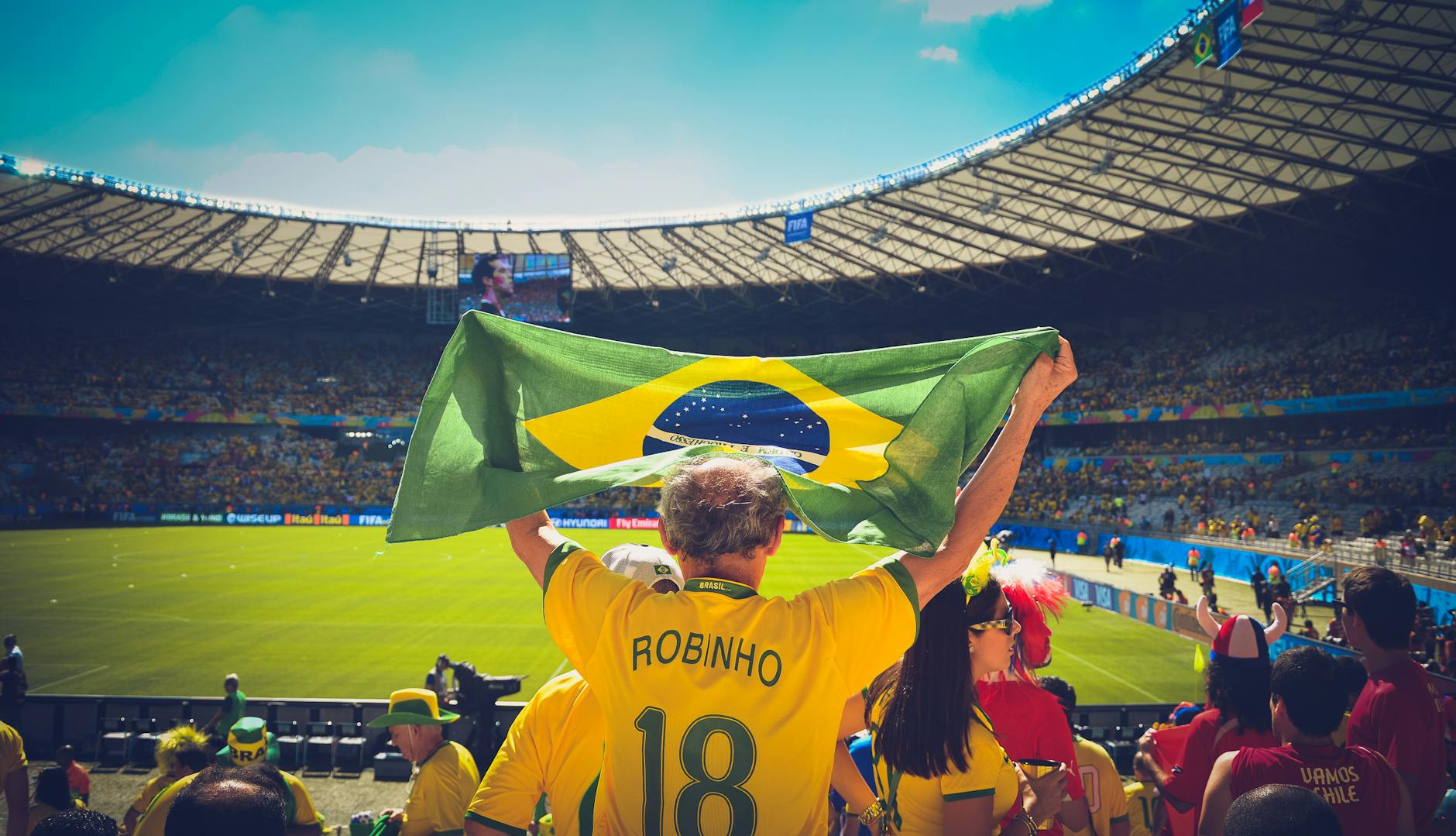
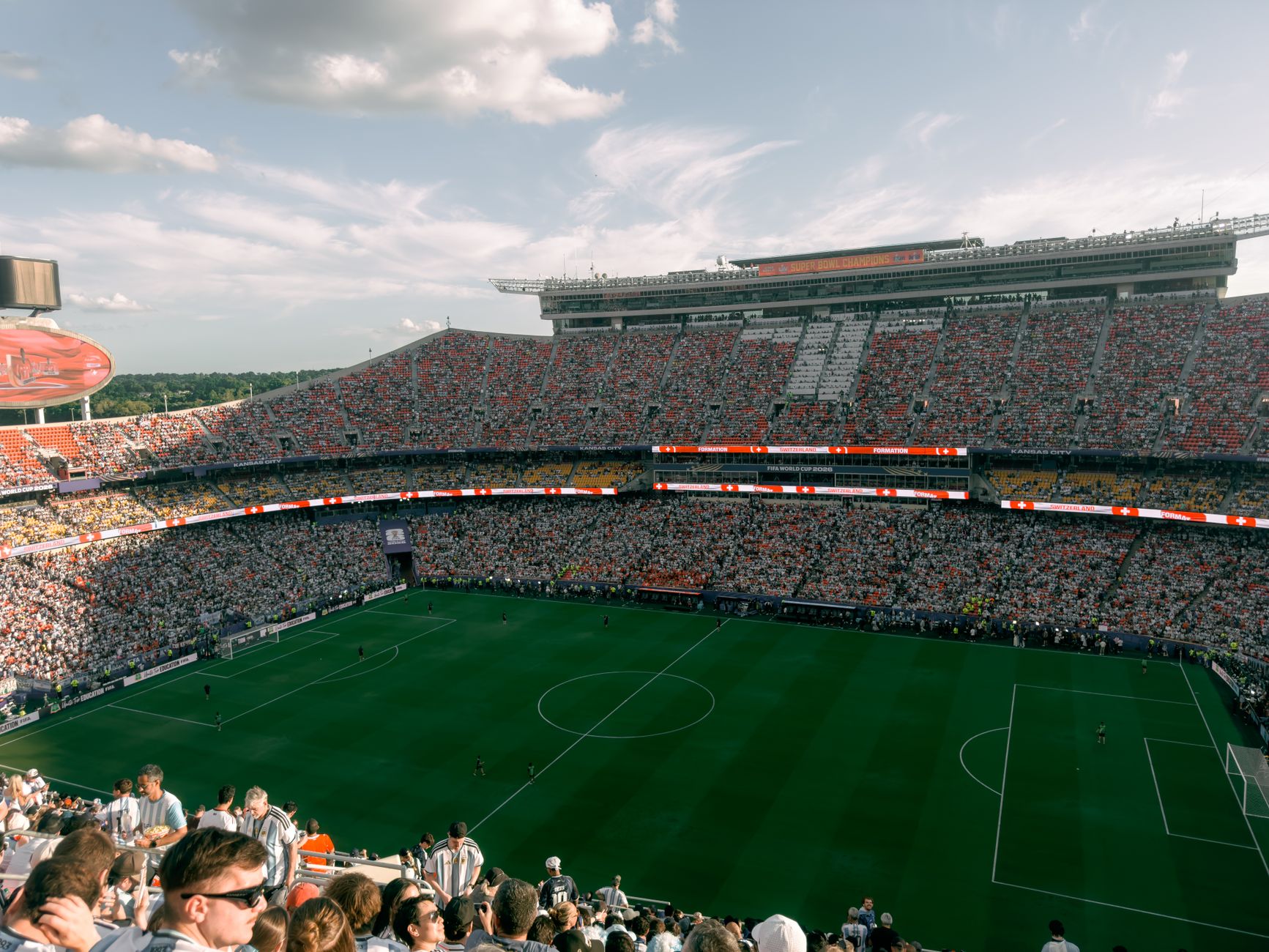
Welcome to the FIFA World Cup 2026! Witness the biggest football tournament in the world featuring unforgettable goals, thrilling ...
1. Introduction: The Dawn of a Mega-Tournament
The global sporting landscape stands on the precipice of an unprecedented revolution. The FIFA World Cup 2026 is not merely another edition of football’s holy grail; it represents the largest, most expansive, and most logistically ambitious athletic event ever assembled in human history. Jointly hosted by three powerhouse nations—the United States, Mexico, and Canada—the tournament breaks away from traditional single-nation formats to establish a continent-wide celebration of the world's most popular sport. Fans, pundits, and players alike are preparing for a summer that will permanently rewrite the record books and elevate football's footprint across North America.
For the first time since the tournament’s inception in 1930, the field has expanded from 32 to 48 national teams. Across 16 iconic host cities, 104 high-stakes matches will unfold over nearly six weeks of relentless competition. From the thunderous atmosphere expected at Mexico City’s legendary Estadio Azteca to the high-tech grandeur of MetLife Stadium in New Jersey—where the tournament’s grand final will take place—the stage is set for an epic narrative. As national teams finalize their qualifying campaigns and tactical setups, the road to glory officially begins, promising extraordinary moments, dramatic upsets, and individual brilliance that will define a generation.
2. Background & Context: Expanding Horizons and Continental Prestige
To fully grasp the historic scope of the 2026 showpiece, one must look back at the dramatic evolution of the FIFA World Cup over the past few decades. The leap from 24 teams at USA 1994 to 32 teams at France 1998 established a balanced, highly lucrative template that endured for seven consecutive editions, culminations of which were seen in Qatar 2022. However, global football governance recognized that international participation was outgrowing the traditional structure. With mid-tier confederations making remarkable strides in technical proficiency, expanding the tournament became the definitive strategy to truly globalize the sport’s ultimate showcase.
The multi-nation bid—dubbed the "United 2026" bid—triumphed over competing proposals by offering established infrastructure, world-class stadium venues, and massive commercial opportunities. Mexico brings unmatched cultural heritage, becoming the first nation in history to host matches in three separate World Cup tournaments (1970, 1986, and 2026). Canada makes its debut as a host nation, capitalizing on a surge in domestic soccer interest following recent international qualifications. Meanwhile, the United States offers vast commercial markets and state-of-the-art gridiron stadiums adapted for association football. This continental synergy has generated massive domestic engagement, extending to college athletic hubs where institutions like UT Austin Longhorns Summer 2026 News: World Cup Connection highlight how collegiate facilities and communities are aligning with global soccer fever.
However, organizing a tournament across three sovereign nations with distinct legal systems, immigration policies, and political climates has not been without friction. As political leaders weigh in on security protocols and tournament administration, political commentators and sports diplomats have monitored regional tensions closely. High-profile political dynamics have repeatedly surfaced around host arrangements, as evidenced by major public discussions where politicians like Donald Trump Issues 'Terrible Mistake' Warning over World Cup 2026 regarding cross-border organization and administrative oversight. Despite these complex national dynamics, local organizing committees and FIFA have maintained that sports diplomacy will prevail, ensuring seamless travel and safety for millions of visiting supporters.
3. Key Details & Analysis: Tactical Shifts, Travel Logistics, and Player Fatigue
From a purely tactical perspective, the expansion to 48 teams fundamentally alters how managers approach the group stage. Divided into 12 distinct groups of four, the top two teams from each group, along with the eight best third-place finishers, will advance to a new, highly volatile Round of 32 knockout phase. This structural adjustment drastically changes risk management in early fixtures. Traditional powerhouses no longer face immediate elimination from a single opening-match slip-up, allowing modern strategists to experiment with dynamic pressing triggers, fluid positional rotations, and squad rotation schemes aimed at preserving energy for the extended knockout bracket.
The physical load on elite players represents the primary concern for modern tacticians. Modern superstars are competing in over 60 domestic and European matches per season prior to joining their national teams. The mental and physical demands of modern football mean that individual endurance and recovery protocols will likely dictate tournament success. When looking at global superstars capable of sustaining elite performance across marathon seasons, few match the remarkable standard set by forward icons whose goal-scoring records dominate headlines, such as the phenomenal run featured in 3 Golden Boots, 1 Season: Mbappé is Unstoppable! 🐐🤯 #shorts #trending. Managers who rely heavily on hyper-intense counter-pressing will need to balance their instructions to prevent late-game physical breakdowns in hot, humid host cities like Houston or Miami.
Furthermore, geographical logistics present a monumental challenge that dwarfs previous tournaments. Host venues are organized into three geographic regional clusters (Western, Central, and Eastern) to minimize transcontinental travel, yet teams will still face severe climate variance and time zone jumps. Consider the strategic parameters teams must prepare for across these zones:
Western Region (Vancouver, Seattle, San Francisco, Los Angeles): Mild coastal temperatures, long flight corridors, and heavily turf-based stadium conversions demanding specific cleat adaptations.
Central Region (Guadalajara, Mexico City, Monterrey, Houston, Dallas, Kansas City): Severe altitude factors in Mexico City (over 7,200 feet above sea level) combined with sweltering humidity in Texas domes.
Eastern Region (Atlanta, Miami, Toronto, Boston, Philadelphia, New York/New Jersey): High humidity, dense media environments, and intense travel schedules along the East Coast corridor.
Squad depth will therefore serve as the ultimate equalizer. With FIFA permitting 26-man rosters, national team head coaches must utilize their substitute benches effectively. Deep squads with high-quality rotational players will possess a distinct advantage over single-star nations whose starting XI must play 120-minute operational loads in grueling knockout fixtures.
4. Expert Perspective: Political Tensions, Administration, and Fan Fever
The global sports media landscape is buzzing with commentary from seasoned analysts, former international stars, and administrative insiders dissecting the structural shift of World Cup 2026. The administrative backdrop has proven just as dramatic as the action on the grass. Institutional fractures within European football governance have frequently spilled into the public domain, especially as continental bodies clash with FIFA over fixture congestions, revenue distribution, and political influence. Political leaders have occasionally inserted themselves into these debates, highlighted by instances where Trump defends Infantino as UEFA-led schism with FIFA deepens - The Jap, reflecting the delicate intersection between global soccer powerhouses and political influence.
Simultaneously, whispers of systemic dissatisfaction among non-European associations have sparked sensational headlines across sports journals. Media narratives surrounding potential breakaway leagues or alternative international governance structures have occasionally surfaced, summarized in reports like Rebel World Cup Threat Emerges, FIFA in Crisis. However, veteran pundits maintain that despite governance political theater, the prestige of the official FIFA World Cup trophy remains absolute and irreplaceable for players worldwide.
Prominent pundits at leading sports broadcasting outlets like BBC Sport stress that execution on the pitch will ultimately supersede off-field political friction once the opening whistle blows at Estadio Azteca. Tactical analysts point out that smaller footballing nations now enter the tournament with sophisticated low-block defensive structures and hyper-efficient transition setups designed to frustrate possession-heavy elite nations. Fan reactions across social media platforms reflect immense excitement, with global supporters eagerly purchasing travel packages, tickets, and merchandise, creating an infectious atmosphere that promises to captivate host cities throughout the summer.
5. Impact & Implications: Reshaping the Global Football Hierarchy
The systemic expansion to 48 teams carries profound implications for the global football ecosystem, particularly for developing football nations in Asia (AFC), Africa (CAF), and North/Central America (CONCACAF). Historically, qualified representation from these regions was severely restricted due to slot allocations heavily favoring Europe (UEFA) and South America (CONMEBOL). With expanded allocations, nations that consistently narrowly missed qualification—such as Nigeria, Egypt, Iraq, Uzbekistan, or Mali—now have a realistic path to the world stage. This inclusion acts as a major catalyst for domestic football infrastructure, injecting millions of dollars in FIFA participation rewards directly into grassroots development programs and local league academies.
Economically, North America is preparing for a financial surge of historical proportions. Hospitality sectors, municipal tourism boards, and domestic sports franchises across the 16 host cities expect billions of dollars in local consumer spending. Soccer's cultural footprint in North America, particularly in the United States, is projected to undergo a permanent leap forward. Major League Soccer (MLS) and Canadian Premier League (CPL) clubs are leveraging the tournament's unprecedented visibility to attract younger fan bases, build modern training hubs, and sign high-profile international talent. The tournament acts as the definitive turning point for converting casual sports viewers into lifelong football supporters.
On a sporting level, the expanded format will fundamentally reshape the international FIFA rankings and competitive parity. Smaller nations exposed to elite European and South American tactical systems will experience accelerated growth, closing the competitive void between traditional superpowers and rising footballing regions. The introduction of the Round of 32 also adds an extra layer of unpredictable elimination drama, where a single inspired performance from an underdog goalkeeper or a moments-of-magic counterattack can eliminate an established giant long before the semi-final stages.
6. Looking Ahead: Qualification Climax, Dark Horses, and Tech Innovations
As the countdown to opening day ticks away, football fans around the globe are fixated on the concluding chapters of international qualifying campaigns. In South America's grueling CONMEBOL marathon, traditional juggernauts continue to battle high-altitude away games and ferocious derby encounters. In Europe, playoff brackets present heart-stopping, single-elimination matches where established football nations risk complete heartbreak. Emerging dark horses from Africa and Asia are captivating neutral fans, demonstrating tactical discipline, raw athleticism, and fearless attacking mentalities that could yield major tournament surprises.
Furthermore, World Cup 2026 will serve as the ultimate testing ground for cutting-edge sports technology and officiating innovations. Building upon the semi-automated offside technology (SAOT) utilized in recent tournaments, FIFA is introducing upgraded optical tracking systems powered by artificial intelligence. Connected ball technology, featuring embedded micro-sensors, will deliver real-time telemetry data to VAR officials and broadcast networks, providing instantaneous measurement of ball velocity, spin rates, and precise touch-point detection for handballs and marginal offside calls. These advancements aim to eliminate lengthy review delays, ensuring that the spectacle remains fast-paced and fluid.
Fans and analysts should keep a keen eye on key tactical matchups during the group stage draw. Key elements to watch include:
Altitude Adaptability: How top-tier European squads manage physiological strain when playing in high-altitude environments in Central Mexico.
Depth Utilization: The tactical management of 26-man squads by elite managers to navigate 7-match pathways to the final.
Set-Piece Efficiency: The elevated role of long-throw routines and engineered set-piece plays, which underdogs will heavily rely on to break down technically superior opposition.
Goalkeeping heroics: Penalty shootout preparation in the expanded knockout format, where