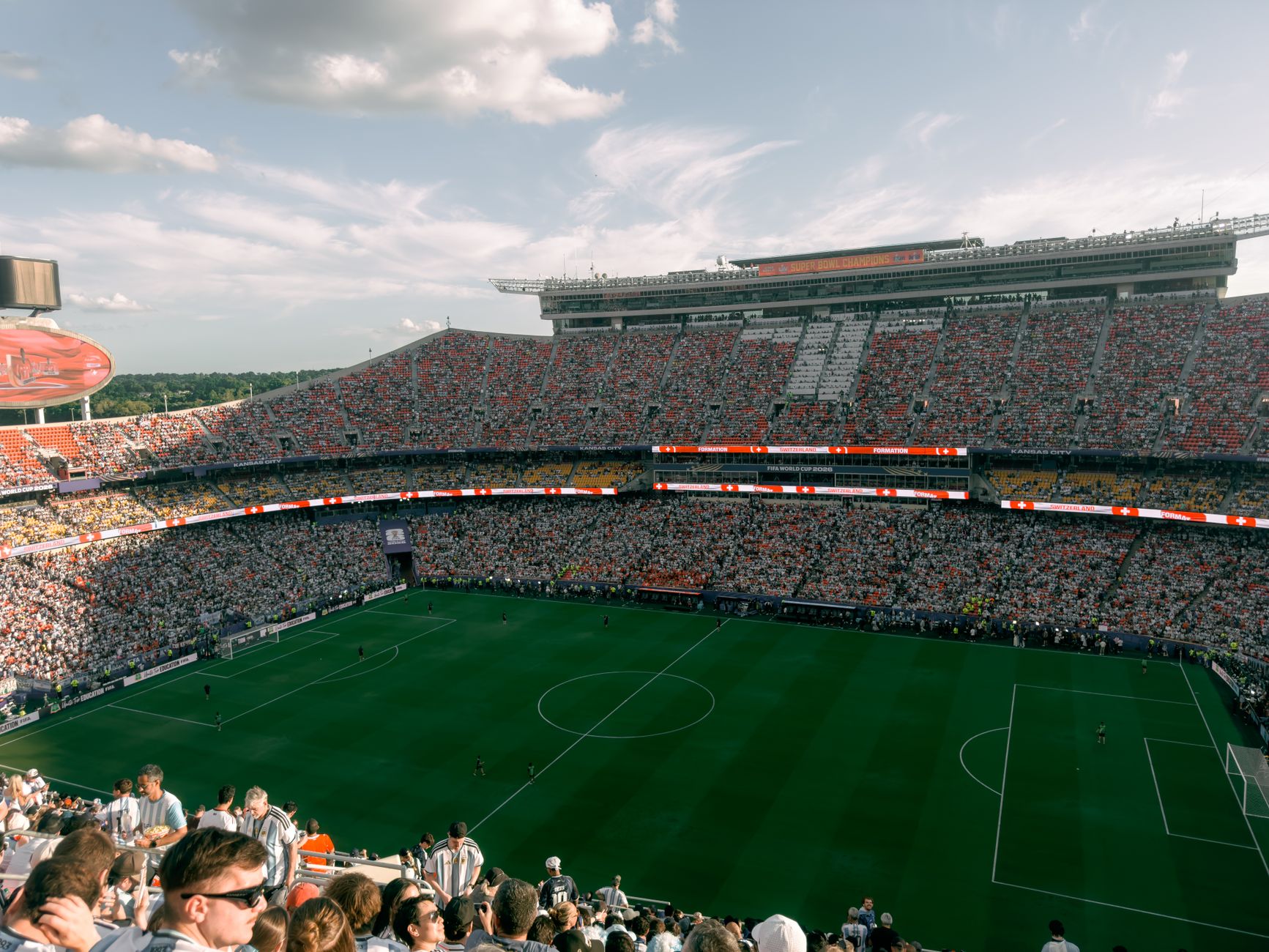
FIFA studying impact of expanding World Cup to 64 teams for 2030 edition Reuters
Introduction: FIFA Studies Unprecedented Expansion to 64 Teams for 2030 World Cup
In a move that could fundamentally alter the landscape of international football, FIFA has initiated exploratory studies into expanding the Men's World Cup to a monumental 64-team format for the 2030 centennial edition. Following reports from global news agency Reuters, world football’s governing body is assessing the operational, economic, and sporting feasibility of doubling the size of the tournament compared to its traditional 32-nation framework. The proposal arrives at a transformative juncture for the sport, as the global football calendar is already preparing to accommodate an expanded 48-team tournament at the 2026 World Cup across Canada, Mexico, and the United States.
The potential shift to a 64-team World Cup represents the most drastic structural overhaul in the competition's nearly century-long history. By opening the tournament gates to nearly one-third of FIFA’s 211 national member associations, the proposed format aims to usher in an unprecedented era of global inclusivity. However, the prospect of managing a 64-nation event has immediately sparked intense debate among federation officials, broadcast executives, elite club managers, and fan advocacy groups across the world. The study marks a bold declaration of ambition from FIFA leadership, seeking to maximize global interest while pushing human performance and sports logistics to their absolute limits.
As football governance moves into uncharted territory, the decision to evaluate a 64-team model reflects broader commercial pressures and political dynamics within the sport. While proponent federations view the expansion as a vital catalyst for football development in emerging markets across Africa, Asia, and Oceania, critics warn of severe schedule congestion, potential competitive dilution, and player burnout. With the 2030 tournament already uniquely slated to span six nations across three continents, adding 16 more teams to the established 48-team plan presents a complex puzzle that FIFA must solve over the coming years.
Background & Context: The Rapid Evolution of the World Cup Format
To fully understand the gravity of FIFA’s ongoing feasibility study, one must trace the historical trajectory of the World Cup's structural growth. The inaugural tournament in 1930 featured just 13 teams in Uruguay, expanding modestly to 16 teams for the 1954 edition in Switzerland. For nearly three decades, the 16-team format provided a tightly contested elite showcase, until FIFA expanded the field to 24 nations for the 1982 World Cup in Spain to reflect the growing strength of football outside Europe and South America. The landmark shift to 32 teams occurred at France 1998, establishing a widely praised format featuring eight balanced groups of four that endured for seven consecutive editions through Qatar 2022.
The precedent for radical expansion was formally set in 2017, when the FIFA Council unanimously voted to expand the 2026 World Cup to 48 teams. That decision was fueled by a desire to provide broader international representation and capitalise on explosive commercial opportunities in North America. Global commercial demand surrounding expanded football tournaments has reached unprecedented heights, as demonstrated by commercial reporting indicating Adidas Q2 Revenue Climbs 14% Driven by FIFA World Cup 2026 Demand across international markets. This financial surge underscored the financial viability of larger international events, setting the stage for FIFA leadership to explore even bolder concepts for the 2030 centennial celebration.
The backdrop for the 2030 tournament is already historic in its own right. FIFA previously confirmed that the 2030 World Cup will feature a unique multi-continental hosting arrangement: Spain, Portugal, and Morocco will serve as primary co-hosts, while Uruguay, Argentina, and Paraguay will each host an opening celebratory match to mark 100 years since the inaugural tournament in Montevideo. Integrating a 64-team field into a tournament that already spans Europe, Africa, and South America presents an unprecedented logistical mandate. Organizing multi-city accommodations, intercontinental transit, and training infrastructure for 64 distinct national delegations requires a level of coordination never before attempted in professional sport.
Furthermore, the push for expansion aligns with FIFA’s long-standing institutional policy to democratize global football development. Confederations such as the Confederation of African Football (CAF), the Asian Football Confederation (AFC), and the Confederation of North, Central America and Caribbean Association Football (CONCACAF) have historically lobbied for greater access to the sport's showpiece event. With traditional powerhouse nations in UEFA and CONMEBOL frequently monopolizing knockout stage positions, an expanded field ensures that smaller footballing nations receive crucial infrastructure funding, international exposure, and competitive experience on the grandest stage.
Key Details & Analysis: Logistics, Tournament Structure, and Athletic Demand
Analyzing the structural mechanics of a 64-team World Cup reveals significant logistical and tactical hurdles. Under a 64-team setup, FIFA would likely explore a format consisting of 16 groups of four teams, or alternatively, 8 groups of eight teams. A 16-group structure would see the top two teams from each group advance directly to a dramatic Round of 32 knockout stage. This model would increase the total number of matches played during the tournament from 104 (scheduled for the 48-team 2026 edition) to an extraordinary 128 matches. Managing such an expansive fixture list within a standard 32-to-35-day tournament window demands multiple daily kick-offs and an exceptional broadcast allocation strategy.
From an athletic perspective, expanding the field places extreme physical demands on elite players who are already coping with congested domestic and continental club schedules. Sports science and athletic analytics have highlighted the escalating physiological stress placed on top-tier athletes during summer tournaments. Comprehensive performance assessments, such as the Who Can Kick Higher? FIFA World Cup 2026 Athleticism Analysis, demonstrate that elite players are operating at near-peak mechanical limits regarding sprint distance, deceleration stress, and joint load. Adding extra international fixtures risks increasing muscle fatigue, injury rates, and performance degradation during crucial knockout matches.
To visualize the structural evolution of the FIFA World Cup across eras, consider the following statistical comparison of key tournament parameters:
1998–2022 Era: 32 Teams | 64 Total Matches | 8 Groups of 4 | 32 Days Duration
2026 Proposed Era: 48 Teams | 104 Total Matches | 12 Groups of 4 | 39 Days Duration
2030 Feasibility Study: 64 Teams | 128 Total Matches | 16 Groups of 4 | Estimated 42+ Days Duration
Logistically, hosting 64 national teams requires an astonishing array of top-tier facilities. A total of 64 dedicated, elite-standard team base camps—comprising five-star hotels and private, modern training complexes—would be required across Spain, Portugal, and Morocco. Additionally, match venues would need to accommodate rigorous turf management programs to withstand back-to-back match days. Venues like the Santiago Bernabéu in Madrid, the Camp Nou in Barcelona, the Estádio da Luz in Lisbon, and the newly planned Grand Stade de Casablanca would face relentless usage cycles throughout the group stage, necessitating state-of-the-art hybrid pitch management technology.
Broadcasting rights and media operations also require radical scaling under a 64-team model. Delivering flawless, high-definition global feeds for 128 matches across fluctuating time zones presents a massive engineering task. According to official guidelines detailed on FIFA.com, host broadcast services must maintain absolute uniformity across all host venues. The sheer volume of content produced would create unprecedented digital streams and television inventory, generating record revenues while simultaneously testing the bandwidth of global media networks and domestic rights holders.
Expert Perspective: Structural Friction, Pundit Views, and Executive Backlash
The news that FIFA is actively evaluating a 64-team expansion has generated sharp division across the football community. European football administrators and domestic league executives have expressed immediate skepticism, citing the continuous expansion of FIFA tournaments as an existential threat to domestic league stability. Tensions between global football governing authorities and European bodies have simmered for years over calendar congestion and revenue allocation. The rift between governing bodies reached acute levels when UEFA Threatens FIFA World Cup Boycott Over Private Stake Sale proposals, highlighting the deep structural mistrust regarding unilateral decision-making in Zurich.
Prominent football analysts and former international players have voiced concern over the potential dilution of competitive quality during the group phase. Pundits writing for BBC Sport and major European networks argue that expanding to 64 teams will inevitably result in heavily mismatched group fixtures, leading to non-competitive scorelines that could undermine the prestige of the group stage. The argument posits that while global inclusion is a noble administrative objective, the World Cup’s primary value lies in its elite intensity, where every group stage match carries high-stakes narrative tension.
Conversely, sports administrators representing smaller and mid-tier football federations strongly advocate for expansion. For nations in Central America, Africa, Central Asia, and Oceania that historically missed out on qualifying under the 32-team format, a 64-team tournament offers a transformative pathway. Qualification for a World Cup generates vital government funding, corporate sponsorship, grassroots infrastructure development, and national pride. African and Asian football leaders frequently point out that their continental representation has been historically under-indexed relative to their population size and football participation rates.
Furthermore, broader political disagreements regarding FIFA’s financial strategies continue to influence confederation perspectives. Internal governance debates have intensified in recent years, particularly in light of controversial financial restructuring plans where European Nations Boycott World Cup Over FIFA Private Equity Plan disputes dominated institutional discussions. European stakeholders remain cautious that expanding the World Cup to 64 teams may be driven primarily by a mandate to create more commercial inventory rather than a commitment to pure sporting integrity.
Impact & Implications: Re-shaping Global Qualification and Financial Dynamics