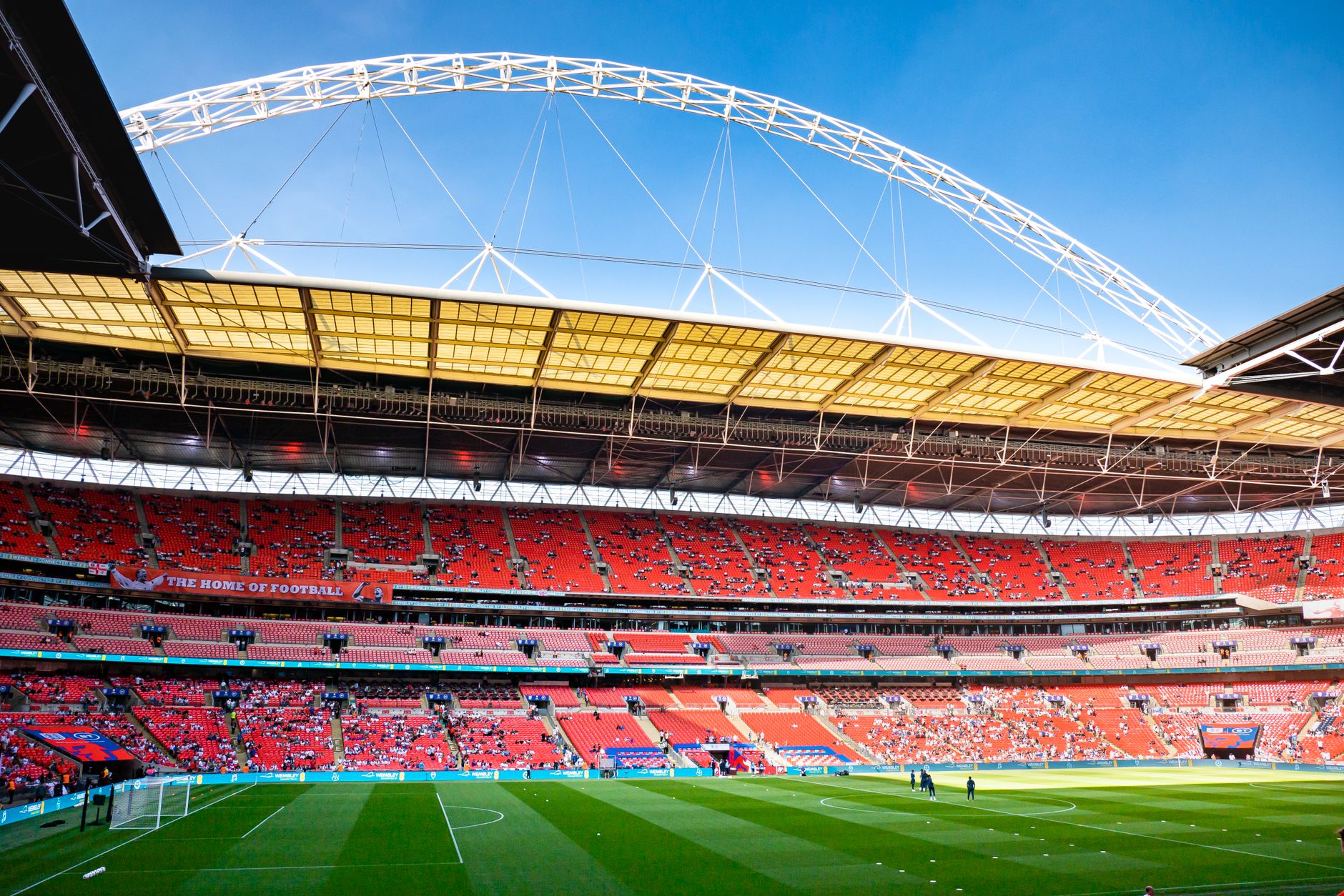
The pressure is building on Gianni Infantino. Can he survive as Fifa president?
Introduction
"A week is a long time in politics," former British Prime Minister Harold Wilson famously observed. In the multi-billion-dollar arena of global football administration, 24 hours can feel like an epoch. Just days ago, Gianni Infantino occupied what appeared to be an impregnable throne as the president of FIFA. Holding supreme authority over the global game, the Swiss-Italian administrator seemed destined to cruise smoothly toward another term at the helm of world football's governing body, backed by deep institutional alliances and an expanding tournament footprint.
Yet, a subterranean shockwave has suddenly shattered the calm in Zurich. Infantino's leadership now hangs by a thread following a brazen, covert attempt to sell significant equity stakes in FIFA competitions to private investment firms. Executed apparently without the knowledge or approval of FIFA's broader executive apparatus or regional confederations, the clandestine financial maneuver has ignited an unprecedented rebellion across the international footballing landscape. What was intended as a secretive commercial expansion has transformed overnight into the most dangerous political crisis of Infantino's career.
The swiftness of the backlash has stunned observers inside FIFA headquarters. European governing body UEFA has already delivered a devastating ultimatum, threatening a complete boycott of all FIFA competitions—a nuclear option that directly imperils the upcoming expanded World Cup. With key allies resigning in protest and confederations across multiple continents demanding immediate leadership reviews, the battle lines are drawn. World football stands at a profound constitutional crossroad, facing questions over whether Infantino can survive this mounting wave of defiance or if his presidency is entering its final act.
Background & Context
To understand the depth of the current crisis, one must revisit the turbulent landscape from which Gianni Infantino’s presidency emerged. Infantino assumed the FIFA presidency in February 2016 amid the wreckage of the massive FIFA gate corruption scandal that brought down his predecessor, Sepp Blatter. Promising absolute transparency, robust corporate governance, and sweeping financial reform, the former UEFA General Secretary presented himself as the modernizing force capable of restoring credibility to a tarnished institution. For much of his tenure, he consolidated power by dramatically expanding international tournaments and distributing vast sums of development funding to national associations across Africa, Asia, and North America.
However, beneath the surface of institutional unity, tensions between FIFA’s leadership in Zurich and UEFA’s headquarters in Nyon have simmered for years. UEFA has repeatedly viewed Infantino's commercial ambitions—including previous proposals for a biennial World Cup and an expanded Club World Cup—as aggressive encroachments on European football’s calendar and revenues. The financial landscape of top-tier football has undergone dramatic shifts in recent years, marked by an influx of private capital, sovereign wealth investment, and evolving financial models. As clubs constantly adapt their strategies in a hyper-competitive global market—a dynamic seen in tactical recruitment shifts like Why Chelsea want to sign older players—FIFA under Infantino sought to capture a larger share of global private investment.
The breaking point came when details emerged of Infantino’s unilateral negotiation with private equity consortia. In seeking to monetize FIFA’s premier international assets without broad consultation, Infantino crossed an ideological and governance red line. For European administrators who felt repeatedly bypassed, as well as leaders from other confederations who were kept completely in the dark, the private equity gambit represented a fatal violation of institutional trust. The resulting political fallout has transformed long-standing policy grievances into an explosive effort to end his presidency entirely.
Key Details & Analysis
The anatomy of the revolt against Infantino was swift, lethal, and remarkably widespread. UEFA was the first to strike, wielding its most powerful political leverage: a formal threat to boycott all FIFA competitions. A World Cup without European powerhouses like France, Germany, England, Spain, and Italy would gut the tournament’s broadcast value, prestige, and financial viability. Sensing an unprecedented opportunity to remove a president with whom they have clashed for nearly a decade, European leaders transformed a commercial dispute into an existential fight for control of the global calendar.
Crucially for Infantino, the rebellion was not confined to his traditional rivals in Nyon. CONCACAF, the confederation representing North and Central America and the Caribbean, delivered a monumental blow. Having worked hand-in-hand with Infantino to organize the massive 2026 FIFA World Cup hosted jointly by the United States, Canada, and Mexico, CONCACAF broke ranks to demand a "full review" into the leadership and financial governance of FIFA. This public rebuke from a key strategic partner underscored how isolated the FIFA President had become in a matter of hours.
The political dam broke further as loyal blocks within the Asian Football Confederation (AFC) openly shunned the FIFA chief, refusing to offer their customary public backing. Simultaneously, Infantino’s executive foundation crumbled from within. Senior adviser Carlos Cordeiro, former president of U.S. Soccer and a pivotal figure in FIFA's North American strategy, resigned his post. He was swiftly followed out the door by Chief Operating Officer Kevin Lamour, one of Infantino’s closest administrative lieutenants. The resignation of key insiders confirmed that the governance failure reached the very top of FIFA’s operational pyramid.
Desperate to stem the bleeding, Infantino staged a frantic retreat in the early hours of Saturday morning, announcing that the private equity deal was officially shelved. However, the concession arrived too late. UEFA responded immediately with a blistering public statement declaring that it had completely lost confidence in Infantino's ability to govern. The attempted backtrack failed to appease his critics; instead, it signaled profound vulnerability, prompting opposition forces to mobilize for a permanent leadership change.
Expert Perspective
Governance experts and veteran sports journalists have characterized the 24-hour meltdown as the most catastrophic failure of political risk management in modern sports administration. Speaking on condition of anonymity, senior European football officials described Infantino’s move as an unpardonable overreach that shattered the basic tenets of collective decision-making. Analysts from major sports outlets, including detailed reporting from BBC Sport, have highlighted that the anger across global federations stems not only from the commercial content of the proposal, but from the secrecy with which it was conducted.
Fan groups and football advocacy organizations have also weighed in heavily, condemning the ongoing push toward hyper-commercialization and opaque financial deals. Across Europe and North America, supporters' trusts have voiced concern over private equity firms obtaining structural stakes in national-team competitions. The broader public debate mirrors domestic arguments surrounding football finance and accountability. Much like the growing calls for financial transparency in club operations—such as campaigns highlighted in Football Clubs Urged to Pay £70m Taxpayer Match Policing Bill—supporters are demanding that international governing bodies operate with absolute public accountability rather than treating global tournaments as private financial assets.
Tactically, pundits note that UEFA President Aleksander Čeferin has executed a masterclass in political maneuvering. By uniting European member associations behind a clear narrative of institutional integrity and governance, UEFA has backed Infantino into a defensive corner. Football governance scholars point out that while Infantino previously survived controversies through the unwavering support of smaller member nations, the loss of key figures within CONCACAF and the AFC deprives him of the broad geographical coalition required to insulate his presidency from European pressure.
Impact & Implications
With the battle lines firmly drawn, the immediate focus shifts to the constitutional mechanisms available to remove a sitting FIFA President. The swift exit route remains a voluntary resignation, precisely mirroring the dramatic resignation of Sepp Blatter in 2015 following federal indictments in Switzerland and the United States. However, Infantino remains a defiant political fighter who retains pockets of genuine support. If he refuses to step down voluntarily, his opponents must navigate complex statutory pathways defined in the official statutes available on FIFA.com.
The first statutory avenue involves triggering an emergency meeting of the FIFA Council. Such a gathering can be formally convened if 19 of the 37 FIFA Council members submit a written demand. The structural composition of the Council reveals the delicate political arithmetic involved:
UEFA (Europe): 9 members
African Football Confederation (CAF): 6 members
Asian Football Confederation (AFC): 7 members
CONCACAF (North/Central America): 5 members
CONMEBOL (South America): 5 members
Oceania Football Confederation (OFC): 3 members
Executive Officers: FIFA President and Secretary General Mattias Grafström
While UEFA’s nine members and CONCACAF’s five could form a formidable core of 14 votes, reaching the required threshold of 19 remains uncertain. CAF, CONMEBOL, and OFC have notably refrained from issuing aggressive public condemnations, leaving Infantino with potential lifeboats on the Council. Should 19 members successfully convene an emergency session, the Council could pass a resolution calling for Infantino's resignation. While such a vote does not automatically vacate the presidency under FIFA statutes, it would render his political position practically untenable.
The second, far more potent nuclear option is the calling of an Extraordinary FIFA Congress. Under Article 27 of the FIFA Statutes, an Extraordinary Congress must be convened if one-fifth (43) of the 211 member associations make a formal request in writing. Because UEFA boasts 55 national associations within its ranks, European football possesses the absolute power to trigger an Extraordinary Congress unilaterally whenever it chooses. Once triggered, the Congress must meet within two to three months.
An Extraordinary Congress would effectively function as a de facto vote of no confidence. To successfully remove Infantino from office, opposition forces would need to secure a simple majority of 106 votes out of the 211 total member associations. The political distribution across the global voting blocks presents a dramatic battlefield:
UEFA: 55 votes
CAF (Africa): 54 votes
AFC (Asia): 46 votes
CONCACAF: 35 votes
OFC (Oceania): 11 votes
CONMEBOL: 10 votes
If UEFA (55) and CONCACAF (35) vote cohesively against Infantino, they would command 90 votes—just 16 short of the 106 required for removal. Securing those remaining votes would depend entirely on picking off dissatisfied nations within the AFC and CONMEBOL. In the complex world of sports diplomacy, securing specific voting blocks often resembles delicate contract negotiations in professional football—much like how clubs carefully negotiate structured agreements, as seen when <