Track the 2026 World Cup Golden Boot race. In-depth analysis
2026 World Cup Golden Boot Tracker: Will Messi, Mbappé, or another superstar take the crown?
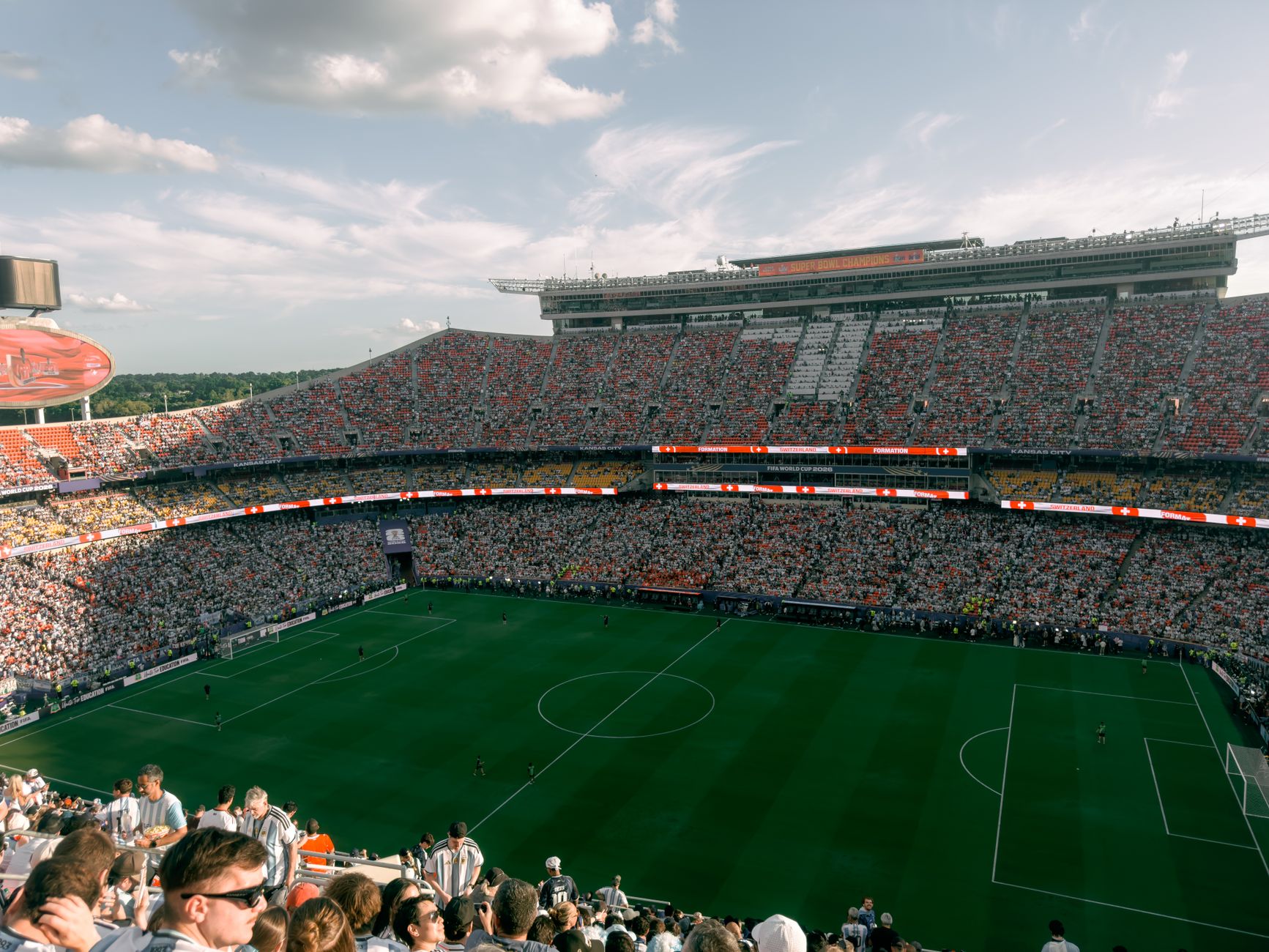
The 2026 FIFA World Cup across Canada, Mexico, and the United States has erupted into an unprecedented sporting spectacle, captivating millions of football fans worldwide. While national pride and the famous golden trophy remain the ultimate team achievements, the individual race for the adidas Golden Boot is generating equal amounts of drama. Awarded to the tournament's top goalscorer, the Golden Boot represents the absolute pinnacle of individual attacking excellence in world football. As the drama unfolds across North America's modern arenas, every shot, penalty, and late tap-in is monitored under an intense global spotlight.
The central question driving headlines across major sports outlets is simple yet captivating: can legendary Argentina captain Lionel Messi defend his international fairy tale, or will France's explosive sensation Kylian Mbappé dominate the leaderboard once again? Meanwhile, a terrifying new wave of world-class goalscoring machinery, led by Norway's Erling Haaland and England's Harry Kane, is eager to crash the party and write their own names into the annals of World Cup history. The high-scoring early encounters have set an electric tempo, promising one of the most statistically extraordinary top-scorer battles ever witnessed.
Beyond the pitch, the 2026 tournament has shattered commercial and viewership records, elevated by massive celebrity presence and global media interest. Off-field figures and tournament ambassadors have kept football in the headlines, but when the referee's whistle blows, all attention pivots strictly back to the pitch. Tactical adjustments, rotational squad management, and clinical finishing inside the penalty area are now deciding who climbs the Golden Boot rankings and who gets left behind in the North American heat.
Background & Context: The Evolution of World Cup Goalscoring Records
To fully appreciate the intensity of the 2026 Golden Boot tracker, one must understand the rich history and changing dynamics of World Cup scoring. Historically, winning the Golden Boot required a rare mix of elite finishing, deep tournament progression, and occasional group-stage goal sprees. Legendary strikers such as Ronaldo Nazário (8 goals in 2002), Miroslav Klose (5 goals in 2006), James Rodríguez (6 goals in 2014), and Harry Kane (6 goals in 2018) all etched their names in history through distinct combination plays, lethal set-piece finishing, and extraordinary individual brilliance. In 2022, Kylian Mbappé put on a generational performance in Qatar, claiming the award with an incredible 8 goals, including a breathtaking hat-trick in the final match.
However, the 2026 edition introduces a historic structural modification that fundamentally changes the mathematics of the Golden Boot competition. With the expansion to a 48-team format featuring 104 total matches, teams reaching the semi-finals and final now play eight matches instead of the traditional seven. Furthermore, the inclusion of an additional knockout round—the Round of 32—alongside initial group fixtures against first-time qualification nations creates fertile ground for world-class strikers to rack up massive goal tallies early in the competition. The margins between victory and exit remain razor-thin, as detailed in our comprehensive review of 2026 World Cup Winners & Losers: Spain Rules, USMNT Exit Drama.
Historically, deep team runs were almost mandatory for any striker aspiring to lift the top scorer trophy. Yet, the modern game's relentless pace and high-pressing systems mean that goal distribution is evolving. Teams can no longer rely solely on a single focal point up front; instead, sophisticated attacking patterns are designed to create high-probability chance creation across multiple channels. Strikers who double as primary penalty takers for dominant footballing nations hold an enormous statistical advantage in this expanded structure, making every whistle in the box a potential milestone in the Golden Boot standings.
Key Details & Analysis: Dissecting the Golden Boot Contenders
Analyzing the primary contenders for the 2026 Golden Boot requires looking at individual form, tactical setups, and national team reliance. The elite forward group features an extraordinary mix of veteran genius, physical powerhouses, and relentless transitions. Here is how the primary top-scorer contenders stack up on the international stage:
Kylian Mbappé (France): Possesses unmatched acceleration, clinical off-ball movement in the half-spaces, and proven big-match temperament. Operating under Didier Deschamps' fast-transition system, Mbappé remains the oddsmakers' favorite to collect consecutive Golden Boots.
Lionel Messi (Argentina): Even in the twilight of his iconic career, Messi's positional intelligence, spatial awareness, and lethal set-piece delivery keep him at the heart of Argentina's attack. His central role as primary penalty taker guarantees high-quality scoring chances.
Erling Haaland (Norway): A physical marvel whose explosive movement and unyielding goal sense make him a constant threat. In Norway's direct attacking setup, Haaland requires minimal touches to generate high Expected Goals (xG) figures.
Harry Kane (England): The ultimate hybrid forward who seamlessly drops deep to link play before invading the box. Kane's elite penalty record and aerial prowess make him a perpetual contender for international scoring honors.
Robert Lewandowski (Poland): A master of traditional center-forward movement whose technical box positioning allows him to capitalize on even the smallest defensive lapses.
Beyond individual brilliance, tactical trends established at the club level are heavily impacting national team production. The influence of top European clubs is unmistakable throughout the tournament stats. Outstanding club form translates directly into international rhythm, a phenomenon underscored by Stats: Arsenal's Incredible 2026 FIFA World Cup Impact, which details how modern pressing and fluid attacking movements built at club level are paying huge dividends on the World Cup stage.
Advanced analytical metrics provided by FIFA reveal that non-penalty Expected Goals (npxG) and shot-conversion percentages are higher in this tournament than in previous editions. Strikers who play in possession-dominant teams that quickly recover the ball in the opposition third are generating far more high-margin chances per 90 minutes. Consequently, players backed by world-class creative midfield engines—such as France, England, and Argentina—are positioned far more favorably on our live Golden Boot tracking board than isolated forwards operating in defensive, counter-attacking setups.
Expert Perspective: Tactical Systems, Rotation, and Pundit Insights
Respected football analysts and tactical pundits across major networks like ESPN have emphasized that managing physical workload will play a pivotal role in deciding the individual scoring champion. Spanning vast distances across three host countries, differing altitudes, and varying weather conditions—from humid southern venues to domed indoor stadiums—the 2026 tournament demands peak athletic recovery. Strikers playing for teams that secure early qualification from the group stages might find their minutes limited in matchday three, potentially curbing their immediate goal tallies but preserving their sharpness for the crucial knockout rounds.
Tactical experts also point to the psychological pressure unique to the World Cup stage. Leading analysts argue that while early group stage encounters against lower-ranked opposition offer opportunities for multi-goal displays, the true mark of a Golden Boot winner lies in maintaining clinical efficiency when space tightens against elite defensive blocks in the final 16 and beyond. A striker who convert 25% of their limited chances during high-stakes knockout ties often outpaces players who stack goals early but fade against top-tier opposition.
Simultaneously, the immense media narrative surrounding the tournament has amplified the visual glamour of the spectacle. High-profile ambassadors and sporting icons have drawn non-traditional audiences into the fold, cementing the event's cultural footprint across North American pop culture. The massive financial and marketing machine driving the event is thoroughly documented in reports detailing How Much David Beckham Earned From 2026 World Cup Revealed, showcasing how commercial star power and on-field sporting excellence combine to make North America 2026 a landmark moment in modern sports history.
Impact & Implications: How the Golden Boot Race Shapes Team Success
The pursuit of the Golden Boot is rarely an isolated, selfish endeavor; it directly influences team strategy, match management, and group stage standings. A front-runner hitting peak scoring form alters how opposing head coaches structure their defensive lines. When a superstar like Mbappé or Haaland starts racking up multiple goals in early fixtures, opposing managers are forced to deploy double-coverage tactics or adopt deeper low blocks, inadvertently opening up space for secondary attackers and midfielders to exploit.
Furthermore, in the expanded 48-team tournament structure, goal difference plays a vastly magnified role in determining third-place qualification brackets and knockout seedings. A team possessing an aggressive, relentless striker who pushes for fourth and fifth goals late in comfortable group victories gains a massive structural advantage in seeding calculations. Strikers are encouraged by their coaching staffs to stay hungry until the final whistle, driving up average goals-per-game stats across the board.
However, history demonstrates that reliance on a single superstar can sometimes backfire if that player is successfully neutralized in the elimination stages. Balance remains the hallmark of true tournament champions. As observed in previous elite tournaments and highlighted following Spain's memorable international triumphs—captured vividly when Spain Celebrates 2026 World Cup Win with Trophy Lift in Madrid—teams that combine a high-performing goalscorer with a unified, fluid team structure are far more likely to pair individual awards with collective ultimate glory.
Looking Ahead: Knockout Matchups, Pitch Conditions, and Dark Horse Contenders
As the group stage action wraps up and the high-stakes single-elimination phase approaches, the Golden Boot tracker enters its most thrilling phase. The elimination rounds introduce extra time and potential penalty shootouts, factors that dramatically impact goal tallies and individual drama. Freshness, clinical composure under pressure, and elite set-piece execution will dictate who climbs to the top of the goalscorer leaderboard when the tension reaches boiling point.
Looking at the projected knockout brackets, several dark-horse candidates could mount late, explosive runs to challenge established leaders like Messi and Mbappé. Keep a close eye on the following high-value key factors over the coming matchdays:
Bracket Path Advantages: Teams facing defensively vulnerable opposition in the Round of 32 offer their key attackers a golden window to double their total goals in a single evening.
Set-Piece Efficiency: Strikers who handle primary penalty duties for teams prone to drawing VAR decisions in congested penalty boxes will maintain a continuous scoring floor.
Venue and Climate Factors: Matches played in climate-controlled indoor environments may foster faster, more fluid attacking play compared to open-air fixtures played under extreme summer heat and humidity.
Emerging Dark Horses: High-volume wingers and surging attacking midfielders from dynamic sides like Brazil, Germany, and Spain who could produce late, multi-goal games.
The convergence of these variables ensures that the Golden Boot race will remain fiercely unpredictable right up until the final whistle at MetLife Stadium. Football fans can expect dramatic swings in the rankings with every passing matchday, as a single brilliant performance can catapult a candidate from mid-table obscurity right into prime position for the sport's greatest individual award.
Conclusion: A Legacy-Defining Race for Footballing Immortality
The 2026 FIFA World Cup Golden Boot race is shaping up to be one of the most compelling individual battles in the history of international sports. Set against the backdrop of an expanded, high-octane tournament spanning North America, the competition brings together legendary veterans making their final international bows and generational talent operating at the absolute peak of their athletic powers. Every matchday delivers high-level tactical chess, astonishing moments of physical skill, and unmatched narrative tension.
Off the pitch, the tournament's astronomical cultural reach—boosted by international icons and global media coverage, as thoroughly detailed in Why Beckham is Face of World Cup 2026 in US | BBC Report—has elevated football to unprecedented heights in North America. Yet, when stripped down to its pure sporting core, nothing matches the simple, electrifying thrill of seeing the world's finest goalscorers battle for personal glory and national immortality.
Whether Lionel Messi crafts one final magical chapter, Kylian Mbappé further cements his status as a World Cup titan, or Erling Haaland claims the mantle in explosive fashion, the 2026 Golden Boot winner will have earned their place in football royalty. As the tournament marches relentlessly toward its dramatic conclusion, one thing is absolute: fans worldwide are witnessing a historical individual goalscoring chase that will be celebrated for decades to come.