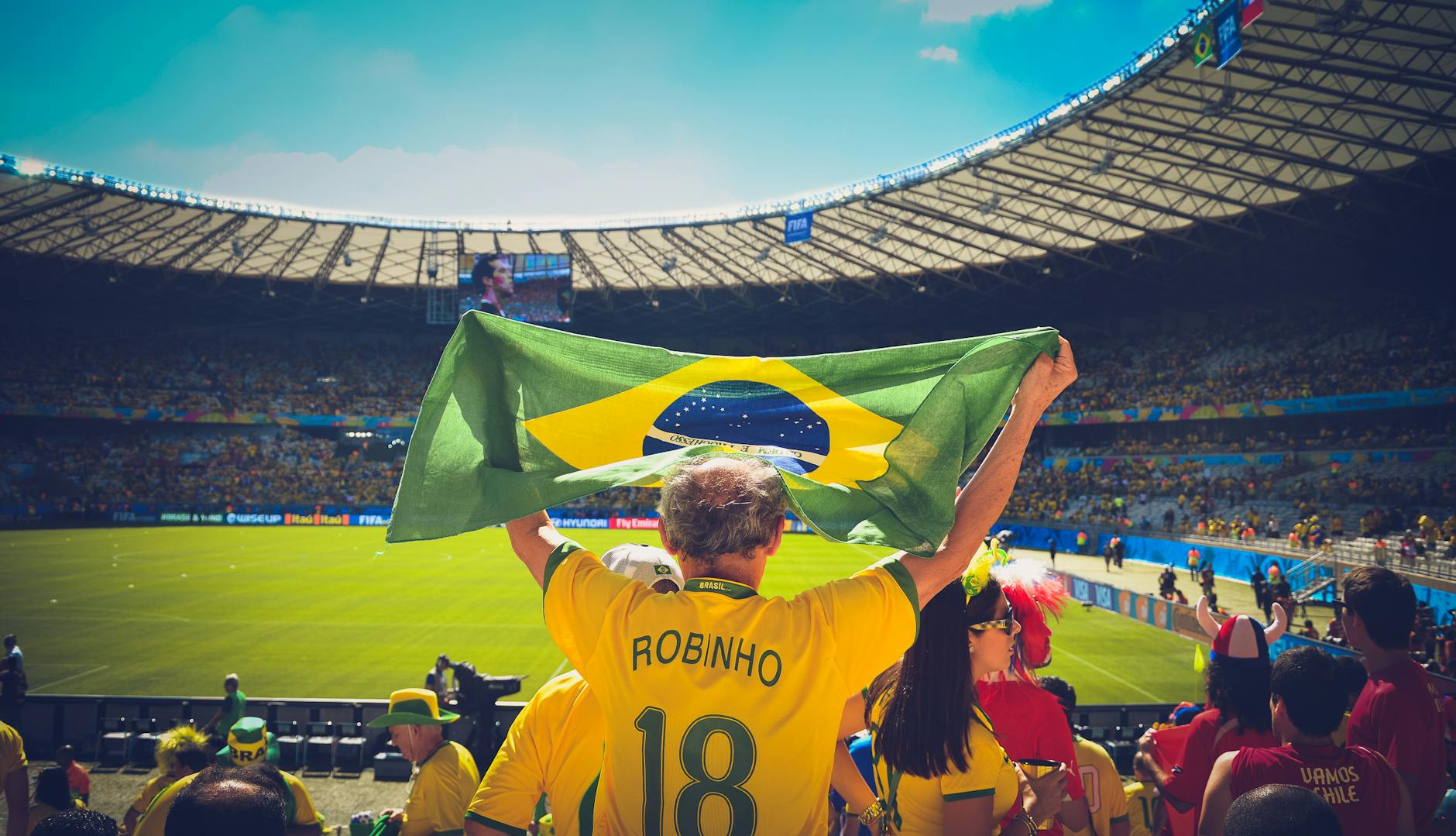
New France head coach Zinedine Zidane has revealed he turned down multiple job opportunities during the last five years - because he only wanted to take ch
Zidane Takes the Reins: "I Turned Down Every Offer for Les Bleus"
In what is undoubtedly one of the most seismic developments in modern international football, Zinedine Zidane has officially been unveiled as the head coach of the France national team. Taking over from his former international teammate Didier Deschamps, whose decade-plus tenure brought a World Cup trophy and unparalleled consistency, Zidane steps into the hot seat at a pivotal juncture for French football. During his captivating opening press conference at the French Football Federation (FFF) headquarters in Paris, the 52-year-old icon made a stunning revelation: he had spent the last five years turning down lucrative, high-profile offers from top European clubs and foreign national federations for one singular reason—his heart was exclusively set on managing Les Bleus.
Zidane's appointment ends years of feverish speculation across the global footballing landscape. Ever since he stepped down from his second trophy-laden spell at Real Madrid in 2021, the legendary midfielder was constantly linked with the sport's highest-paying and most prestigious seats, including Paris Saint-Germain, Manchester United, Juventus, and Bayern Munich. Yet, Zidane maintained a patient, almost stoic resolve in the background. His unwavering patience underscores a deep-rooted emotional connection to the French shirt—a shirt he famously lifted to the heavens in 1998 after scoring twice in the World Cup final against Brazil at the Stade de France.
As the footballing world digests the magnitude of this appointment, the immediate focus turns toward the road ahead. With the expanded 48-team FIFA World Cup 2026 in Canada, Mexico, and the United States looming large on the horizon, Zidane takes charge of a squad brimming with world-class talent, led by global superstar Kylian Mbappé. The announcement has sent shockwaves of excitement through the French public, but it has also sparked an intense debate among analysts and tacticians. Questions abound regarding whether Zidane will maintain the pragmatic, result-oriented foundation established by Deschamps or unleash a new, attack-minded era designed to dominate world football with expressive flair.
The stakes could not be higher for both the manager and the national federation. France enters every major tournament under the heavy burden of absolute expectation. While Deschamps brought stability and a winning culture, the bitter taste of defeat in the 2022 Qatar World Cup final and a pragmatically stifling campaign at Euro 2024 left many supporters craving fresh ideas. Zidane’s arrival represents a dream scenario for fans, yet it carries the immense weight of expectation that only a living legend can command.
Background & Context: End of an Era, Beginning of a New Dynasty
To fully grasp the significance of Zidane's arrival, one must look at the towering legacy left behind by Didier Deschamps. Appointed in 2012, Deschamps transformed a fractured national team program into an international powerhouse. Under his steady leadership, France reached the final of Euro 2016, conquered the world at the 2018 FIFA World Cup in Russia, lifted the UEFA Nations League trophy in 2021, and came within a penalty shootout of retaining their global crown in Qatar in 2022. Deschamps forged a culture defined by mental resilience, tactical adaptability, and defensive solidity.
However, football is a game of relentless evolution, and the final chapters of Deschamps' reign showed signs of stagnation. Despite reaching the semi-finals of Euro 2024, France struggled to captivate neutral observers, reliant on moment-to-moment individual brilliance rather than cohesive, fluid attacking structures. The painful memory of the 2022 World Cup final defeat to Argentina—a game in which veteran defender Marcos Otamendi and his backline neutralized the French attack for long stretches before Mbappé's miraculous late rescue attempt—remained a stark reminder of France's tactical vulnerabilities against top-tier opponents. For fans keeping up with global international retirements, such as when Soccer-Argentina defender Otamendi retires from international football, that dramatic night in Lusail marked the end of an era for many iconic figures on both sides.
Enter Zinedine Zidane. As a manager, Zidane’s track record is nothing short of historic. Taking the reins at Real Madrid in early 2016, he accomplished what no manager in the modern UEFA Champions League era had ever done: winning three consecutive European titles between 2016 and 2018. He added two La Liga crowns to his managerial resume, demonstrating a rare capability to manage colossal dressing-room egos while making crucial tactical adjustments in high-stakes matches. His uncanny ability to inspire trust and get the absolute best out of stars like Cristiano Ronaldo, Karim Benzema, Luka Modrić, and Toni Kroos makes him uniquely qualified to lead France's current golden generation.
Furthermore, Zidane steps into an international landscape undergoing rapid evolution. From structural tournament expansions to tactical changes across domestic leagues, modern football demands rapid adaptation. As dynamic pressings and rules evolve globally—much like how English football proposes trial to tackle goalkeeper timeouts to streamline match rhythm—international managers must constantly innovate to keep their teams sharp, disciplined, and physical over short, high-intensity tournament windows.
Key Details & Tactical Analysis: How Will Zidane's France Play?
The central question surrounding Zidane’s tenure is how he will organize Les Bleus on the pitch. During his time at Real Madrid, Zidane showed remarkable flexibility, shifting smoothly between a flexible 4-3-3, a diamond 4-4-2, and a compact 4-2-3-1 depending on opponent weaknesses and available personnel. Unlike dogmatic system coaches, Zidane’s overarching coaching philosophy centers on player empowerment, spatial awareness, and lethal transitional speed. He prioritizes building a strong spine, giving creative players the freedom to express themselves in the final third.
Tactically, Zidane is expected to modernize France's approach without dismantling the defensive strength built by Deschamps. In goal, Mike Maignan remains the indisputable starter, anchored by a formidable central defensive pairing of William Saliba and Ibrahima Konaté. Zidane’s real tactical revolution, however, will likely take place in midfield and attack. Having previously worked with and heavily praised young French talents during his final months in Madrid, Zidane is perfectly positioned to maximize the midfield pairing of Aurélien Tchouaméni and Eduardo Camavinga. Paired alongside dynamic central talents like Warren Zaïre-Emery, France possesses a midfield engine capable of dominating possession while providing elite defensive coverage.
In attack, all eyes will be on how Zidane builds around Kylian Mbappé. Under Deschamps, Mbappé was often asked to work within a highly disciplined structure that sometimes isolated him on the left wing or as a central striker without adequate midfield support. Zidane, who famously balanced Cristiano Ronaldo’s attacking output with collective team balance at Real Madrid, is expected to afford Mbappé a roaming, hybrid role. Supported by lightning-fast wingers such as Ousmane Dembélé and Bradley Barcola, along with versatile playmakers like Michael Olise, France's frontline could become the most fearsome attacking unit in international football.
To highlight the key tactical shifts expected under Zidane's leadership, consider the following strategic priorities for the new national team setup:
Fluid Attacking Rotations: Moving away from fixed positional roles in favor of dynamic positional interchanges between the central striker and wide attackers.
High Midfield Pressing: Utilizing the physical and technical dominance of Tchouaméni and Camavinga to win back possession in the opposition half.
Transition Speed: Exploiting turn-over opportunities rapidly with precise vertical passing to utilize the electric pace of Mbappé and Dembélé.
Empowered Full-Backs: Encouraging full-backs like Théo Hernandez to push deep into attacking channels to provide width and overloads.
The depth of talent available to Zidane is staggering. French sport consistently produces world-class athletes across various disciplines, a phenomenon reflected not just in football but across global sporting culture, where dynamic top-tier athletes make headlines worldwide, much like French stars as Wigan add to Saints' disarray | 12-player Wakefield ro in physical multi-code environments. Bridging physical power with technical supremacy will be Zidane's main objective.
Expert Perspective: Reaction from Pundits, Peers, and the Footballing World
The reaction to Zidane’s appointment across the global football community has been overwhelming enthusiasm mixed with keen tactical intrigue. Former French internationals and pundits have overwhelmingly welcomed the move, seeing Zidane as the natural heir to the national throne. Former teammates, including Thierry Henry and Bixente Lizarazu, have publicly stated that Zidane’s unparalleled charisma and legendary status will immediately command the absolute respect of every player in the French dressing room.
However, football analysts have also pointed out the unique challenges that come with international management. Unlike club management, where a head coach works with players daily on the training ground, international managers get limited contact hours during FIFA international windows. Some pundits have questioned whether Zidane’s renowned man-management style—which relied heavily on daily conversations, personal bonds, and subtle tactical tweaks at Real Madrid—can translate effectively to the intermittent nature of national team football.
When assessing managerial transitions, football historians point out that taking over a national giant requires a blend of gravitas and tactical adaptability. In many ways, Zidane's challenge mirrors broader managerial dynamics seen across world football, where younger or newly appointed leaders take charge of historic institutions—a trend evident even in domestic club management, as seen in Motherwell's Young Manager Alfred Johansson pushing tactical boundaries in Scotland. For Zidane, the expectation is not merely to win matches, but to do so with style and dominance.
Fan reaction across France has reached a fever pitch. From Paris to Marseille, supporters view Zidane not just as a manager, but as a national hero returning home to lead his country toward glory once again. His refusal to accept top club roles over the past five years has resonated deeply with the French public, who see his patience as a remarkable act of loyalty to the national shirt in an age dominated by commercial interests.
Impact & Implications: The Road to FIFA World Cup 2026
The timing of Zidane’s appointment carries profound implications for the FIFA World Cup 2026. Hosted across North America, the upcoming tournament will feature an unprecedented 48 teams, expanding the knockout stages and increasing the number