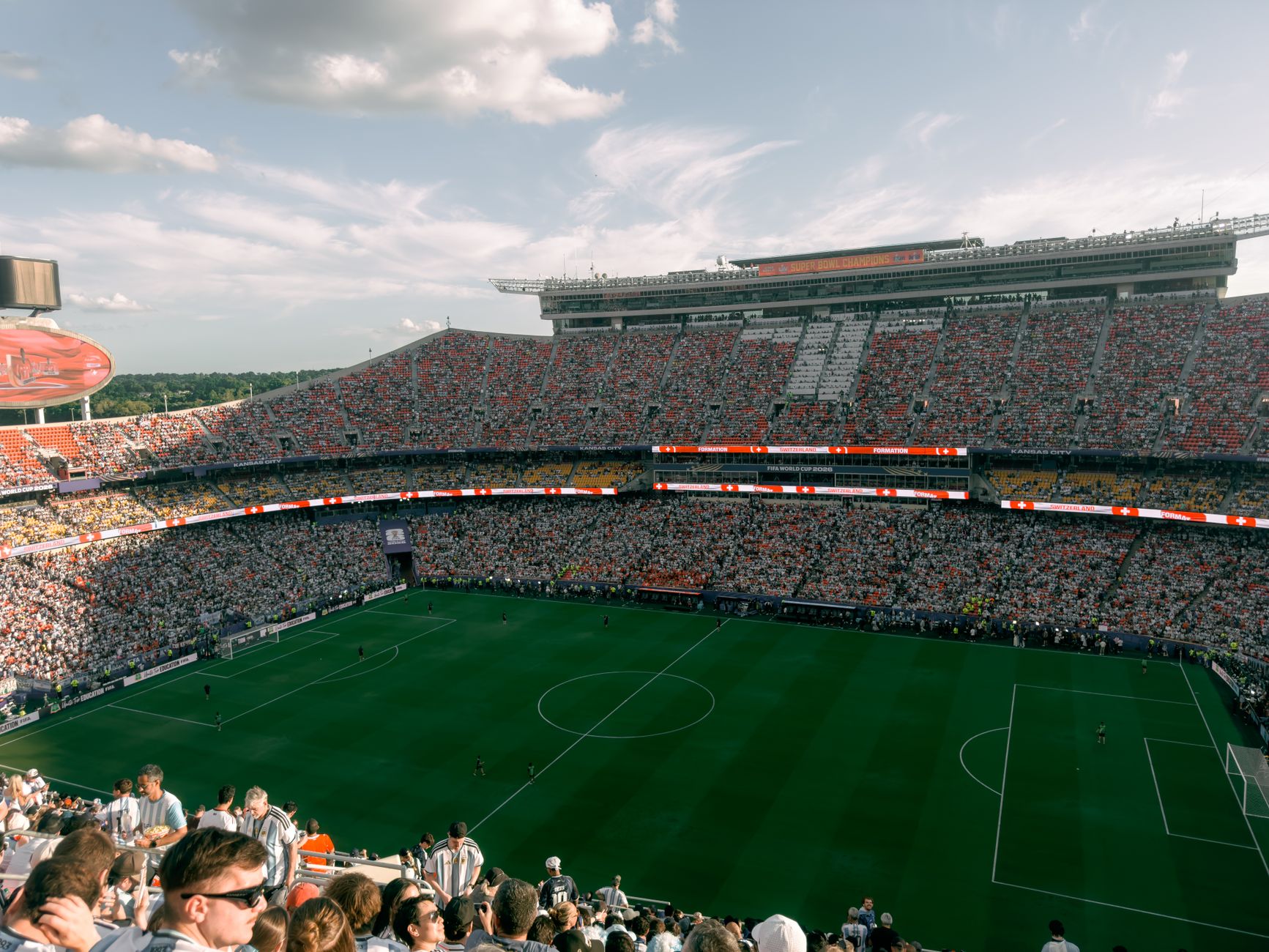
FIFA Chief Arsene Wenger fiercely opposes proposed World Cup business plan reforms, sparking debate over 2026 finances, player welfare, and revenue splits.
1. Introduction: Wenger’s Stance Triggers Earthquakes in Football Governance
In an unexpected shift within the highest corridors of international football administration, FIFA’s Chief of Global Football Development, Arsène Wenger, has forcefully spoken out against sweeping proposed reforms to the FIFA World Cup business plan and financial distribution structure. The former legendary Arsenal manager, long viewed as one of the principal architects of modern footballing innovation and global expansion, has delivered a stern rebuke to proposed structural alterations aimed at overhauling how the tournament’s immense revenues are partitioned and monetised ahead of the landmark 2026 tournament in North America.
Wenger’s fierce pushback comes at a fragile juncture for the international game. As North America prepares to host an unprecedented 48-nation spectacle spanning the United States, Canada, and Mexico, internal debates over television rights, corporate sponsorship redistributions, and commercial licensing models have intensified. The proposed business reforms—championed by external financial advisers and certain member associations—aim to radically adjust global solidarity payouts, commercial rights management, and legacy funding allocations. However, Wenger’s opposition has sent shockwaves through Zurich, exposing a growing philosophical rift between pure financial maximalism and the preservation of competitive integrity.
The ramifications of this dispute extend far beyond executive boardrooms in Switzerland. The financial architecture of the World Cup directly dictates the global football economy, influencing solidarity payments that trickle down to domestic leagues, grassroots academies, and ultimately, the transfer market. With elite clubs spending astronomical sums in domestic windows—exemplified by headlines where Arsenal Set to Sign Newcastle Captain Bruno Guimaraes for £80m—the health of the global redistribution model remains inextricably linked to how top clubs and emerging talents navigate the modern sporting landscape.
2. Background & Context: The Road to 2026 and the Business of the Expanded World Cup
To fully grasp the magnitude of Wenger’s opposition, one must examine the rapid evolution of the World Cup’s financial and structural footprint. Since the 1998 tournament in France, the competition has operated under a stable 32-team format that generated predictable, exponential growth in broadcast and commercial revenue. FIFA’s commercial cycle for the 2018–2022 quadrennial yielded over $7.5 billion in total revenue, driven by world-class television rights packages and global sponsorship deals. The transition to a expanded 48-team model for 2026 was engineered precisely to scale these economic figures past the $11 billion mark, introducing 104 total matches across 16 iconic host cities.
However, the expansion has brought immense logistical and economic friction. The proposed business plan reform package seeks to alter the traditional revenue-sharing equity model. Under the proposed adjustments, a higher percentage of commercial revenue would be allocated directly to top-tier commercial rights holders, global broadcast consortia, and institutional investment partners, while modifying how central solidarity funds are disbursed to developing football federations across CAF, AFC, and CONCACAF. Critics argue that such a model threatens to widen the economic chasm between established football superpowers and developing nations.
Furthermore, domestic club ecosystems rely heavily on FIFA’s Club Benefits Programme, which compensates clubs for releasing players to international duty. As mid-table and rising European clubs invest heavily in international scouting pipelines—such as seen when Forest close in on Ivory Coast defender Diomande—the financial guarantees provided by international tournament distributions provide vital fiscal security under strict Profitability and Sustainability Rules (PSR). Any disruption or restructuring of these baseline financial guarantees creates secondary shocks throughout international football transfers and talent development pathways.
Wenger, who was appointed as FIFA’s Chief of Global Football Development in late 2019, has consistently advocated for widening access to high-level technical development across developing nations. His vision has centered on creating equal opportunity for every young talent worldwide through enhanced talent identification and academy support. Consequently, any business reform that diverts funds away from grassroots development toward commercial infrastructure directly challenges the core mandate of his technical division within the governing body.
3. Key Details & Analysis: Competitive Integrity vs. Revenue Maximalism
The core of Wenger’s objection rests on two critical pillars: sporting integrity and technical equity. The proposed financial alterations introduce aggressive commercial packaging that prioritizes hyper-monetization over calendar sustainability and elite athletic performance. Under the contested business framework, additional group-stage fixtures and regionalized commercial zones would be created to maximize localized advertising streams. Wenger has publicly cautioned that treating the World Cup primarily as an expandable commercial asset compromises the sacred nature of the tournament.
From a technical standpoint, the expansion to 104 matches across three vast nations already poses unmatched physical challenges for players. Navigating multiple time zones, extreme climate variations ranging from high altitude in Mexico City to intense heat in humid host cities, and grueling travel schedules places immense strain on elite squads. Injecting further commercial commitments, mid-tournament sponsor activations, and restructured media access requirements— key elements of the proposed business reforms—adds additional logistical burdens on national team coaching staff and sports science departments.
Financial Redistribution Breakdown
The debated business plan modifications involve several critical components that have split executive opinion across global confederations:
Commercial Yield Allocation: Re-routing a portion of global tournament profits into private equity and commercial venture funds aimed at digital media expansion rather than direct federation grants.
Club Compensation Thresholds: Capping the rate of increase for the FIFA Club Benefits Programme despite a 35% increase in total tournament match days and longer player release windows.
Solidarity Index Adjustments: Altering the weighting scale for solidarity disbursements, which could favor federations hosting high-rating broadcast markets over emerging football nations in need of fundamental infrastructure.
Broadcast Rights Centralization: Attempting to claw back regional ancillary broadcasting rights from individual continental bodies to package them into unified global sponsorship bundles.
Statistical projections highlight why this debate is so fiercely contested. Independent financial audits suggest that while total gross revenues for the 2026 World Cup could exceed $11.6 billion under the reform proposal, the percentage of net revenue flowing directly into global grassroots development programs would drop by roughly 4.2% compared to the 2022 Qatar cycle. For Wenger, whose department relies on these funds to build academies and train elite instructors across Asia, Africa, and Oceania, this structural shift represents a retrogressive step for global football parity.
4. Expert Perspective: Pundits, Clubs, and the Clash Over Football’s Future
The friction between FIFA’s technical directors and its commercial division has drawn significant commentary from analysts, former players, and executive stakeholders across the globe. Pundits have pointed out the hypocrisy of expanding the tournament under the banner of international inclusion while simultaneously designing commercial models that favor dominant broadcast markets. Many view Wenger’s vocal opposition as a brave and necessary stand against the relentless corporate inflation of the modern game.
Prominent figures across domestic television networks have echoed concerns that the transfer market and club football are being distorted by reckless spending driven by speculative revenue streams. Commentating on the erratic financial behavior of modern clubs during high-stakes transfer windows, media personalities have pulled no punches. A notable example of this skepticism was highlighted when media analysts weighed in on market valuations, such as Merse on Rogers move: Crazy money for a player Chelsea don't need!. This commentary underscores the widespread concern that unsustainable money in football is warping player valuations at both club and international levels.
European club managers have privately welcomed Wenger’s intervention. For years, major domestic clubs have voiced frustration over international match calendars, fixture congestion, and the physical toll exacted on their multi-million-pound assets. The European Club Association (ECA) has continually lobbied for higher financial guarantees, comprehensive injury insurance policies, and reduced non-sporting promotional demands during international tournaments. Wenger taking a firm stance against aggressive business restructuring gives club executives additional leverage in their negotiations with FIFA leadership.
Meanwhile, fan advocacy groups have expressed mounting anxiety over the commercialization of the 2026 World Cup. Ticket pricing tiers, corporate hospitality allocations, and dynamic pricing strategies embedded within the proposed commercial reforms have raised fears that traditional fans will be priced out of attending matches in North America. Fans argue that the World Cup risks losing its cultural identity if commercial yields are prioritized over stadium atmosphere and accessible fan engagement.
5. Impact & Implications: The Trickle-Down Effect on the Global Transfer Market
The economic health of the FIFA World Cup is directly intertwined with the broader transfer market ecosystem. When global tournament revenues are distributed equitably, national federations can fund youth infrastructure, nurture home-grown talent, and establish domestic leagues that act as feeder networks for major international competitions. Disrupting this flow has immediate, tangible consequences for how clubs recruit talent globally.
For mid-tier and developing clubs operating under strict financial regulations, FIFA solidarity distributions and player compensation funds provide crucial operational liquidity. This enables smaller clubs to take calculated risks on emerging international talent from South America, Africa, and Eastern Europe. When these funds are squeezed, clubs are forced to rely heavily on low-risk arrangements, free transfers, or loan deals. We see clear evidence of clubs adapting their financial strategies across all tiers of the English and European pyramids, as shown when Leeds Confirm Harry Wilson Signing on Free Transfer to rebuild squad depth without incurring unsustainable transfer fees.
Moreover, the proposed business reforms could exacerbate the financial divide between top-tier elite clubs and the rest of the football pyramid. If commercial yields are heavily weighted toward top broadcast markets and high-profile international host cities, elite clubs with global fanbases will capture an even larger share of sponsorship revenue. This financial concentration allows mega-clubs to easily absorb inflated transfer fees and wage demands, pricing out mid-table clubs and destroying competitive balance across domestic leagues.
The debate also impacts international player valuations. A successful World Cup performance historically adds a massive premium to a player’s transfer fee. However, if the expansion to 48 teams results in dilution of quality during the expanded group stages—as Wenger fears—scouting departments at elite clubs may place far less value on World Cup performances, relying instead on high-frequency domestic and continental data. Official reporting on global transfer trends covered by outlets like BBC Sport indicates that top clubs are increasingly skeptical of inflated post-tournament player valuations.
6. Looking Ahead: FIFA’s Critical Crossroads Ahead of North America 2026
As the clock ticks down toward June 2026, FIFA finds itself at a profound strategic crossroads. The governing body must navigate a delicate political landscape, balancing the commercial demands of international corporate partners against the sporting needs of 211 member associations. The upcoming FIFA Congress is set to be one of the most contentious in recent memory, with Wenger’s public critique expected to spark vigorous debate during executive committee sessions.
Over the next 12 to 18 months, several critical milestones will determine the resolution of this internal conflict:
Finalization of the 2026 International Match Calendar: Establishing mandatory rest periods, travel corridors, and release dates for national team squads.
Ratification of the Commercial Revenue Distribution Model: Voting on whether to adopt the controversial business plan reforms or preserve traditional solidarity allocation formulas.
ECA-FIFA Memorandum of Understanding (MoU) Review: Re-negotiating club compensation packages and player insurance protections for the expanded 104-match format.
Broadcast & Media Rights Bundling: Resolving territorial rights disputes across key markets in Europe, Asia, and the Americas.
Football analysts suggest that FIFA leadership may be forced to compromise. A modified business plan that retains key commercial expansion initiatives while safeguarding global solidarity payments and technical development funds appears to be the most viable middle ground. Fans seeking official updates on policy decisions and schedule releases can follow direct announcements published on FIFA.com as official summit dates approach.
Regardless of the executive outcome, Wenger’s willingness to challenge the commercial narrative sets a critical precedent. It serves as a stark reminder that even within an era dominated by multi-billion-dollar broadcast deals and sovereign wealth investments, the technical integrity of the sport must remain paramount if the World Cup is to retain its magic.
7. Conclusion: The Preservation of Football’s Ultimate Pinnacle
Arsène Wenger’s outspoken condemnation of the proposed World Cup business plan reforms highlights an ongoing fight for the soul of international football. As the sport’s premier tournament scales up to an unprecedented 48 teams across North America, the struggle between relentless commercial exploitation and sustainable technical development has reached a boiling point. Wenger’s voice carries unique weight—combining decades of elite managerial experience with a deep structural understanding of global football governance.
The resolution of this business plan dispute will shape the financial landscape of football for a generation. If commercial maximalism triumphs at the expense of competitive balance and grassroots investment, the gap between elite football institutions and the rest of the world will continue to widen. Conversely, if Wenger’s opposition forces a recalibration toward equitable distribution and player welfare, the expanded 2026 World Cup could genuinely serve as a catalyst for worldwide football growth.
Ultimately, the FIFA World Cup derives its immense value not from balance sheets or corporate sponsorship packages, but from the unscripted drama, passion, and competitive purity displayed on the pitch. As fans, clubs, and federations look toward 2026, the global game relies on leaders willing to defend that sporting essence against short-sighted commercialization. The coming months will reveal whether football’s decision-makers heed Wenger’s warning or risk compromising the very magic that makes the World Cup the greatest spectacle on Earth.
Arsene Wenger FIFA World CupWorld Cup 2026 business planFIFA revenue redistributionexpanded 48 team World Cupfootball finances transfer marketFIFA commercial reformsfootball governance 2026