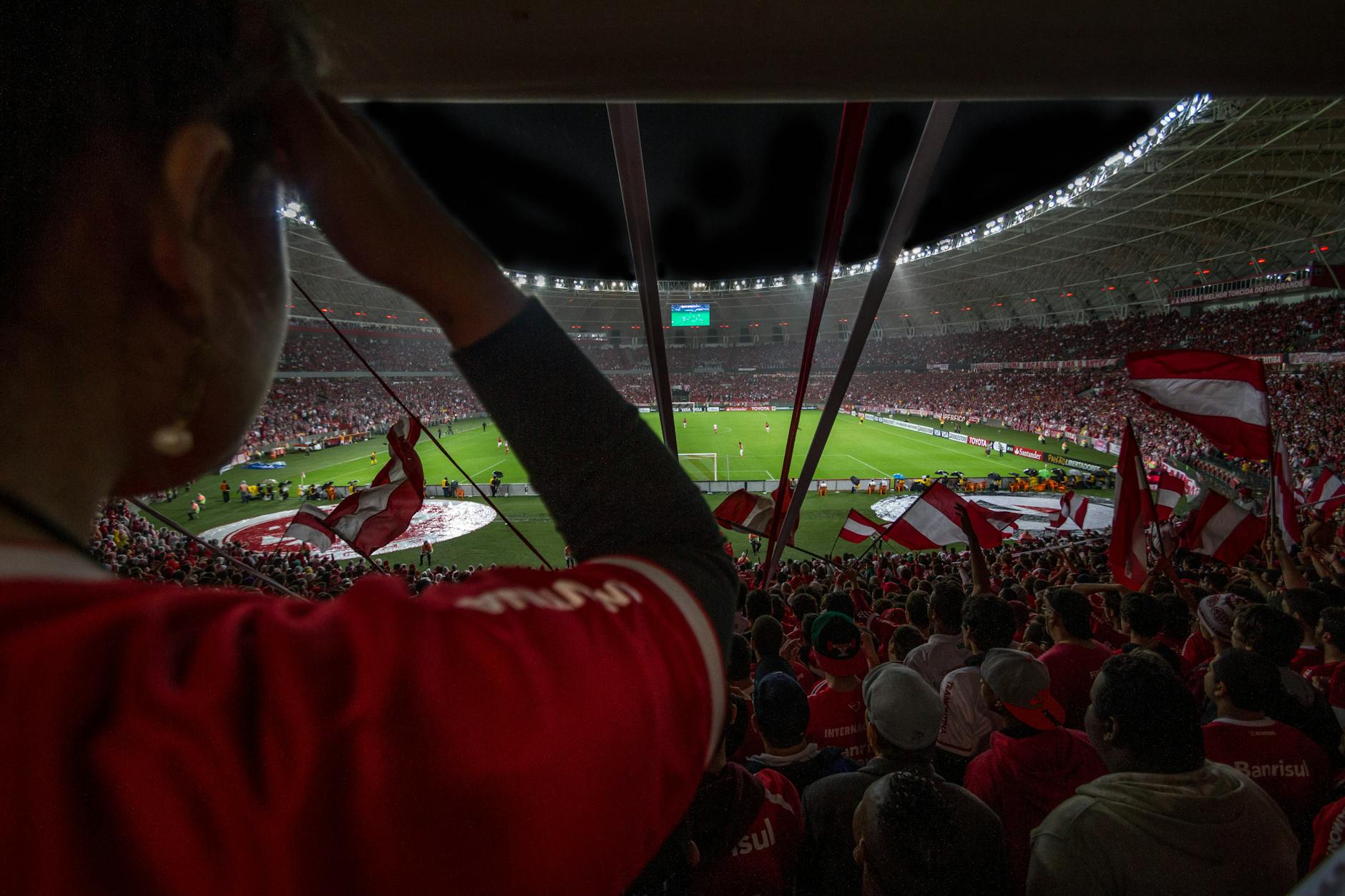
Introduction: A Night of Drama in the 2026 World Cup
The 2026 FIFA World Cup has already delivered its fair share of spectacular goals, tactical masterclasses, and shocking upsets, but few matches have captured the raw intensity and competitive spirit of the tournament quite like the Group Stage clash between the Islamic Republic of Iran and New Zealand. Playing under the dazzling lights of a packed stadium, both nations entered the pitch knowing that a victory would drastically alter their fortunes in this expanded 48-team tournament. What unfolded over the course of ninety minutes was an enthralling, high-stakes battle that pitted Iran’s technical finesse and rapid transitions against New Zealand’s physical resilience, disciplined defensive structure, and aerial dominance.
From the opening whistle, it was clear that neither side was willing to settle for a cautious draw. Team Melli, backed by a passionate and deafening contingent of supporters, dominated the early possession, looking to carve open a stubborn New Zealand backline. The breakthrough came midway through the first half when Mehdi Taremi executed a sublime side-footed volley, showcasing the world-class finishing that has made him a household name in European football. However, the All Whites refused to back down. Led by their talismanic captain Chris Wood, New Zealand fought back fiercely in the second half, equalising with a powerful trademark header that sent their travelling fans into raptures.
Just as the match seemed destined to end in a tense stalemate, Sardar Azmoun capitalised on a late defensive error to snatch a dramatic 2-1 victory for Iran in the 84th minute, securing three invaluable points and leaving the Kiwis heartbroken but proud of a monumental effort. The sheer energy in the stadium was palpable, proving once again that the World Cup has an unparalleled ability to unite fans in a collective state of suspense. The dramatic nature of the winner sent shockwaves through the group, establishing this fixture as an instant classic of the 2026 tournament.
Background & Context: The Road to the Grandest Stage
To fully appreciate the gravity of this fixture, one must examine the contrasting footballing histories and journeys of these two proud nations. Iran, long established as one of the undisputed powerhouses of Asian football, entered the 2026 FIFA World Cup with a point to prove. Despite dominating regional qualifiers for decades, Team Melli has historically struggled to translate their continental success onto the global stage, having never progressed past the group stage in their previous World Cup appearances. Under the experienced guidance of head coach Amir Ghalenoei, this tournament represents a golden opportunity for a highly talented generation of Iranian players—many of whom are playing at the peak of their careers in top European leagues—to finally break that historic barrier and reach the knockout rounds.
New Zealand’s narrative is equally compelling. The All Whites entered the tournament looking to recapture the legendary magic of their 2010 World Cup campaign in South Africa, where they captured the world's imagination by finishing the group stage undefeated against the likes of Italy, Paraguay, and Slovakia. With the Oceania Football Confederation now receiving a direct qualification spot in the expanded 48-team format, the Kiwis have a more sustainable path to global prominence. This match was seen as a litmus test for New Zealand's tactical evolution under Darren Bazeley, who has worked tirelessly to blend experienced European-based veterans with exciting young prospects emerging from domestic and North American leagues.
The atmosphere surrounding this Group Stage fixture was nothing short of electric, drawing comparisons to other high-profile sporting events where passionate crowds define the narrative. The deafening roar of the Iranian fans, coupled with the rhythmic chanting of the Kiwi supporters, created a unique sensory experience. In many ways, the anticipation mirrored the intense fan engagement seen in domestic sports, such as when Wyatt-Hodge Hails Crowd in England World Cup Warm-Up Win, demonstrating how vital a vibrant crowd is to the performance of the athletes on the pitch. As the global football hierarchy shifts, matches like this highlight the closing gap between traditional footballing giants and rapidly improving nations, a trend that is currently redefining the sport. Indeed, as many analysts ponder if older football dynasties are losing their grip—frequently asking Is Brazil Football Cooked? Analysis Ahead of 2026 World Cup—it is the rising forces from Asia and Oceania that are injecting fresh drama into the international arena.
Key Details & Analysis: Tactics, Player Performances, and Ratings
Tactically, the match was a fascinating game of chess between Amir Ghalenoei’s fluid 4-3-3 system and Darren Bazeley’s structured 5-4-1 defensive block. Iran sought to exploit the half-spaces, using the creative vision of Saman Ghoddos to feed the overlapping runs of their full-backs. New Zealand, conversely, sat deep and looked to launch direct counter-attacks using the hold-up play of Chris Wood. According to official statistics on FIFA.com, Iran controlled 58% of the possession and registered 14 shots compared to New Zealand's 8, but the Kiwis were incredibly efficient, making every attacking foray count and neutralizing Iran's wingers for large portions of the match.
The opening goal was a masterclass in movement and technique. In the 28th minute, Sadegh Moharrami delivered a pinpoint cross from the right flank, finding Mehdi Taremi, who had intelligently peeled off his marker. With immense composure, Taremi guided a side-footed volley past the helpless New Zealand goalkeeper, Max Crocombe. New Zealand's response in the second half was tactical perfection. Bazeley pushed his wing-backs higher up the pitch, putting immense pressure on Iran's central defenders. The equalizer in the 67th minute came from a beautifully flighted corner kick by Liberato Cacace, which Chris Wood met with a thunderous header at the far post, showcasing his elite aerial ability.
The match was ultimately decided by a lapse in concentration. In the 84th minute, a miscommunication in the Kiwi defense allowed Sardar Azmoun to intercept a backpass, round the keeper, and slot the ball into an empty net. The speed of Iran's late transitions and their ability to punish mistakes highlighted the world-class caliber of their attacking duo. This clinical edge and rapid transition style are reminiscent of elite European wingers who dominate headlines, such as the ongoing speculation surrounding a potential Bradley Barcola PSG Exit: Arsenal Lead Chase for Winger, where top clubs seek players who can turn a match on its head in a split second.
Player Ratings: Team Melli (Iran)
Alireza Beiranvand (GK) - 6.5/10: Had very little to do in the first half but was commanding in his box. Could do nothing to stop Chris Wood's powerful, close-range header.
Sadegh Moharrami (RB) - 7.5/10: Provided a brilliant assist for Taremi’s opening goal and was a constant threat down the right wing while remaining defensively disciplined.
Hossein Kanaanizadegan (CB) - 6.0/10: Struggled at times with the physical presence of Chris Wood and lost the aerial duel that led to New Zealand’s equalising goal.
Shojae Khalilzadeh (CB) - 6.5/10: Put in several crucial blocks and organized the backline well under heavy aerial pressure in the second half.
Milad Mohammadi (LB) - 7.0/10: A tireless performance on the left flank, balancing his defensive duties with constructive overlapping runs.
Saeid Ezatolahi (DM) - 7.0/10: Anchored the midfield effectively, breaking up Kiwi counter-attacks and distributing the ball with composure.
Saman Ghoddos (CM) - 8.0/10: The creative heartbeat of Iran's midfield. His vision, passing range, and ability to find space between the lines kept New Zealand on the back foot.
Alireza Jahanbakhsh (RW) - 6.5/10: Showed flashes of brilliance but struggled to consistently beat his marker before being substituted in the 72nd minute.
Mehdi Taremi (LW) - 8.5/10 (Player of the Match): Scored a sensational volley to open the scoring and was a constant thorn in the side of the New Zealand defense with his movement and intelligence.
Sardar Azmoun (CF) - 8.0/10: Showed incredible striker's instincts to anticipate the defensive error and score the dramatic winning goal late in the game.
Player Ratings: The All Whites (New Zealand)
Max Crocombe (GK) - 7.0/10: Made three outstanding saves to keep New Zealand in the game, including a brilliant fingertip stop from an Azmoun strike in the first half.
Bill Tuiloma (RCB) - 6.5/10: Made several key interceptions but was caught slightly out of position during the build-up to Iran's first goal.
Michael Boxall (CB) - 7.0/10: A warrior in the heart of the defense, winning numerous aerial duels and throwing his body on the line to block shots.
Nando Pijnaker (LCB) - 5.5/10: Had a solid game until the 84th minute, when his under-hit backpass gifted Azmoun the winning goal.
Liberato Cacace (LWB) - 7.5/10: Excellent both defensively and offensively. Delivered a world-class assist for Chris Wood's goal and kept Jahanbakhsh quiet.
Callum McCowatt (RWB) - 6.0/10: Worked incredibly hard but struggled to cope with the attacking threat of Mohammadi and Taremi on his flank.
Joe Bell (CM) - 7.0/10: Provided excellent defensive cover in front of the back three and distributed the ball with intelligence under heavy pressure.
Matthew Garbett (CM) - 6.5/10: Covered immense ground and initiated several counter-attacks, though his final pass occasionally lacked precision.
Elijah Just (AM) - 6.0/10: Showed great energy but was isolated for long periods and struggled to create clear-cut chances for his teammates.
Chris Wood (CF) - 8.0/10: Led by example. His physical presence caused constant problems for the Iranian defenders, and his header was a masterclass in aerial execution.
Expert Perspective: Coaching Decisions and Pundit Reactions
Following the final whistle, tactical analysts and football pundits were quick to dissect the key decisions that shaped this memorable encounter. As noted by tactical analysts on BBC Sport, Amir Ghalenoei’s decision to transition from a possession-oriented style to a more direct approach in the final fifteen minutes was a masterstroke. By instructing his players to press higher up the pitch and force errors from New Zealand's tired backline, Ghalenoei directly facilitated the mistake that led to Azmoun's match-winner. Pundits praised the tactical flexibility of the Iranian coaching staff, who refused to settle for a draw and actively searched for a way to break the Kiwi deadlock.
On the other side, Darren Bazeley received significant praise despite the heartbreaking defeat. Football commentators commended his defensive organization, noting that New Zealand’s compact low block frustrated one of Asia's most potent attacking units for the majority of the game. However, some pundits questioned the timing of Bazeley's substitutions, suggesting that fresh legs in the midfield could have prevented the fatigue that ultimately led to the fatal defensive error in the 84th minute. The general consensus among experts is that New Zealand proved they belong on this stage, showing a level of tactical maturity that bodes well for the remainder of their campaign.
The fan reaction across social media and in the stadium highlighted the emotional rollercoaster of World Cup football. Iranian supporters celebrated with a mixture of joy and relief, recognizing that their team had survived a massive scare. Meanwhile, Kiwi fans expressed immense pride in their team's performance, with many noting that a draw would have been a fair reflection of the match. The collective drama of this fixture has set a high benchmark for the rest of the tournament, capturing the essence of what makes the World Cup the pinnacle of global sports entertainment.
Impact & Implications: What This Means for the Standings
This dramatic 2-1 victory has massive implications for the Group Stage standings. With three points secured, Iran now sits in a commanding position to qualify for the knockout rounds. Historically, Team Melli has struggled to secure crucial wins in their opening fixtures, often leaving themselves with too much to do in their final group matches. This victory relieves immense pressure on Ghalenoei’s squad, allowing them to approach their next fixtures with a high degree of confidence and tactical flexibility. For a nation desperate to make history by reaching the round of 16, this result is nothing short of monumental.
For New Zealand, the defeat is a bitter pill to swallow, but their performance offers plenty of reasons for optimism. Despite leaving the pitch empty-handed, the Kiwis demonstrated that they can compete physically and tactically with top-tier international opposition. Because the tournament has expanded to 48 teams, some of the best third-placed teams will also progress to the knockout stages, meaning that New Zealand's goal difference and competitive performance could still prove crucial. If they can replicate this level of intensity and defensive discipline in their remaining matches, a spot in the round of 32 remains highly achievable.
The result also reshapes the dynamic of the group, turning the upcoming matches into must-watch encounters. Every goal, yellow card, and tactical decision will now be magnified as the teams battle for survival. The narrow margin of Iran's victory serves as a warning to other teams in the group that no opponent can be taken lightly in this tournament. The competitive parity on display suggests that group